Transcript
A congressman just asked the Treasury Secretary virtually on the record whether the government is propping up its own bond market and he didn't deny it yet. The stock market hasn't noticed. It's just too busy with AI. But some people have noticed. Morgan Stanley sent its biggest clients a report on exactly this to the pension funds, the big wealth funds, the hedge funds, their clients, not you.
Now, I've read it and there is one line in it that I think you deserve to see because it tells you when there stops being a Wall Street problem and it starts becoming yours just as the wind is picking up to make this more dramatic. I'm Felix Nicholas Prin, an economist and former banker standing here in London and I take no sponsorships, no endorsements ever, so I can say whatever I like, even if it isn't the most popular thing. So, do they know something you don't? Well, by the end of this video, you will know what they know. And I'm going to run you through a lot of numbers here, and I'm standing on a balcony, so it might not be the most coherent string of sentences, but I know that the people who watch this while they're doing something else, they're going to like miss out on some of those.
And and I might miss one of those. So, I'm going to put all of it, the charts, the Morgan Stanley information, all that stuff into a free report. You can download it. There's nothing to buy. It's just a link down below at felixfriends.org/bondmarket.
As exciting as that sounds, doesn't it? But honestly, just by watching this, you're going to be ahead of 99 per cent of people because most of them will find out about what's really happening with the bond market from a headline in about well about 6 to 12 months too late. So, what is actually happening?
Well, the American government borrows money by selling bonds. So, one bond is an IOU. So, say you give the government $1,000, they give it back to you in 10 years, and in the meantime, they pay you a little bit of interest. Now that interest is called yield because it makes bond traders sound more fancy. And the yield is set by the market, not by the government and not by the Fed.
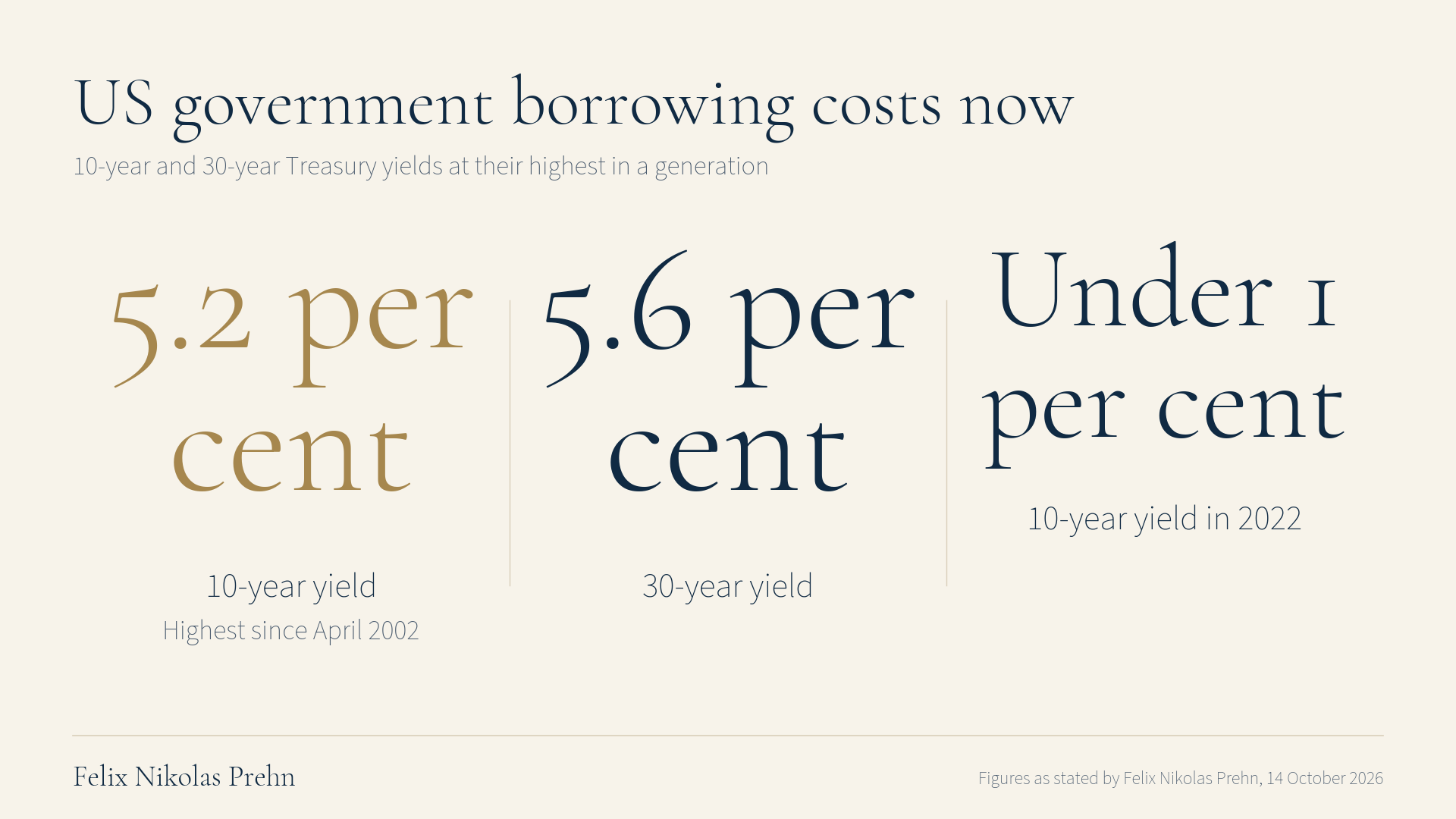
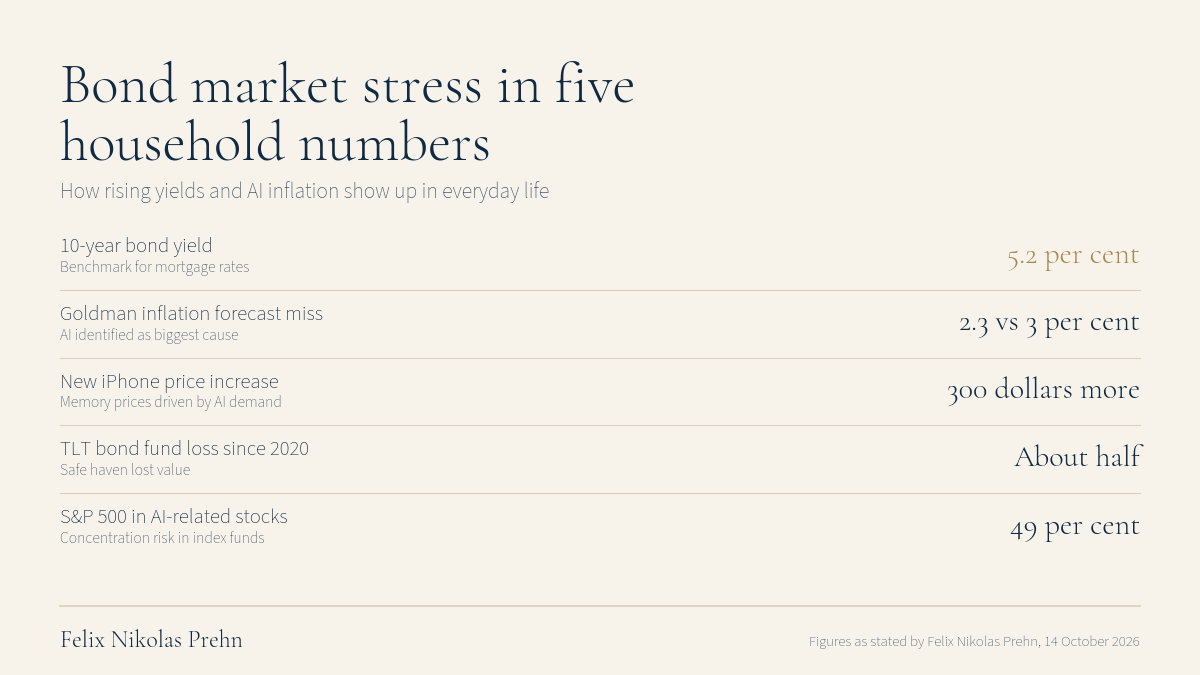
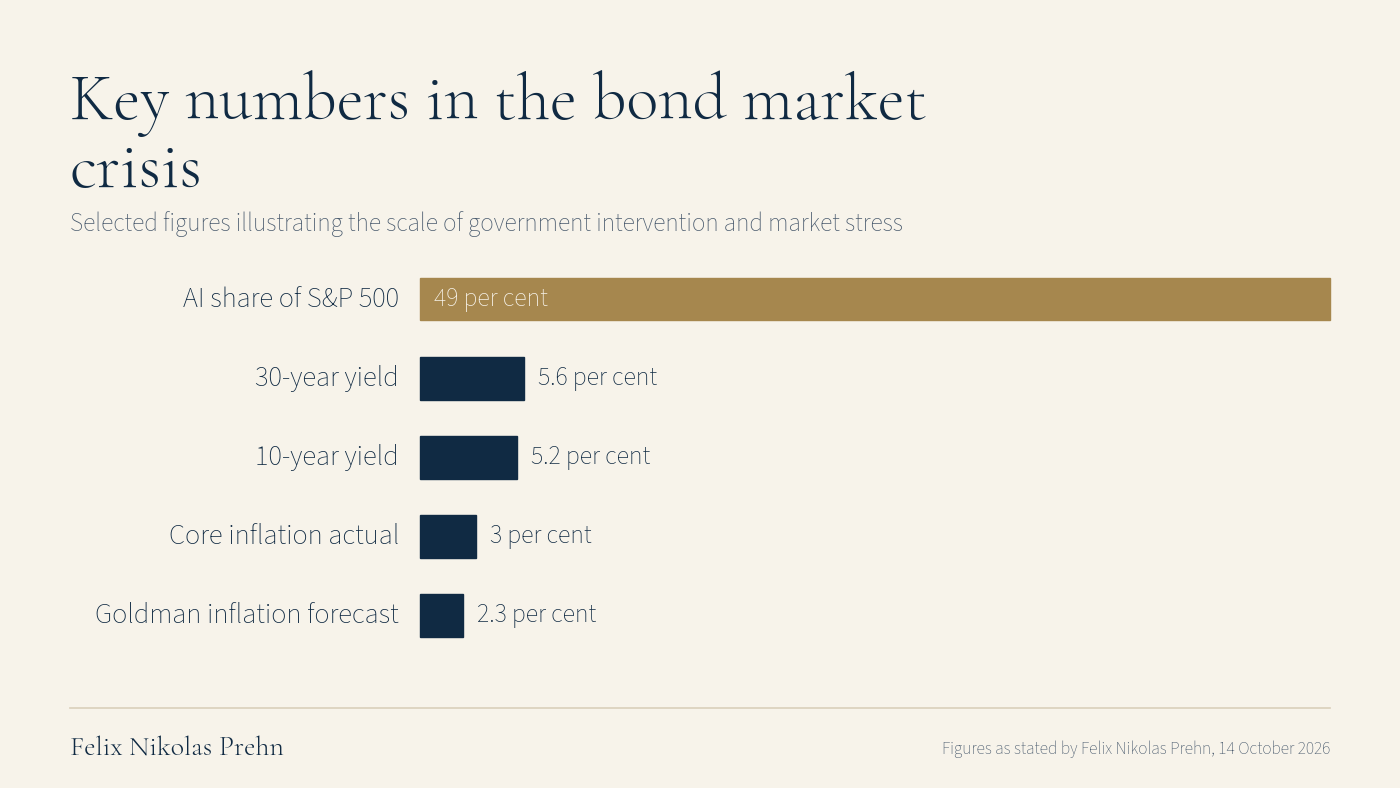
If buyers want more interest before they'll lend to the government, the yield goes up and the yield on the 10-year US bond is now about 5.2 per cent. The 30-year yield is 5.6 per cent. It's the most expensive money has been to borrow for the US government in a generation. And Bloomberg run a chart on it in the last few days and and you can see it in the report. I'll I'll put it on for you.
It's it's a line that goes from under 1 per cent in 2022 to about 6 per cent right now. So, you're thinking still, why am I watching this? Why am I listening to a guy talking about a bond?
I've haven't bought one in my life. Because the yield on a government bond is the price of money. It is the floor under every other interest rate in the economy. Your mortgage is priced of it. Your car loans priced off it.
The loan your employer takes to build the next factory is priced on it. And the loan your pension fund uses to judge whether it can pay you. So when the floor rises, everything standing on it rises with it. And money has not been this expensive since 2002, which is, you know, the good old Bill Clinton years or something. So the last time it came anywhere near this was 2007.
And I think you remember what happened to house prices after 2007. So if you're in the US, I'm talking to you. If you're in UK or Europe, don't switch off because this is actually your flaw, too. When America pays 5 per cent to borrow the money that would have been lent to Britain or Germany at 4 per cent, it'll go to America instead until Britain and Germany pay up. So, the American bond market sets the price of money for the world and the world is just finding that out again because it's been a while.
So, who's buying these bonds? Why does it matter to you? Well, your share prices are directly linked to this, too. We're going to get to that in a second. So, fewer and fewer people are willing to buy lend to the US government at these interest rates.
Now, for 30 years, the biggest foreign buyer was Japan. Japan pension funds and insurers bought American bonds because Japanese bonds paid nothing. Zero like n it's the word for nit in uh in Japanese. Someone tell me. So the bank of Japan is doing what?
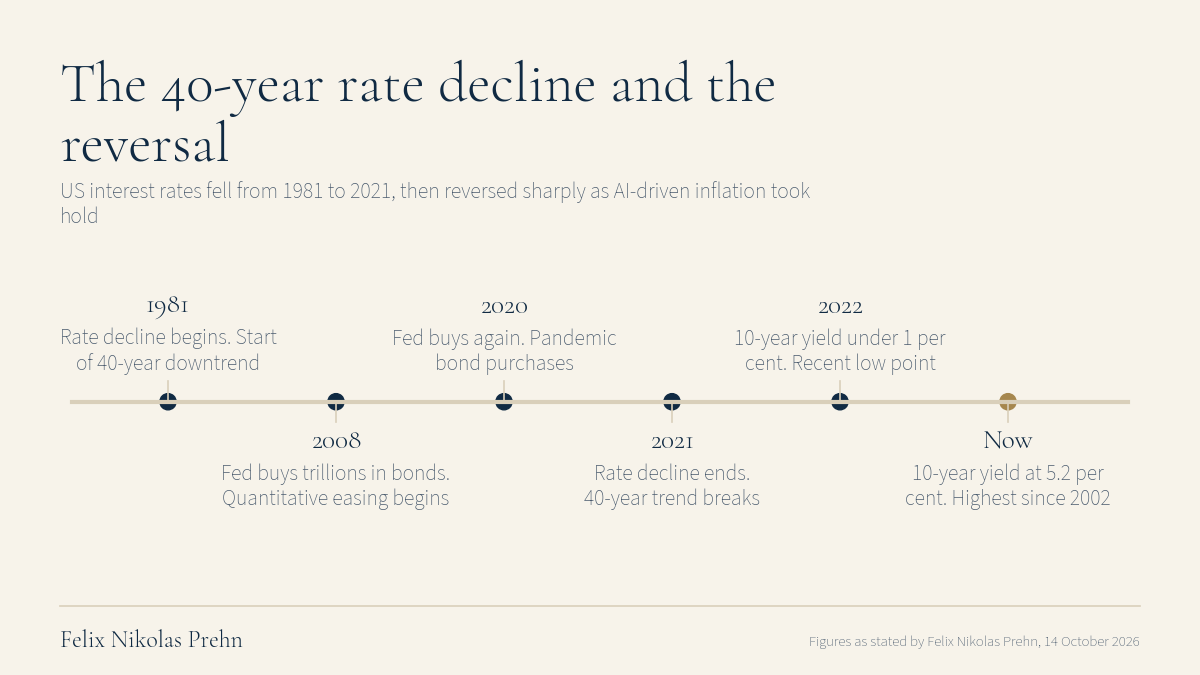
It's raising rates. Japanese bonds now pay something. And Japanese money is going home because it's lovely and the food is wonderful and people are very polite. So the Federal Reserve, which bought trillions of these bonds after 2008 and again in 2020, isn't buying either. So the buyer of last resort for the American government right now is the American government, which is what this congressman was really asking about.
Now that hearing, so the Treasury doubled what it calls its buyback programme.
Now buybacks mean the Treasury goes into the market and buys back its own debt with money it raises by selling new debt, which is a little bit mad, right? Hence the wind picking up. So officially the story is about liquidity, about making the market run smoothly. Now unofficially everyone on Wall Street reads it as the government trying to hold its borrowing costs down desperately. Government is saying the market is wrong and we're going to lean on it.
So when he was asked the Treasury Secretary in a public hearing whether this had worked because 10-year yield had gone through 5 per cent the very week these buybacks and know everything else was happening. The answer was yes, it was successful. Now, he then also went rather famously um and and and told the bond traders, I am the house now. You can bet against me if you want. And guess what they did? The 10-year yield hit the highest level since April 2002.
And yes, the government spent about 6 billion buying back just one day to fight it off, but it wasn't successful. So, think about what that means. If the intervention worked, why do you need more tools? and if you need more tools, as he's now saying, what was the intervention for? And senators have since written to this chap being the Treasury Secretary and asking whether he plans to drain the government's own bank account to fund even bigger buybacks. And Bloomberg just reported the next move.
City Bank expects the Treasury to cut and even possibly stop its sales of 20 and 30year bonds and fill that gap by selling short-term builds.
And I know you're just now thinking this is really really dull. Why do I care? Builds are IUs that come to you in just a year. So in plain English, this means this. Nobody wants to lend to America for 20 or 30 years at a price America can afford.
So America is going to borrow for 3 months at a time instead. It's sort of like saying, I know I've got a debt problem, but what I'm going to do is I'm going to get 19 new credit cards and just cycle the debt through those and hope nobody notices. So, it looks better because you are only holding the debt with a lower interest rate period of your new free credit card. But you're going to have to do this forever at a bigger and bigger and bigger scale. And the simple truth is there isn't actually a better option.
So write down this date, 4th of November. That's when the Treasury publishes its refunding statement, which I know is the most riveting read in the world.
But it's the document that says how much it'll borrow and for how long. So if the long bond sales get cut or the 20 year just disappears quietly, no one's really going to talk about this in the press because it's really, really dull. But it is the moment that the world's biggest borrower admits it can no longer sell debt at the price it's willing to pay and it's just a couple of weeks away which is why I'm making this video right now standing on this balcony rather than waiting for it to be in the news. And there is one more thing on the bills that replace those long bonds have to be bought by somebody too. They get they they mostly get bought by money market funds which is where a lot of ordinary savers keep their cash.
So the risk doesn't disappear. It just moves from a 30-year bond held by a pension fund to a 3-month IOU held by you. Congratulations. And this is where it touches your money. So the thing most people hold as a safe bit of their portfolio, the bit the advisor tells them would protect them when stocks fall is longdated government bonds.
It's a fund for that. It's called TLT. And if you look at that chart, it has lost about half of its value since 2020. Half, right? This is a safe thing.
So the price is basically embarrassing. So that's the bond market. The government's intervening. Some people have noticed, most people have not. And what I've just told you is that none of this is going to go away.
This is going to get worse. And that's the Morgan Stanley line. Before I get to that, I want to tell you something about what this video can and cannot actually do for you. What I've shown you so far is awareness. And awareness is worth something.
But I've been doing this long enough to know that awareness on its own doesn't actually change what happens to your money. So knowing a storm is coming and it looks a bit like that here, doesn't it? Um and and and knowing how to sail in it are two very different things. And most of us were taught to handle money by people who learned that in the world that is gone. Buy the index.
Buy and hold. Put 40 per cent in bonds as you get older. Don't look at it for 20 years. And and it worked for the last generation. It did because interest rates fell for 40 years straight.
Literally from 1981 to 2021, you had a falling interest rate that that tailwind is over. It ended in 2022 and what you're watching in the bond market is the bill for it arriving. What replaces buy and hold is a skill. You were never taught it. And again, it's not your fault.
But it is your responsibility now because nobody at the pension fund is going to learn it for you. No financial adviser is probably going to do that for you either. Although if you have a really good one, brilliant. Keep them or her. Uh but the people who going to come through this are going to come through this well.
They're not smarter than you. They're not actually richer than you. They just watch where the professional money is moving and they move with it instead of marrying one position or just you know hoping that buy and hold will somehow come back and it's a skill and you can learn it literally in an afternoon and and teaching is why I do what I do. So this coming Saturday, I'm going to sit down with you live for free for about 2 hours. And I call it sort of how to protect what you've built from, you know, the world that is literally changing and breaking.
And we're going to give it to you step by step. Um, you can do this with index funds, you can do the stocks, you can be a trader, none of that matters. You can be in the US, in the UK, in Europe, anywhere else in the world. And you can ask me questions. So if you want a seat, click on the link down below in the comments.
Um, there'll be a couple of thousands of us there. We can have some fun. So, let's get back to Morgan Stanley's line. So, the report is written by Morgan Stanley's economics team for institutional clients. It's 60 pages.
Most of it is tableds.
I'm not going to walk you through all of it because it would be deathly dull. In fact, the institutions who pay for the report don't need them either. Um, but what matters is one thing and they put it on the front page and they call it R versus G. R is the interest rate the government pays on its debt. G is the growth rate of the economy.
And the whole question of whether a country's debt is sustainable comes down to which of those two numbers is bigger. So if the economy grows faster than the interest on the debt, you're fine. Even if you have a ton of debt, right now the debt will essentially shrink compared to the size of the economy on its own. And that's what America did in the ' 50s. Um big war debt, but you know, the 50s were wonderful apparently and everything was growing.
So you put some numbers on this. Let's say the economy grows at 4 per cent a year and the government pays 3 per cent on debt. Every year the economy gets 1 per cent bigger relative to the debt. So even a government running a deficit sees it debt ratio move down. Right?
And that's what we've been seeing. But you flip it around say the economy grows at 4 per cent including inflation and the government pays 5 per cent. Well, every year the debt gets 1 per cent bigger relative to the economy. And the only way you fight that is by running a surplus. Now we haven't had a surplus since uh you know Bill the Great.
I I I did not I did not you know spend too much money bill. Um so if the interest rate rises above the growth rate the arithmetic flips. Now the debt grows faster than the economy. You borrow to pay the interest which raises the debt which raises the interest which raises the debt which raises the interest and we could go on. Now the report is a phrase for what happens next.
And this is what I wanted you to really understand and it's that the R versus G relationship could turn positive by 2030 which would drive an ever accelerating increase in debt stocks if fiscal frameworks do not adjust. Lovely language isn't it ever accelerating. This is Morgan Stanley's chief economist writing to big funds. Not some blogger, not some gold salesman. This is a bank that earns its money from this market and it's telling the people who run your retirement that the United States on current policy crosses that line pretty soon.
And 2030, by the way, assumes no recession. So, it's sort of a pretty optimistic outcome. And if one arrives, this is going to happen a lot quicker. So, the interest rate is catching up to and possibly going to exceed the growth rate. And when it does, the debt feeds on itself and gets bigger and bigger and bigger.
It's like a monster. Now, if you connect that to what we started with, the whole game for the Treasury is to keep this interest rate R below growth G. And that's why they're buying back bonds. That's why they're cutting long bond sales. That's why the Treasury Secretary told Congressman, "The market has it wrong." It's an attempt, a fairly desperate attempt to prevent this.
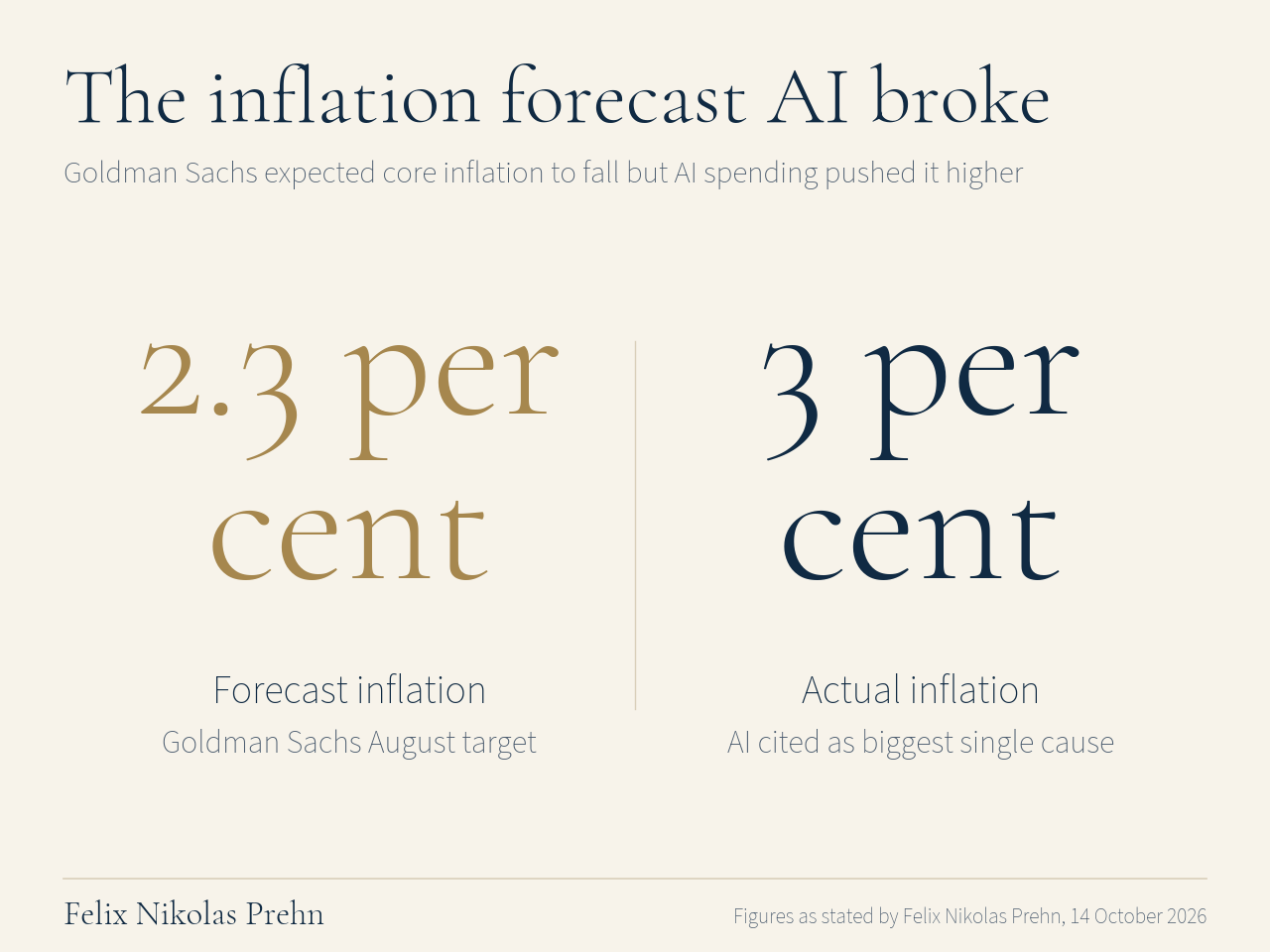
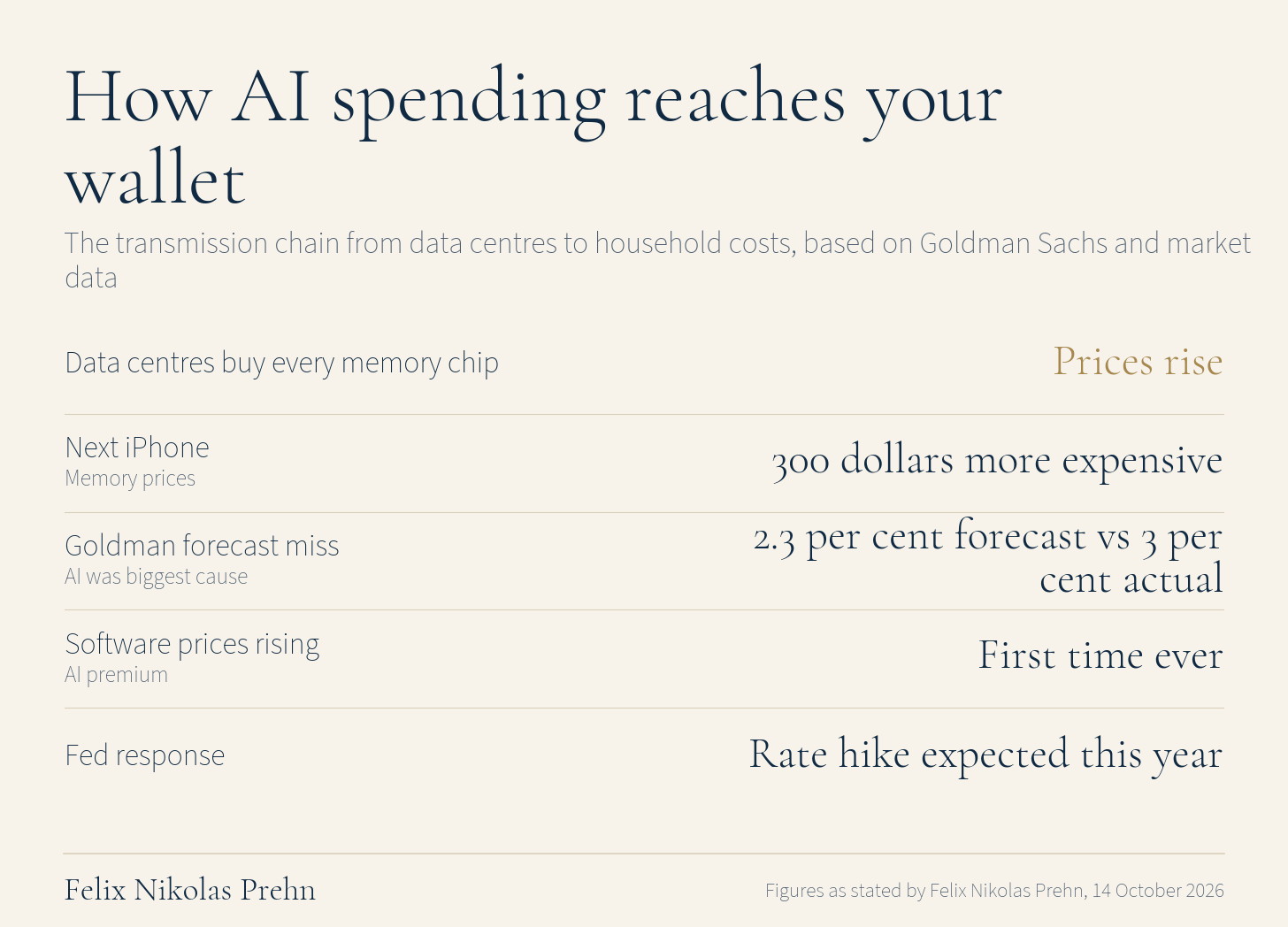
But there's a reason that isn't working, and it's not the war, and it's not the tariffs. It's one thing everybody thinks is going to save the economy. In January this year, Goldman Sachs, another lovely bank who has, you know, the the kittens at the heart of their their their um moral policy, um they forecast that core inflation will be 2.3 per cent by this August. Now, it came in at 3 per cent.
Now, that's a big miss with a bank for a bank without many economists. So, Goldman has just published a postmortem on where it went wrong. And the biggest single cause on their own chart is AI. So it wasn't oil, it wasn't tariffs, it was chips, laptops, and memory and software. Consumer electronics explain a lot of that higher inflation that data centres are buying every memory chip on Earth, which means the memory chip in your phone and in your laptop costs more and it creeps into inflation.
Computer software prices are rising for the first time ever because you can slap AI on a piece of software and charge more for it and people are going to go, "Oh, that must be right." uh even though that's sort of the opposite of what is logical and the Fed's noticed. So the Fed raised interest rates and the market expects another interest rate hike this year. So what they're basically saying is that AI investments are putting inflation up. Now of course the official story is that AI is going to be deflationary and it's going to save absolutely everything. So the problem is a little bit more complex than most people, you know, appreciate.
And the Fed's only tool to fight inflation is what? Make interest rates even higher. But you see, the companies spending all this money, your Microsofts, your Amazons, your Metas, they don't really care what the interest rate is. They're going to do it anyway. So, the Fed's raising interest rates, the data centres keep building, memory prices keep rising, inflation stays high, and then of course we have the whole oil disaster on top of that.
Um, and it means what? It means your mortgage goes up. It means your house price goes down. It means the value of your income goes down. And it also means your stocks are going to get hit pretty hard on some point.
And maybe you don't believe the interest rate story yet. Well, the next iPhone is $300 more expensive than the last one because of memory prices.
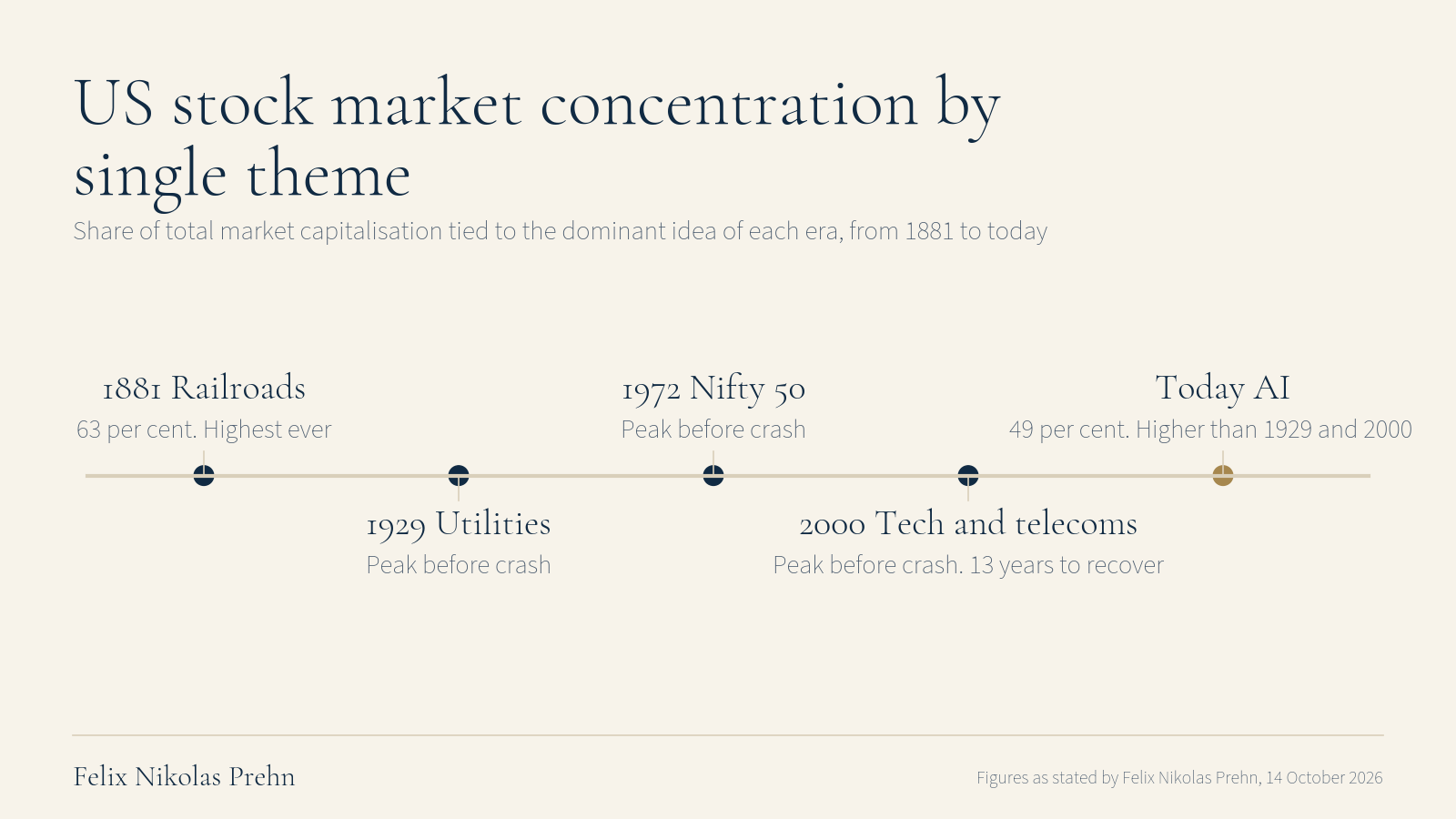
So, you are paying for data centres. And there's another chart here. We'll hopefully put it on the screen. And it measures how much of the American stock market is tied up to one idea. Goes back all the way to 1835.
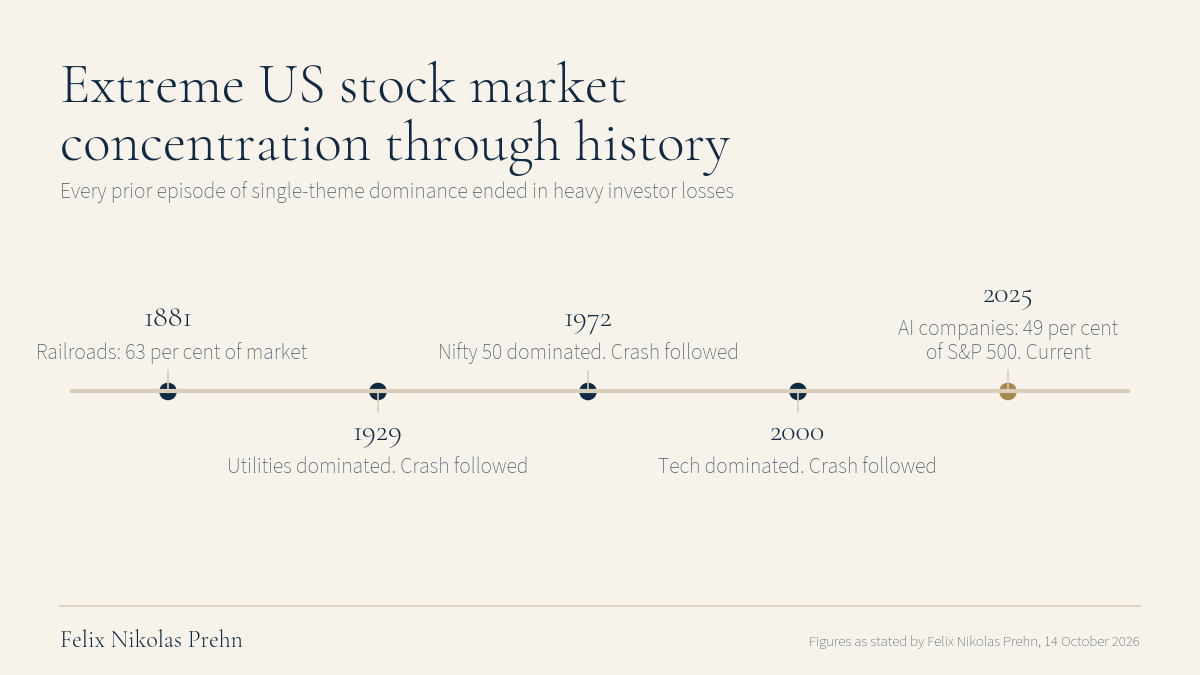
Now in 1881 it was railroads. 63 per cent of the entire market was on railroads. In 1929 it was utilities. In 1972 it was the nifty50. And in 2000 it was tech and telecoms.
Now today AI related companies are 49 per cent of the S&P 500. This is higher than 1929. This is higher than 2000. And the only time in American history the market was more concentrated in a single idea was the railroads. So in every pension fund, every southern wealth fund, every index tracker, and every individual investor aspiding is the same seven companies.
It's called what? It's called a bubble. It's the definition of a bubble. A double. A bubble isn't a judgment about whether the technology is real.
The railroads were very, very real, right? They built the country. And the people who bought railroad shares in 1881 still lost all their money because the price had stopped being about railroads and had become about everybody else buying railroads. So if you own an index fund, you own this. Half your money is already in one bet.
If you own any tech stocks, you actually made it way worse. And you know what? It feels wonderful on the way up. Um it has no breaks on the way down though. And if you look at 2000, well, it took 13 years to get back to where you started.
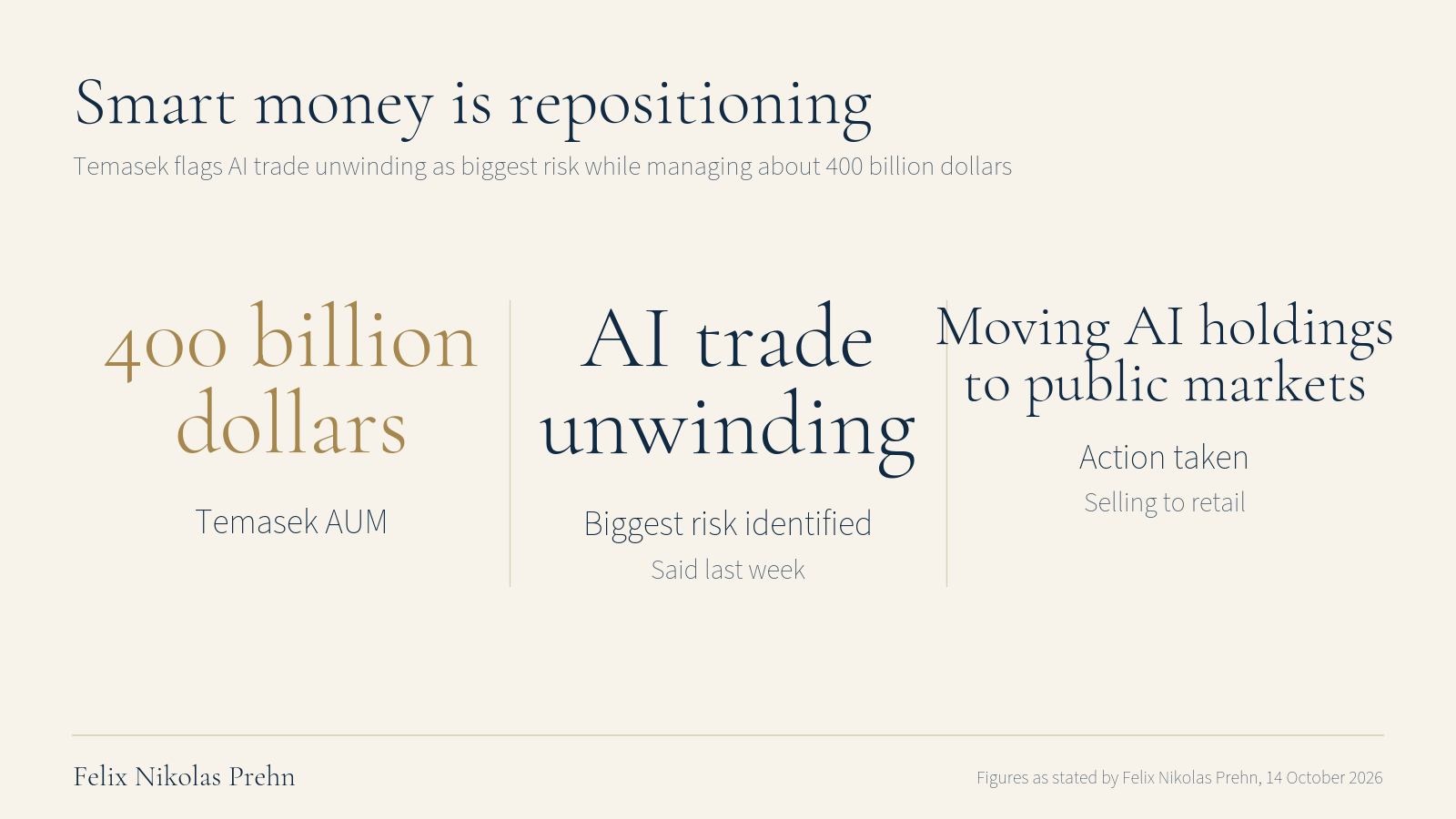
And the smart money knows this. One of the biggest wealth funds in the world, Timasc, which is Singaporean, they have about $400 billion dollars. They said last week that the biggest risk is the unwinding of the AI trade.
And you know what they're doing? They're moving their AI holdings into public markets. So, they're selling them to suckers like you and me. So, there is this whole loop. AI spending drives inflation.
Inflation keeps interest rates high. High interest rates push R interest rates above G for growth. And it means the debt gets bigger and bigger and bigger. And the only thing holding the whole thing up is the share price of seven companies. The world's biggest investors are basically preparing to sell.
And that's what Morgan Stanley's clients know.
Now you do too. So the question is what you actually do with this. First, what you don't do is you don't sell everything and sit in cash. Cash at 3 per cent inflation is a is a is going to make you poor. And and and yes, you can panic as it's a strategy of sorts, but it's a really bad one.
So, what you do is three things, and they're all really boring, which is why they work. One, find out what you actually own. Most people have no idea how much of their money is in AI, and you can go into the Winston app. I put a put a link for a free trial down below, and you can just check that out. If you don't like it, you cancel it.
Um, and it'll literally first thing it'll ask you to do when you when you open it up is put in what you own, and it'll then tell you what your AI exposure is. And then the second thing is you check your companies for debt. In a world where interest rates is rising above growth, it's going to hit a lot of companies pretty hard. So the companies that borrowed money cheap in 2020 are the ones who are going to get hurt when they have to refinance this. There's another filter in the app.
You click on stocks and then you click on a filter called danger zone. Um and and and then you can you can filter that down to your companies. Now some companies take Nvidia. It's basically got no debt. It's got a mountain of cash.
So if the AI trade unwinds, the share price is going to take a pretty hard beating, but the company will actually still be there. It's not in the danger zone. Now look at say Oracle. It's borrowing tens of billions of dollars to build data centres for other people say I very different animal. And the app flags that for you and it does it for thousands and thousands and thousands of other companies around the world.
And then three, stop thinking of long-term bonds as a safe thing.
Uh and I know everyone has been taught to do that. TLT, which is 30-year bonds, what got halfed Now there is actually a trade in that in my opinion and I haven't bought any yet but I think there is potentially something we can do with that and we can talk about that a bit more detail on Saturday. But the last part the rule for when to sell and maybe the rule for when to buy long-term term bonds again because they've been oversold so much. That's the skill and it's the part I can't teach you in a 20-minute video standing on a balcony. It takes some practice which brings you back to Saturday.
So, for about two hours live and free, I'm going to show you step by step how to position for a bond market that is actually breaking right in front of us and how to watch where the big institutional money is moving and and and understand what the people who write these reports we just talked about right about and move with them instead of against them. And you don't need to be a trader for it. Um, it works if you're in the US, you're in the UK, you're in Europe, anywhere in the world. You can ask me anything live. So, if you want a seat, click on the link down below in the comments.
And I I my hope is that you see this isn't panic. This isn't fear-mongering. This is actually opportunity. And opportunity is wonderful if you're prepared for it. And it's a real kick in the nuts if you're not.
Cuz they are not going to, in my humble opinion, there will not be people who who be all right and people who will be great. I think there'll be people who will be in a great deal of pain. There'll be people who will do wonderfully. And my hope is that more and more of us will end up on the wonderfully side. So come and join me Saturday.
I wish you all the best. >> Right now, I think we're going through some sort of weird phase transition. And normally when you get bad economic news or you get bad jobs data that people are going to fly to safety into the bond.