Transcript
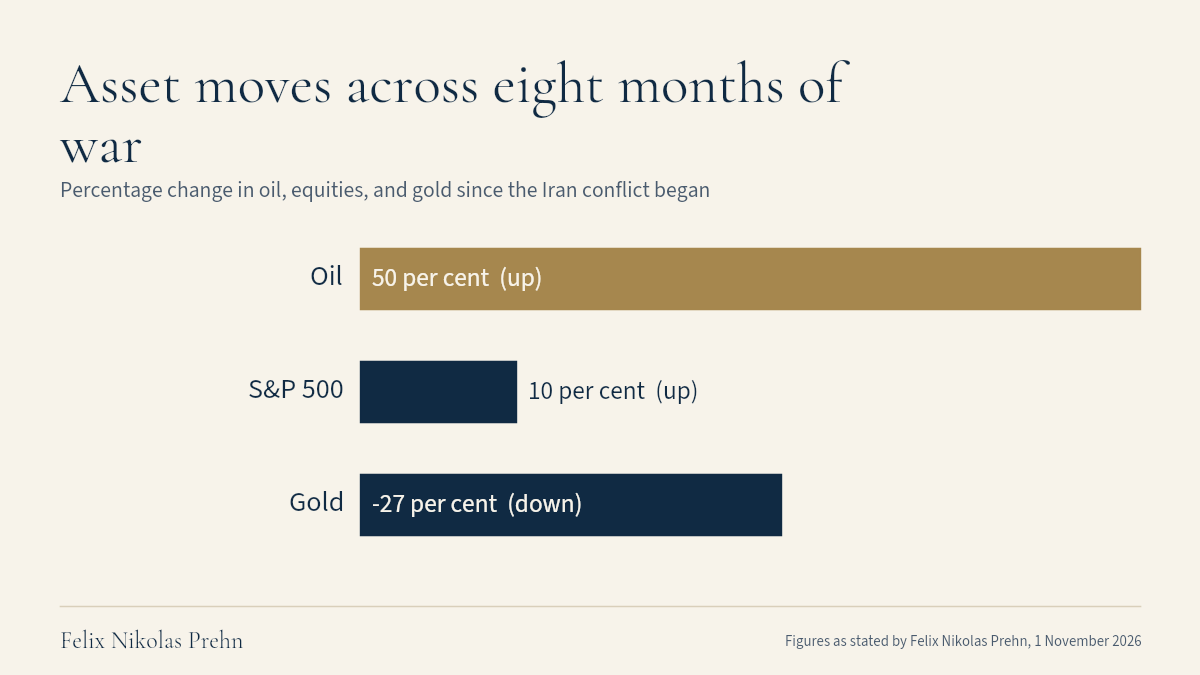
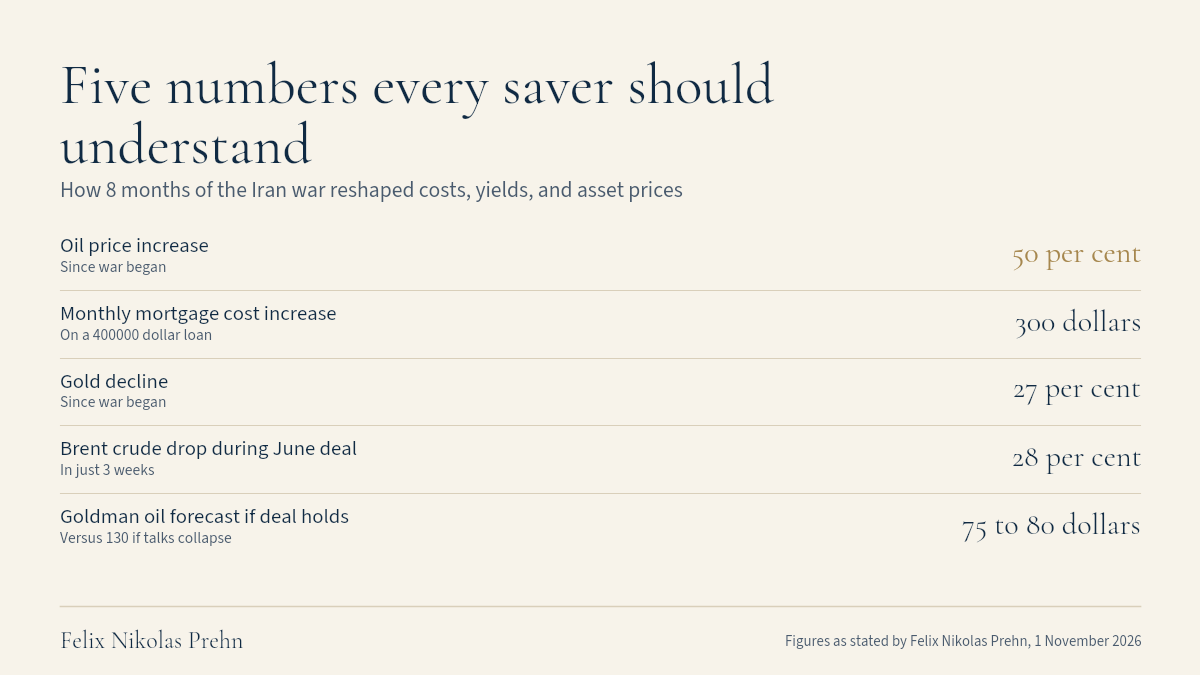
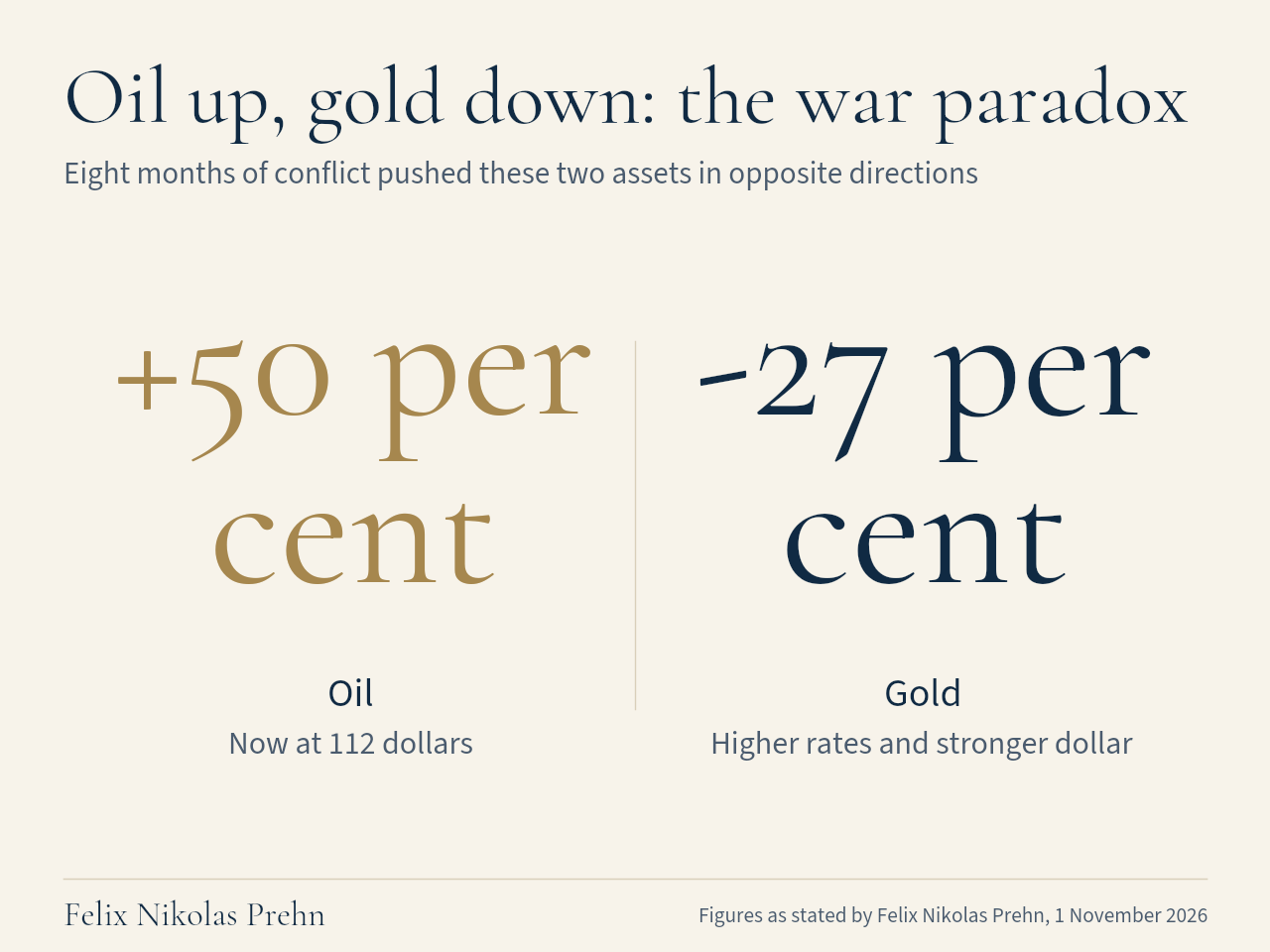
America has been at war with an Iran for 8 months. Oil is up more than 50 per cent. And the S&P 500, it's up 10 per cent. Which is about what it makes in a whole normal year. And that's not supposed to happen.
Wars are meant to crash markets. So if you sold in the first panic of the war earlier in the year when it felt like the world was going to end, I don't blame you. Plenty of careful, sensible people did. But from that low, the market has climbed almost 20 per cent without those people. And now there's talk of peace.
An American offer has been carried into Thran by Qatari mediator. Nothing's signed and Iran has and Iran says it has no plans to meet the Americans. But markets don't wait for signatures. And there was a moment this year that showed exactly what peace does to oil into your portfolio. It lasted three weeks earlier this year.
And most people just sort of blinked and missed it like Sleepy Winston here because we've been swimming at the beach. And then there is gold. In the middle of a war, the thing you're told to own when the bombs fall has dropped more than 25 per cent. Governments have been selling it. And they had a very particular reason for it.
And that reason comes with an expiry date. I want to teach you in this video how to protect your portfolio if the talks fall apart and how to actually benefit if they don't. Because the skilled money on Wall Street, do they know something you don't? Well, by the end of this video, you will. And we're not going to panic.
We're going to have an actual plan here that you can implement. My name is Felix Nicholas Pin. I'm an economist and former investment banker. I'm the founder of the PIN Institute where we publish research or financial markets and also provide instruction on how they actually work. I take no sponsorship, no endorsements ever, so I can say whatever offensive thing we're about to say.
And I've put the research behind this video into a free research report from our institute for you. Covers oil, interest rates, the sectors that tend to move, and of course, gold. Every chart is footnoted, so you can check my work rather than just take my word for it. And you can get it for free at phoenix.org/ /paste deal. Links down below in the description.
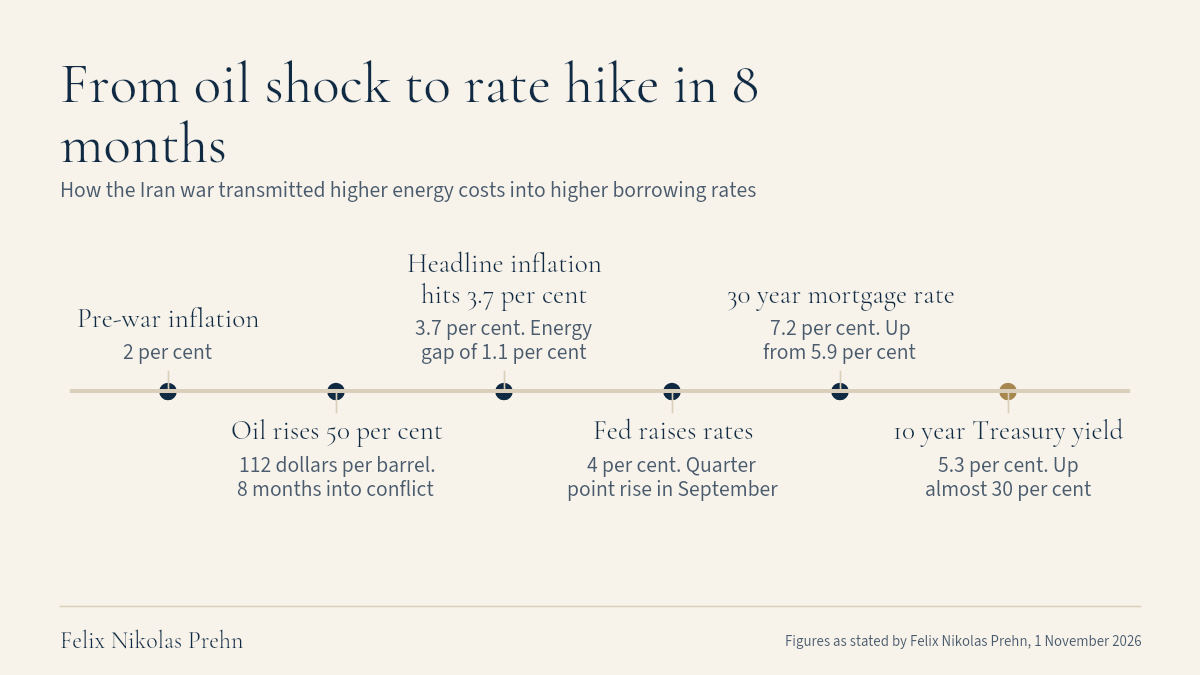
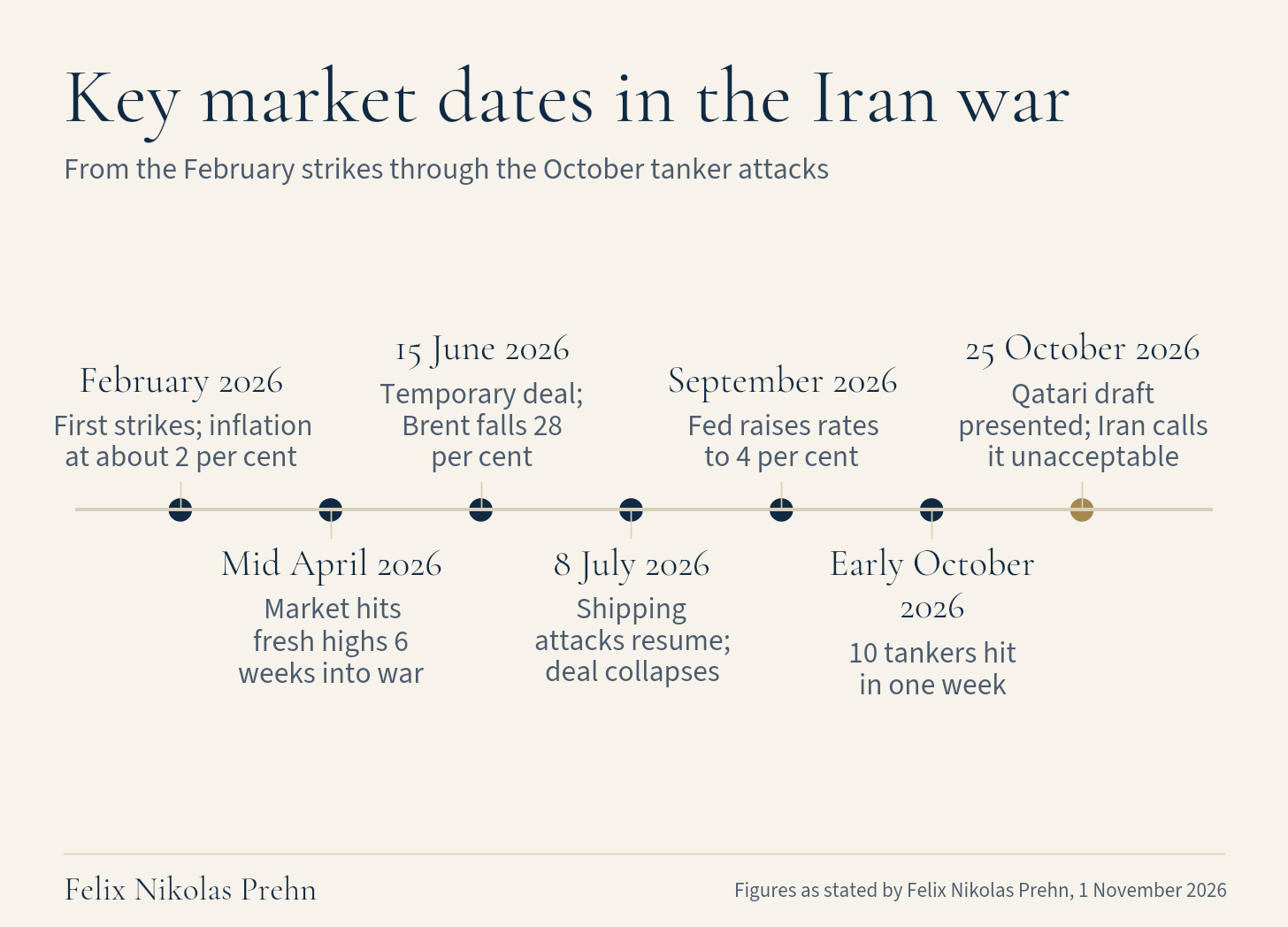
And just by watching this, you're quite frankly ahead of 99 per cent of people because most people read the news after they happened. We here look for the patterns and the money flows that tell us what's happening before it actually happened. So the stock market has just done fine right now. Your household probably hasn't. In February, before the first strikes, inflation in America was running about 2 per cent.
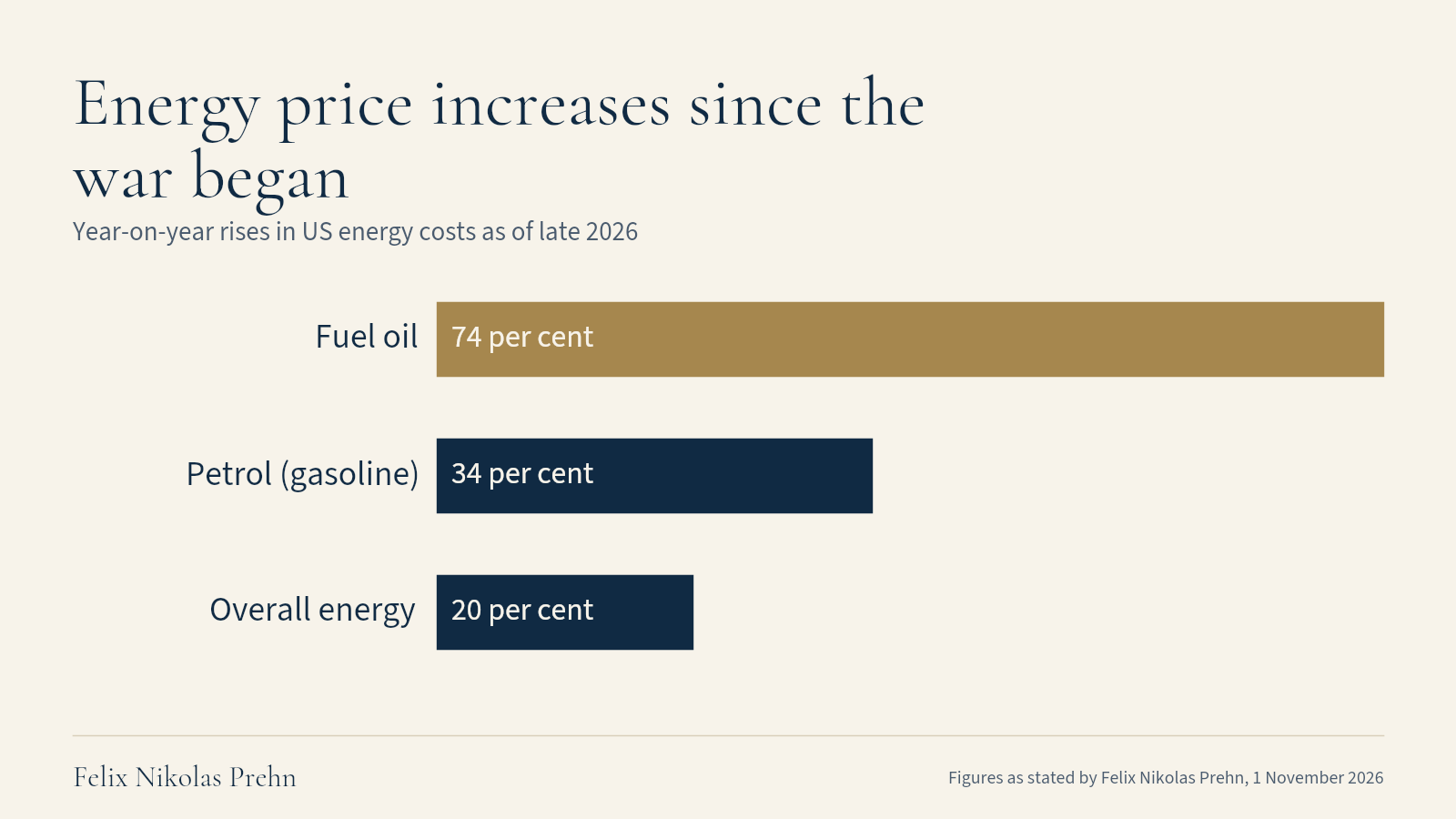
Inflation is now 3.7 per cent. But it actually is way worse than that because energy prices are up 20 per cent on a year earlier. Petrol is up 34 per cent. That's gas for you Americans. Uh fuel oil is up 74 per cent and homes still burn exactly that stuff for heating.
And America's central bank and the Federal Reserve and its infinite wisdom and you know sherry swigging nature did something it hadn't done since July 2023. It raised interest rates in September.
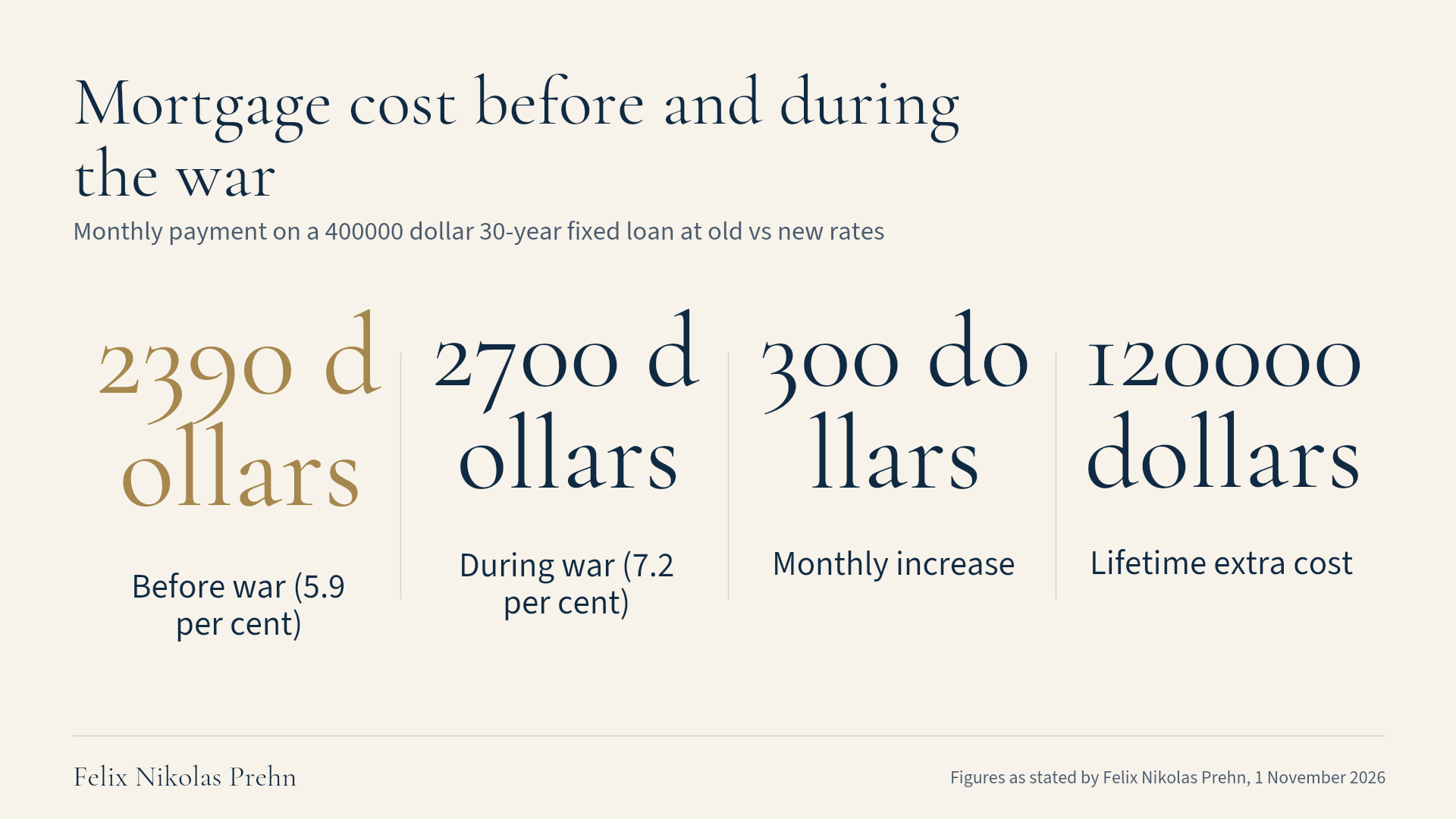
It lifted its main rate by a quarter point to now 4 per cent. And you feel that in your mortgage. The typical 30-year fixed rate American mortgage is basically 6 per cent. And you feel that in your mortgage. The typical 30-year fixed rate in America was 5.9 per cent before the war.
It's now 7.2 per cent. So, if you take a $400,000 loan, say at the old rate, your payment is about $2,390 at the new rate about $2,700 is essentially a $300 increase for exactly the same house. You've gained absolutely nothing at all. You're just paying more for it. And I know you might be on a fixed rate, but try selling that house.
The next person has to get out a new rate, a new mortgage at the new rate, and therefore they got less money to spend on that house of yours. So $333 again doesn't sound like that much to some people, but it's $120,000 over the life of the loan, which is pretty significant, I think, for most people. And you see, mortgage rates follow the interest rate the American government pays to borrow for 10 years. That's the way it actually works. What the Fed does is secondary.
Before the war, the American government was paying about 4 per cent. To borrow. Now, right now, they're paying 5.3 per cent. Again, that doesn't sound that big, but it's massive. If you look at the at the percentage, it's an almost 30 per cent increase.
So, if you look at a sensible 55year-old who's done everything right, the war has cost them in three different ways.
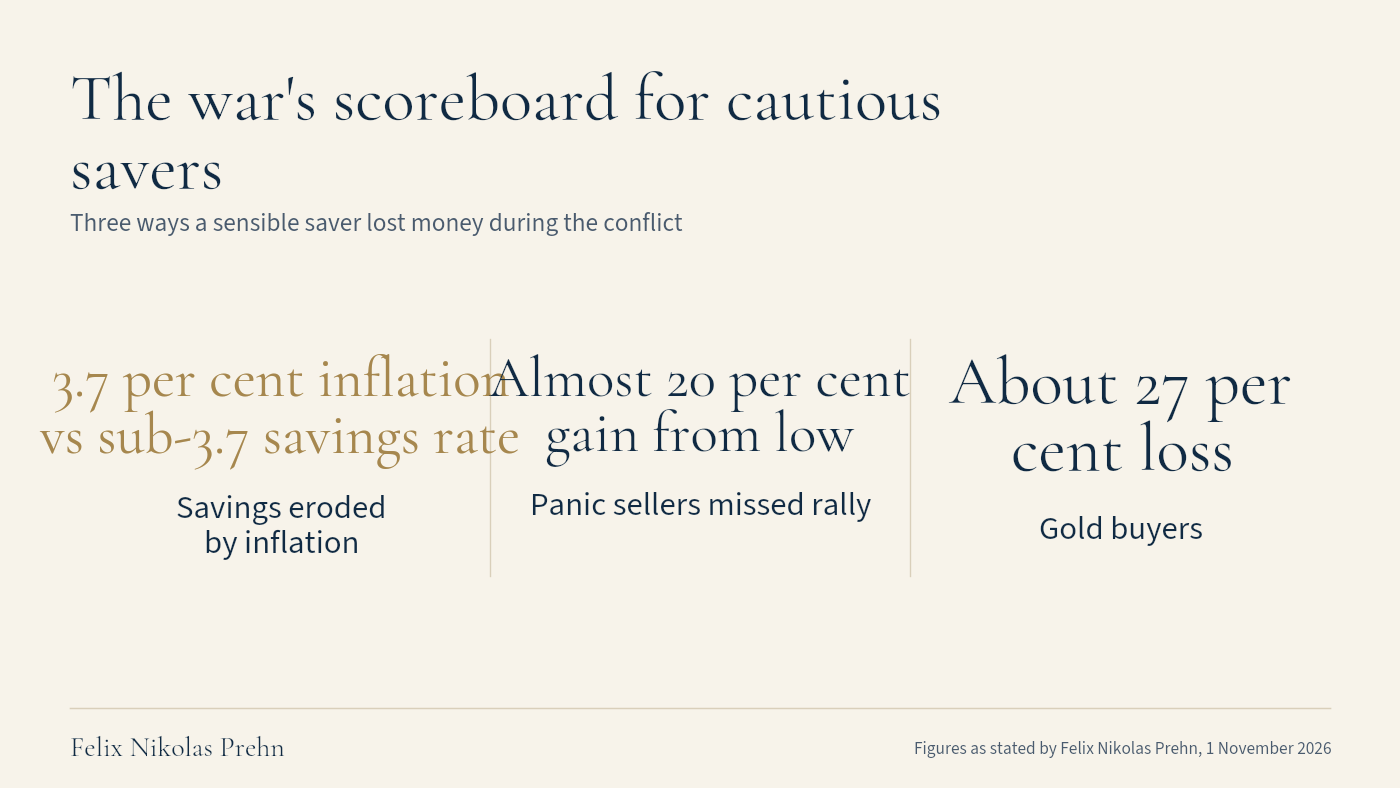
Keeping savings and cash felt safe, right? that the savings account is definitely paying less than 3.7 per cent. Uh therefore, they've actually lost money on that. Anybody who sold in the panic has missed out on a 20 per cent increase. So that's a significant loss. And anybody who bought gold at the beginning of the war is sitting on about a 27 per cent loss.
So most people who did the sensible thing lost three times. And those people were not foolish. They did what the headlines suggested. The trouble with taking your cues from the news is that by the time something is on the front page, the price is usually muted already. What protects you is knowing what tends to happen next before it's obvious to everybody and having a plan for both outcomes rather than saying, "Oh, there'll definitely be peace or war because I don't know that, you don't know that.
It doesn't really matter." And last week showed you what happens when the skilled money, the big money, changes it mind, changes its mind all at once.
On Friday, the S&P 500, the index that tracks America's 500 biggest listed companies at its worst day since June. The NASDAQ, which has packed the tech companies, dropped 3 per cent. Intel, uh, a star of this year, fell 29 per cent in a single day, its worst since 1974. didn't know they had chips in 1974, but yeah, pretty bad. The day before that, guess what? Alphabet lost 500 billion in a day.
It's a company that owns Google. Worst day ever. And then if you look at some of the other big losers out there, well, there's a lot of them, right? Reddit, worst day ever. Like really, really terrible drop there.
Intel is down 45 per cent on the year. Reddit down 36. Sand is down 34 per cent. Then I could go on and bore you to death, but you can see it on the chart. Meanwhile, the average S&P company is up 5 per cent.
Big oil hit record highs and this is called a rotation. Money leaving a group of stocks and moving into another. And think about what happens if oil falls back and interest rates come down because there is peace for a while. Think of the handful of giant American tech companies known as the Magnificant. Think of the handful of giant American tech companies known as the Magnificent 7, plus the other big winners of 2023 to 2025.
The money that hid in them goes looking for the next leaders. And the people who got hurt in that move aren't the pessimists because the pessimists are sitting in cash. They're the people still holding the old winners while the new leadership sets up somewhere else. And spotting that shift early is a skill, a skill you were never taught, which isn't your fault. But you can learn it.
And why wouldn't you want to learn it? Right? If it was easy, would you want to learn it? Right? Learn in the comments.
So, I'm going to teach you that great pivot. And I'll show you how to tell when leadership in the market is changing, how to check the stocks you already own. You can do that with me live and for free at greatpivot.org. and it is at the time to be decided. No, it's this coming Saturday. Uh links down below.
It'll tell you exactly when it is in your time zone. Grab yourself a free ticket to this. It's a live event. It's live on Zoom. Thousands of you will sign up and show up live, which I'm very excited for.
And then type pivot into the comments so that I know you're going to be there for. So, back to the puzzle from the start. How does a market go up 10 per cent while America is at war and oil is at crisis prices? crisis prices. That's a funny sentence, isn't it? That rhymes.
Now, at first, beginning of the year, the market did tank, right? Dropped almost 8 per cent. And that's when the panic selling kicked kicked in. Now, by the middle of April, 6 weeks into the war, guess what happened? Well, we we are hitting fresh highs.
And then what we did is we kind of consolidated a little bit and we've been grinding up higher and higher essentially for the rest of the year. So why did that happen?
Because AI companies kept making big profits. American shoppers kept spending and the wider e economy held up. The government's first estimate of growth for the third quarter came in at a 3.4 per cent GDP growth, which is pretty strong for a country distracted and at war. But it's really the first of these points that matters the most. A stock price is what?
It is a guess about the future and nothing but the future. When you buy a share, you're buying a slice of every bit of profit that the company will make in the years ahead. So price moves on what people expect, not on what's in today's paper. Markets tend to fall when a war starts and the outcome is very unclear. Now, once investors can see a way out, they start pricing in the end of the war while the fighting is still going on, by the way.
And we've been here before. In August 1990, Iraq invaded Kuwait. Oil prices more than doubled. The S&P fell about 20 per cent over the following months. And then on the first day of Operation Desert Storm in January 1991, when American planes started bombing Iraq, oil fell by about a third in a single session, and the S&P went up 3.7 per cent that day.
So from mid January to the victory parade in June, the market went up 20 per cent. So the turn came when the outcome became clear long before the war ended. And anyone waiting for a sign peace and a parade before they bought, well, they got there really, really, really late.
And the market has already rehearsed this. Literally, the markets rehearsed the end of the war back in June. And it gives us the greatest insight in what's likely to happen in my humble opinion. On June 15th, America and Iran agreed a temporary deal. this a sort of memorandum to hold fighting and open up the straight of Homus. This is that narrow sea lane where all the oil goes out and the market well it moved within hours.
The Nasdaq went up 3 per cent. The S&P went up about per cent and a half. The J Dow Jones index and the Russell both closed at record highs. Energy shares went the other way. They tanked because a cheaper oil price means lower profits for those companies that pump it out.
And oil, Bren crude, which is the global price for oil, it fell 28 per cent in that little period. It went below where it had been before the war started. The lunatics at Goldman Sachs cut it cut their oil for cars to $80 for the last three months of this year, which turns out to be well so far definitely not correct. But of course, it didn't last. On 8th July, attacks on shipping started again and the deal fell apart.
Brent went back through the roof. But that 3-week window, people forgot oil falling hard, smaller companies at records, energy stocks sliding. It's a preview of what peace does. And where are we right now? Well, since late September, an American outline for a deal has been passed to Thran through Qatar, which has been acting as a sort of go-between.
And on October 25th, the Qatari draft was presented and senior Iranian officials called it unacceptable. Now on Friday, the Qatari mediators flew back to T Iran and they kept trying. And just yesterday, Iran's foreign minister said there are no plans for meetings with American officials. Iran wants Washington to accept its conditions first, including lifting the blockade of its ports and dropping sanctions on its oil and gas. But there are sources that say they're indications of progress in the latest edit to the draft.
Marco Rubio said no decisions have been taken on new strikes, which is actually quite soft language for the present administration. But out on the water, things look worse. Oil traffic through Humus had recovered to about 80 per cent of normal in September, which is pretty good. And then what happened? 10 tankers were hit in a single week around the start of October and the flow collapsed again.
Oil prices are trading at about $112 as I'm recording this. So, this is a rumor with a pulse. Nothing confirmed yet. Nothing is signed. The last year lasted only 3 weeks.
But what matters for your money is what each outcome would do. So, you can be ready for both. And that starts with oil. That starts with inflation and interest rates. Inflation is at 3.7 per cent in the US right now officially.
Of course, numbers are you know massaged but it removes food and energy because you know you don't need food and energy and well the official explanation is that it jumps around too much. So core inflation is 2.6 per cent.
And that gap so that if you take 3.7 per cent minus 2.6 per cent you get what? Well, you get 1.1 per cent gap. That is mostly the wall, what you pay at the petrol pump, your heating bills. And it's also what worries the Fed. On Wednesday, yes, it kept its interest rates the same, but two of the I was going to say presidents, lunatics, you know what I mean?
The people running the Fed voted for another interest rate. Why? Because of that difference. the oil price and the market, the futures market is leaning towards another rate increase in December. So this next bit is my my own reading of it. This is not a forecast.
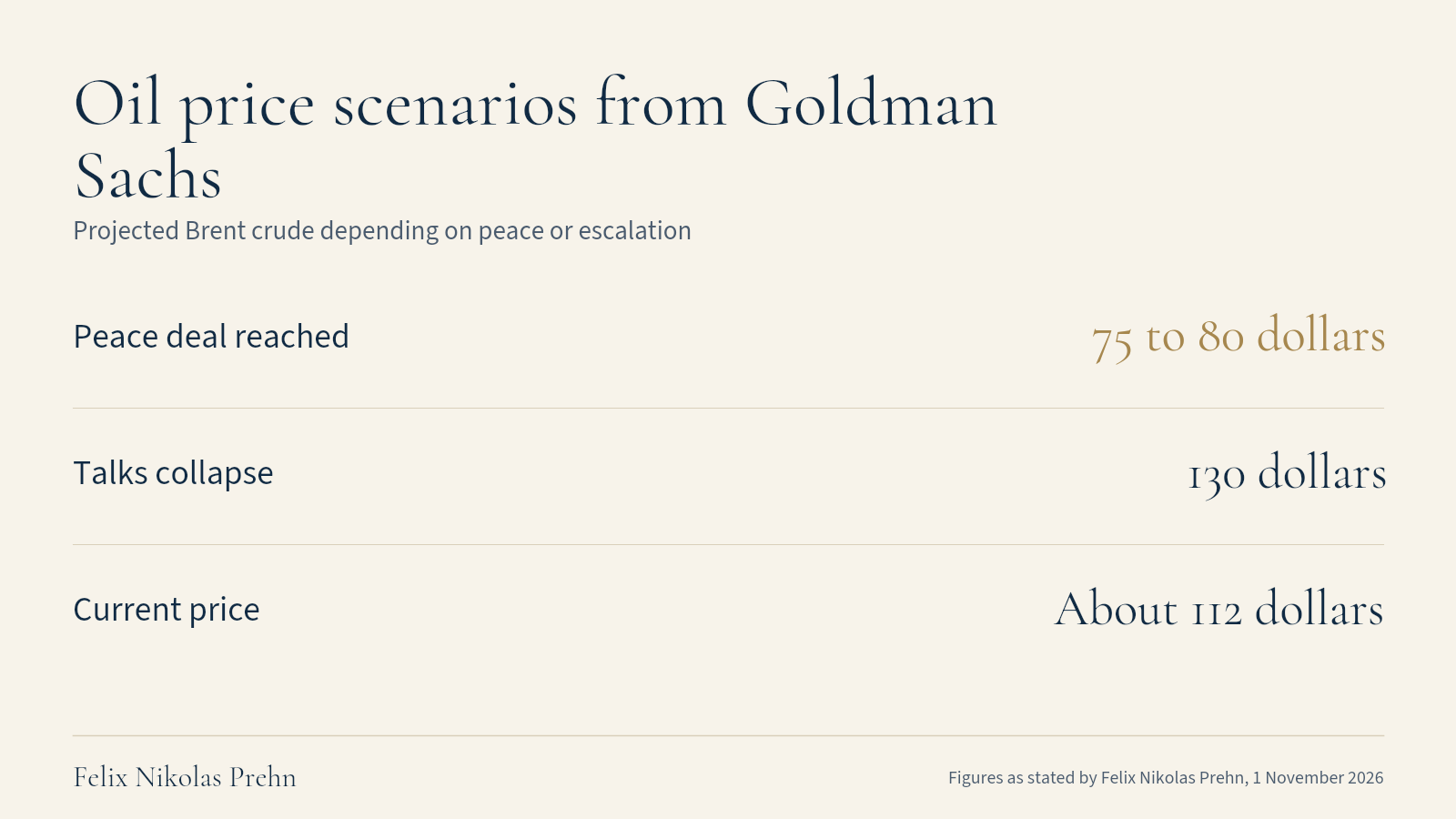
I haven't got a crystal ball. Winston keeps losing it. But suppose a deal is signed and oil flows again. If oil prices drift back to say $75 to $80, which is what Goldman Sachs is predicting if we get a peace deal, energy will stop pushing inflation up and it'll start pulling it down. you're going to get a really wonderful inflation number in the next reading. So within a few months, the main inflation number would likely move back towards that core figure of 2.6 per cent.
And what happens then? Well, the December rate increase just goes away. Mortgage rates will follow. The US government borrowing might actually start coming down. Mortgages drift back to 6 per cent.
So people have more money. And again, there's a precedent for this. Go back to the 1990 Gulf War. The Fed cut rates six times as the oil shock faded and the economy slowed. So, lower rates matter for share prices as well as for your mortgages.
When your savings account or your bond market pays you 5 per cent. Shares don't look that attractive, not as pretty. But when interest rates fall and money sitting in savings accounts or bonds pay you very little, you start looking for better returns. And by say you and I mean you know pension funds and and the big money. So they drift back into stocks.
Of course there's a flip side. If the talks collapse and HMU stays shut, oil stays high, inflation sticks and the December rate hike becomes likely. oil might go to 130 which is what Goldman Sachs is predicting while you know looking after the kittens and the fluffy children because that's obviously what they're really really there for right that's what where the financial world does isn't it benefit to humankind and that sort of thing mankind and all that anyway cheaper oil is the best way I can describe it is a tax cut for some and a pay cut for others so look at what happened the 15th of June this year when we thought there was going to be peace Right? So, this is not educational.
This is not advice. I'm not a financial adviser. I'm not telling you to run out and buy these names. I'm saying study this. It's not a shopping.
Smaller companies are the obvious place to look. Many of them borrow at interest rates that move with the market. So, higher rates bite them hardest. They also sell mostly inside of America where fuel and borrowing costs land on their own customs. The Russell 2000 is the index that tracks them and it closed at a record on the deal day here in the middle of June and then it's pulled back pretty significantly since.
But there are a bunch more of these index funds and you can you can pull them all up in the in the Winston app. I'll put a link down below if you want to get some decent data on index funds as well as stocks. Do you click into funds actually you can just search for them. So say here those two that I'm just putting on the screen there say Jets which is US global jets ETF it'll show you ah how's done and you can see how it did in the middle of June it had a nice little rally there it's pulled back since but you can also see what it owns you know airlines essentially um and and and all that who would benefit right so write these tickets down and then put them all into the winap you can build a watch list you can get some all lots and so IYT is another one that's for truckers, railways, delivery companies, so transport globally. And again, look up what they did between 15th of June and and 8th of July.
Um, but there's also households, house builders and the suppliers, right? ITB and XHP are some more index funds just generally eating out, travel, new cars, online shopping, all that stuff. XLY is a good good index fund that tracks that. Um, and then energy. Well, look at what energy has done.
Energy in the middle of June, well, it tanked and it's had a massive, beautiful rally. So again, think about that if you are in energy or if the deal falls apart. What happens to energy? Because energy is a beautiful little insurance policy for these things. And I actually made quite a bit of money on energy before the war.
Not because I knew about it, but because I could see big money rotating into it. And I didn't really ask too many questions. I just bought it at the same time. So really what I want you to think con think consider consider and think and that's a new word isn't it? Con think we'll keep that is is cheap oil and expensive oil which of my stocks do better in each scenario because you are essentially making a bet if your stock gets hit or benefits by one of those.
There are some sectors that are very very unaffected by it which is kind of an interesting world and again I put that into the app as well. There is I call it the inflation shield and you can put in your portfolio that'll ask you to do that when you when you go in there and you can see in green the companies that benefit from inflation for high oil prices, oil and gas giants, you know, medicine insurers and so on. And then down here the companies that really really don't like oil high oil prices, car makers, computer chips and so on. But then you also have the middle which is kind of interesting which is actually where you might want to be if you don't have a view on this and it'll just tell you exactly where you are where you are um positioned. So again play play around with that down below.
Now let's just talk about gold for a second before we wrap this up. And people think it's done the opposite of it was meant to do, but it's actually done exactly what it was supposed to do. Gold's dropped about 13 per cent. And everyone's asking these questions why it hasn't moved. It's down about 27 per cent since the war began.
And everyone's telling you central banks are the biggest buyers, which is true. Again, I've got the data in here and I can see, you know, Poland, Turkey, China, Russia, East Pakistan, so on. They're buying mostly Yeah. buying a ton of gold. Now, if they all the central banks are buying, how's it possible it's selling? Well, the official figures are that Turkey sold some, Russia sold some, Jordan sold some, but most of the Gulf states don't report their gold in the buys and sells.
So, we can only deduce from the misery that's hit them, which is we're not selling any gold and gas, we're not selling any oil and gas, and therefore we haven't got any revenue. But we do have this great big shiny pile of gold which we built up for a rainy day. And guess what? It's a rainy day. Well, actually rainy day isn't a very rainy day probably be a good thing in the Middle East, but you get the idea.
So when oil shoots up, the oil importers like Turkey see their currencies fall and the central banks sell gold to prop up their currency. And that's the bit that's public. The bit that isn't public is what the gold states have done. But given what we're seeing in oil in gas prices and in and in oil prices and the lack of exports from that region and how much gold has dropped, I think it's pretty logical to conclude that central banks in the Middle East have been dumping gold reserves. That's the Gulf countries, including Iran, of course, because they got to fund their existence.
And look, gold can fall further. Nobody nobody has a a bottom line here how low it can drop. But if you understand why it fell and if you understand that's actually a feature then because it's being the rainy day fund that it was meant to be then gold is actually doing exactly what it was meant to do. And this isn't a surprising thing. And I said at the beginning of the year the beginning of every war gold drops and people are like what are you talking about?
Well why does it drop? Oil prices go up, inflation goes up, interest rates goes up, the dollar goes up. And what does that mean? Well, when higher interest rates are paid in the bond market, you sell gold because you want to get the higher interest rate. All the foreign buggers out there who are earning, you know, euros and yen and and and other monkey currencies, they are now having to pay more of their own monkey currency to buy gold because gold is denominated in dollars.
So there are many many reasons why gold is meant to fall in a war.
It's just people don't really get taught this. But ultimately you don't need to guess the outcome of this war to be ready for it. Right? So we've got deal signed. Brilliant.
It means look at what happened in June. Smaller companies, airlines, transport, house builders will do well. The talks collapse. Oil prices might go to 130. Energy will probably do well.
Interest rates will go higher. that'll continue hitting gold probably as a as a as a war will continue to as well. So look at every one of your major holdings and see how would it be impacted by that and again the Winston app will help you with that. So we don't panic, we just have a plan for all outcomes and then we act accordingly. But in both scenarios we're going to continue to see money flow out of the winners so far into the new winners. And unless you know where to look and how to look, I think you're going to be reading about it in the news afterwards, which is going to feel what frustrating.
So come and join me on Saturday at the Great Pivot, greatpivot.org, and I will teach you for two hours live how to read this situation, how to prepare for it. And my goal is not to give you a long stock list that you can then run out and buy. My goal is to give you the skills so you can make your own list for this and for the next pivot and for every pivot thereafter. So don't miss out on the big beautiful opportunity that comes out of market pivots. I absolutely love them because it's a really really nice way to find new opportunities.
So great pivot.org link is down in the description and if you're going to join us there write pivot in the comments and if you got some value out of this share this with somebody who might get some value out of it too. I wish you all the best. >> Right now, I think we're going through some sort of weird phase transition. And normally when you get bad economic news or you get bad jobs data that people are going to fly to safety into the bond.