Transcript
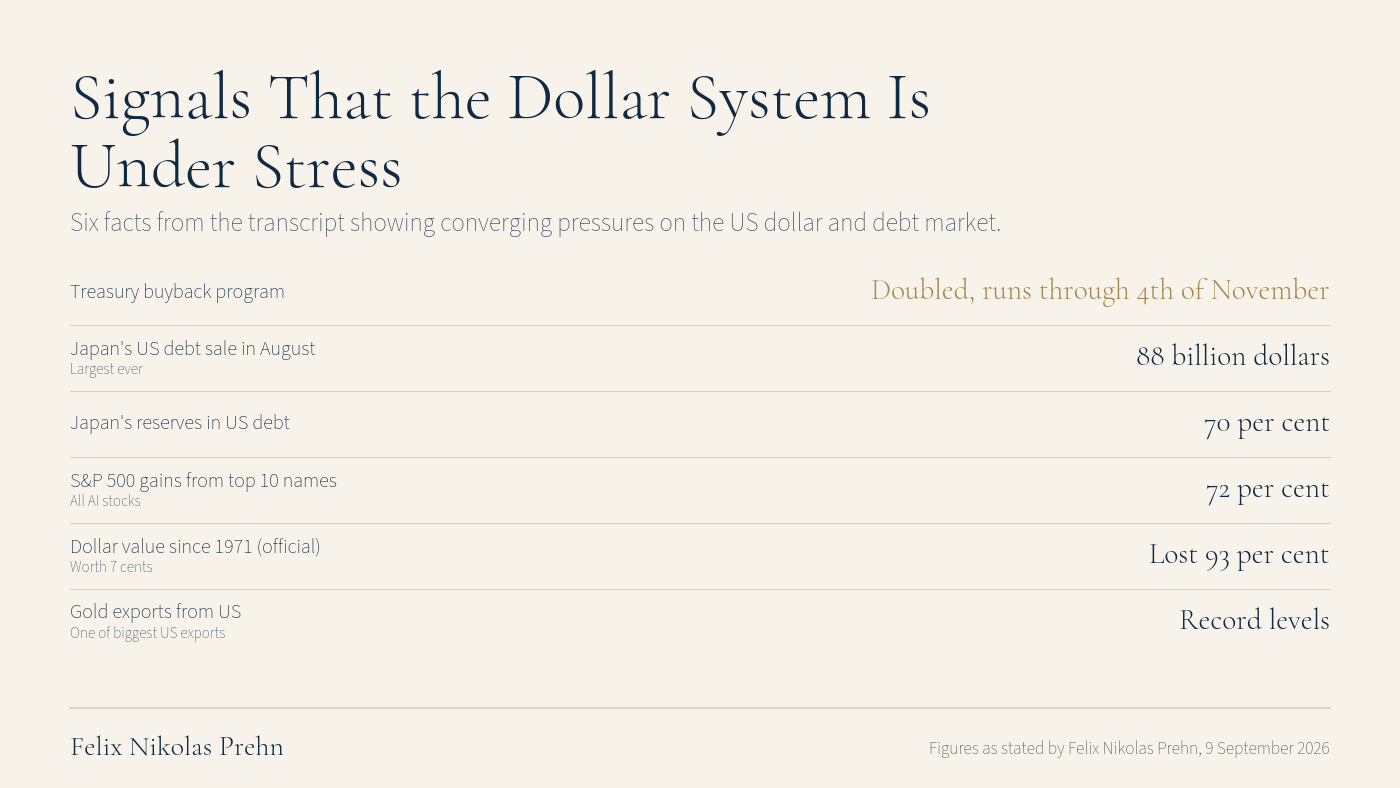
In just a couple of days, the US government is going to do something I would honestly rather well maybe even look too closely at it. It's going to start buying back its own debt with money it prints that same morning and then it doubles that programme and it's going to keep going for two months straight and then probably till eternity. And this is going to happen all the way through until 4th of November. Coincidence around midterms perhaps. But they call it the buyback, which sounds kind of like a what a healthy company does, right?
When it's flushed with cash, but it is not that. Now, Wall Street already knows about it. They've got their own name for it. They call it liquidity support or um end ofear bonus support. It's going to be good for, you know, the Ferrari dealers and the and the and the mistress suppliers, but it mostly means it's good for them.
And it's something like 95 per cent of normal investors have absolutely no idea about. So, let's fix that over the next few minutes. Uh, I hope that it's not too windy here in Storm, which is why I'm slightly hiding in the shade.
Uh, because I think this is important and mainstream media doesn't seem to be covering it. What they're also not telling you is at the same time the printer is warming up at home. The gold is leaving, physically leaving out of US vaults onto planes out of the United States. Gold is now one of the biggest single things America exports. I literally had to check that fact three times, but it's true.
Just think about that. The country that prints the world's money is quietly selling its actual gold out of the door, shipping it out of the door.
To me, that's one of the most unsettling things I've seen all year or maybe in the last couple of years. And on top of that, it isn't just the US that's running the printer. Japan, which has been the biggest loyal buyer of American debt on the planet for decades. You know, the customer who always shows up, well, they just sold $90 billion of American debt in a single month. The central bank is shrinking its bond pile faster than it ever ever has in history.
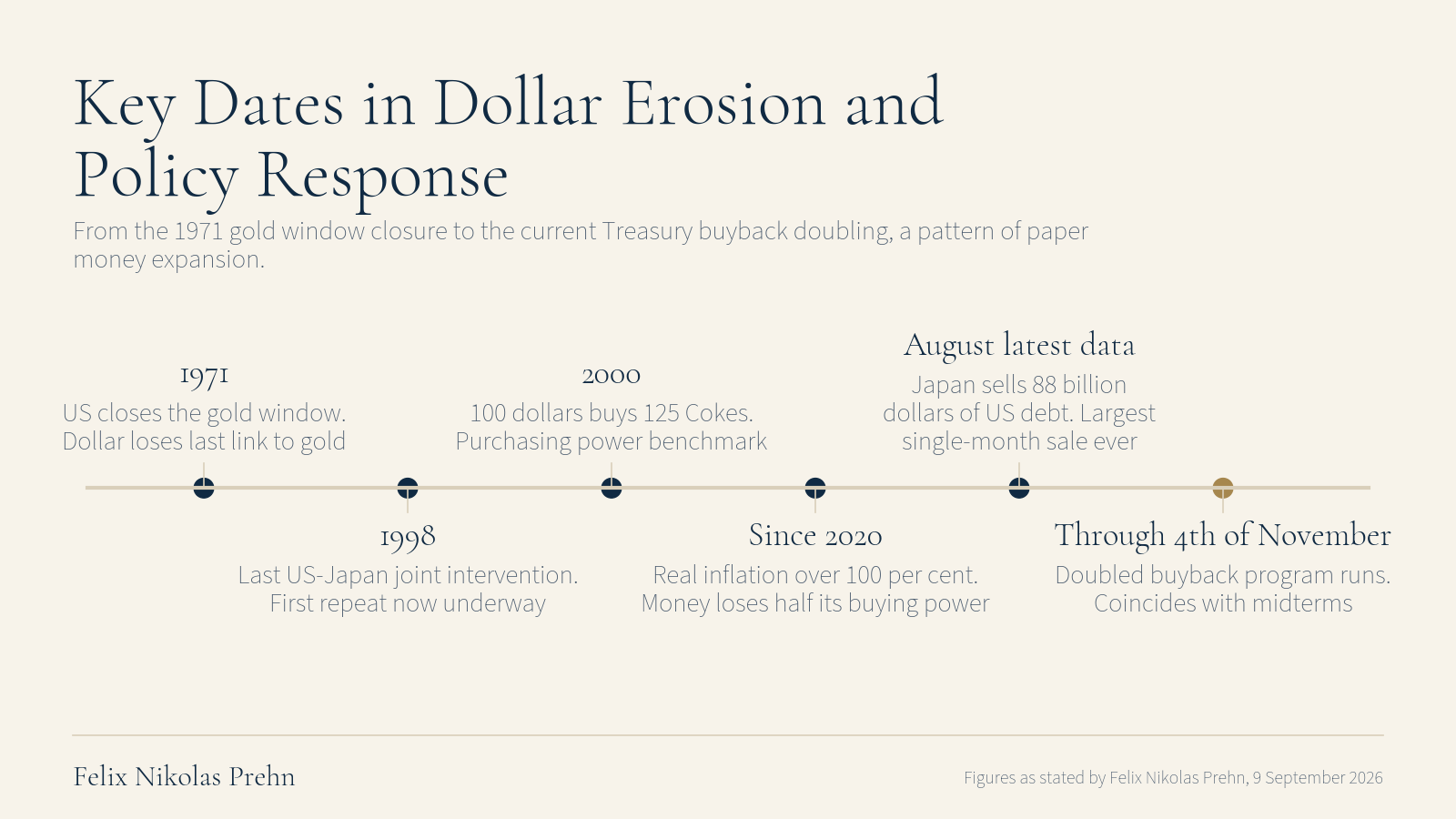
And of course, we've talked previously about if you watching me before about the intervention the US and Japan started together. That's the first time they did that since 1998. So, the biggest buy of American debt is selling. American government is quietly stepping in to buy the debt because nobody else wants it with money that didn't exist before. And what that does to you and your money is really what this video is going to be about.
You're wondering who the heck I am. My name is Felix Prin. I'm travelling. Uh, I used to be an investment banker and then I got out and about seven years ago we started teaching normal people the stuff that W stupid but honestly rather keep to themselves and my mentors have taught about 25,000 people the last seven years. And there's really only one thing I want you to know about me.
Um, nobody ever pays me to make these. I take no sponsors, no affiliates. There are no links down there for anything. And I do that on purpose because it means I get to live a free life and I can say whatever the heck I want. I'm also not political.
I don't care whether you love the Trump or you loathe the Trump. Really, it's got nothing to do with it. We just want to understand here for the next 20 minutes. What it does to your money, what the politicians have decided to do because most people only work that out once it already hits their groceries bills and their rent and then and then all of that and the fact that their savings are no longer worth what they should be and the fact that their salary is no longer worth what they should be. And I want to make sure that isn't going to be you.
That's really what this is about. So, I've also taken the whole boring work and read everything and checked all the dates and all the facts and triple checked them and everything else and put it into a plain English report for you. So, you can download that. It's completely free. No strings attached.
Um, just go to fedexfren.org/flood because that's what's happening to money. They're going to flood the market with money. Grab it, read alongside the video or read it afterwards. And I think that alone is going to put your head up 99 per cent of people, right? Links in the description down below.
So, let me show you why I'm genuinely worried about this. Because you've lived to the warm-up, and most people never really named it what it was. Um, and I've said this on on record, and I'll say it again.
Since co, in my humble opinion, real world inflation, the honest version, not the official government number. The news tells you it's been well over 100 per cent. That's inflation in my world. Now, if you add up what that's cost you since 2020, you know, all the stuff you're buying, your groceries and and all those things, um, a lot of that is just doubled or more, right? Which is very, very significant.
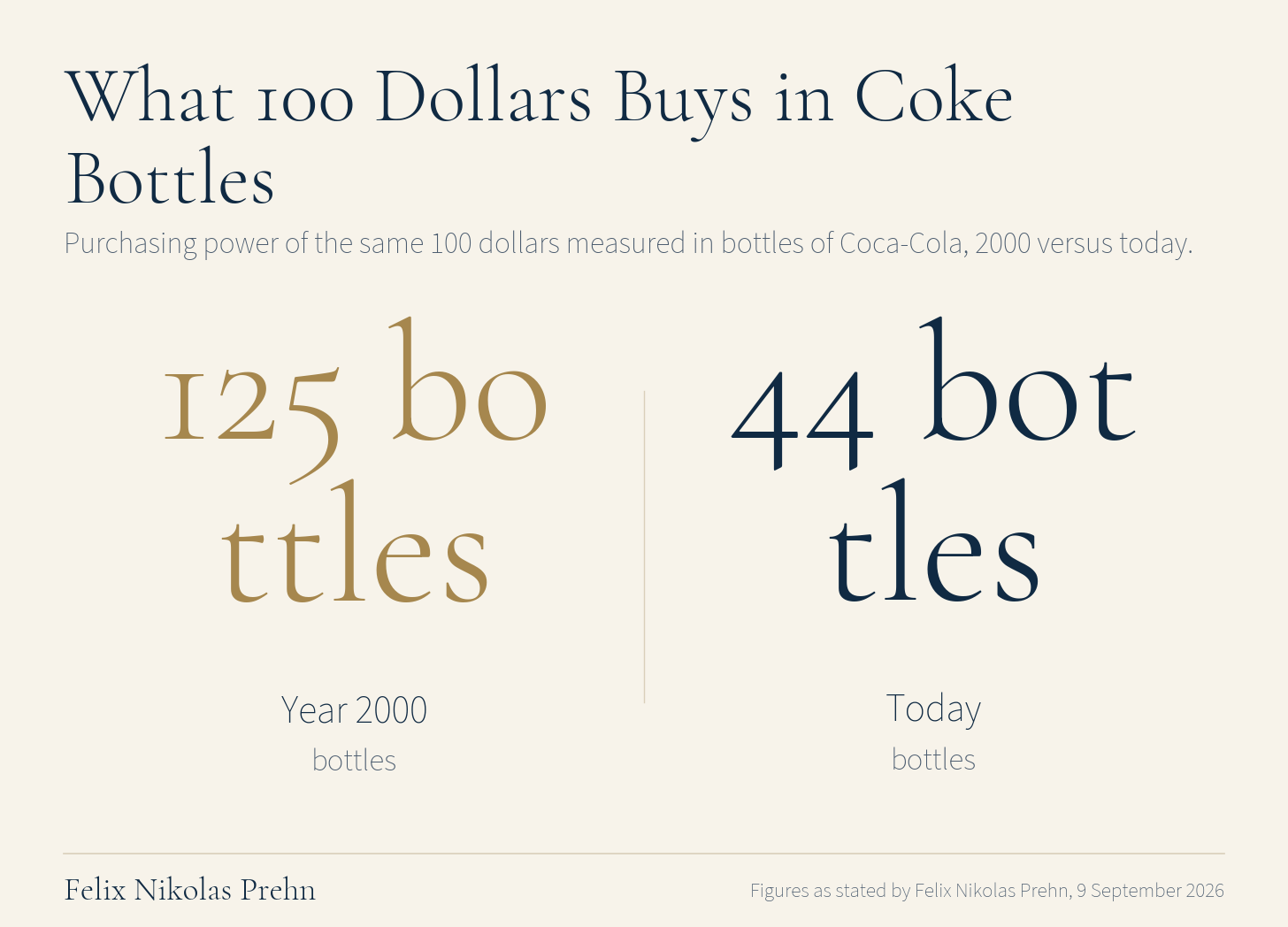
It means your money is lost half its buying power in just 5 years or the government selling you, oh no, it won't be inflationary. You just cause nonsense. And this isn't new. It's just moving faster now. So, here's the simple picture. $100 back in 2000 bought you 125 bottles of Coke.
Today, that same $100 gets you 44 bottles of Coke. Crazy, right? Now, I'm not suggesting you should run out and buy Coca-Cola. It is a poisonous substance, but it's a pretty brilliant stock. I like the company.
So, you got the same $100, same Coke. The bottle didn't get more valuable. Your money just lost significant amount of money.
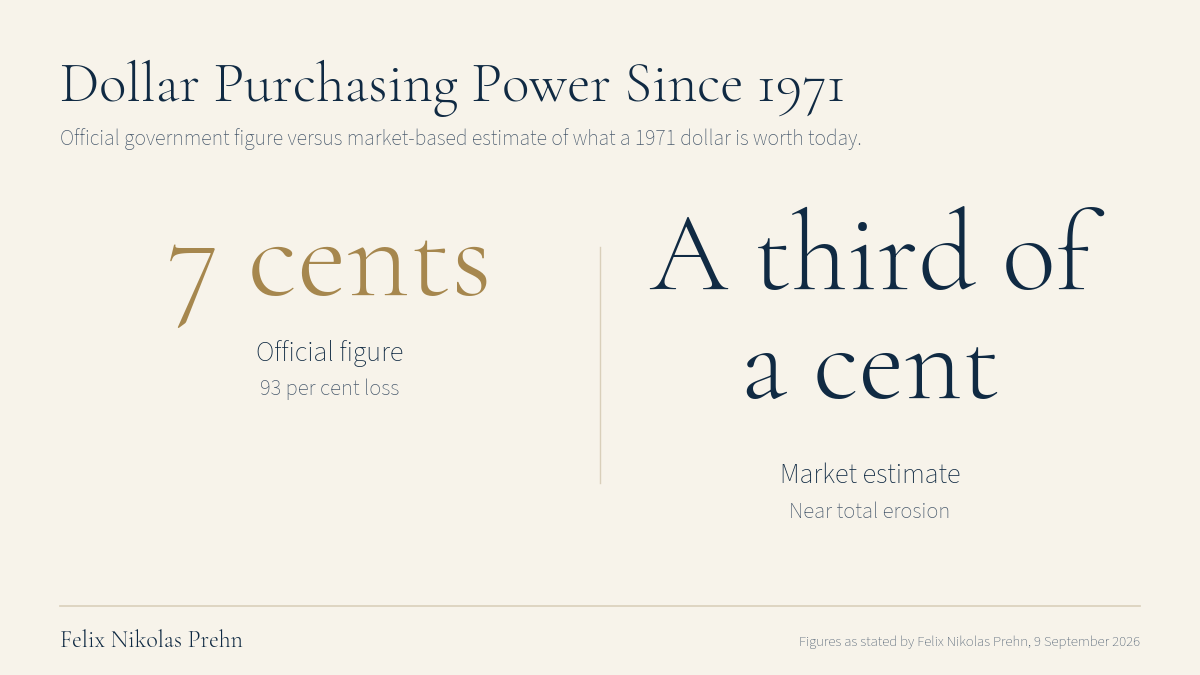
And if you zoom out a bit further, you go back to 1971, your money's lost something like 93 per cent of its value. So your dollar of 1971 is worth 7 cents today. That's the official government figure. If I compare it to the market, it's about a third of a cent. So a 100 cents became a third of a cent, which is just insane, right?
Say hold on to that because that's kind of the whole point of what we talking about this. They're about to do something that is basically doubling the money printing. So everything that we felt since CO, they're lining up to do it again.
But they're going to do it a little harder, a little faster, a little bigger. And if you understand that, I think you can benefit from this because a lot of people got a lot richer since CO, but most people got a lot poorer. So let's make sure you're on the right side of that. And this isn't a conspiracy theory. The US Treasury has said this out loud.
It's a bit quiet the way they do it. They don't sort of massively talk about it because it's a bit embarrassing, but they basically said, "We're doubling the amount of longdated debt we're going to buy back." and we're going to run it for two months and of course then it'll magically stop and and everything will be fine and inflation disappear. But what does it mean? Well, they're buying back long bonds, which just means you go in the market and you take the debt off everyone's hands and then how do you do that? Well, it's got cash do you use it to do that?
Well, it comes from where it always comes from. Comes from the magic money printer. You just create it. And on top of that, the Fed's about to meet and the market was convinced that this new Fed share was going to cut rates, right? Well, if you look at what the market's expecting right now, the bond market isn't really believing.
They think rates are actually going to go up towards 4 per cent. That two line is a chart. I'll sort of put on the screen for you. Um, two lines or they thought at the start of the year versus what they're thinking right now. And they're going in opposite directions.
So, that's really odd, right? The government's printing money to buy its own debt, which is about the loosest thing you can do in terms of financial policy. And at the same time, the market thinks the Fed's going to increase rates, which is like the opposite is to how you tighten the market. So those two things don't normally, you know, sit at the same table. It's kind of like if you're driving and you're putting both feet, you know, one on the accelerator, one on the brake, that's pretty much what the government's doing right now, which is just madness.
But what really annoys me is that they're basically trying to hide it from you. Um, it's not an announcement. And there isn't a great big speech about it. It's just there is a line in a treasury refunding statement uh in the most boring language that humans can produce. So you basically go, you know, um but really what it is is if you buy back your own debt as a government, the government becomes a bigger and bigger customer of itself and then the only reliable buyer left for your IUs, which is really what debt is, is you.
You're not really a healthy borrower anymore, right? You're kind of on life support. And I get it. You've heard about money printing before. The story is usually America prints money, the dollar drops.
Buy gold. Bye-bye. Right. But this time, the rest of the world is actually part of the picture. And they are a step ahead.
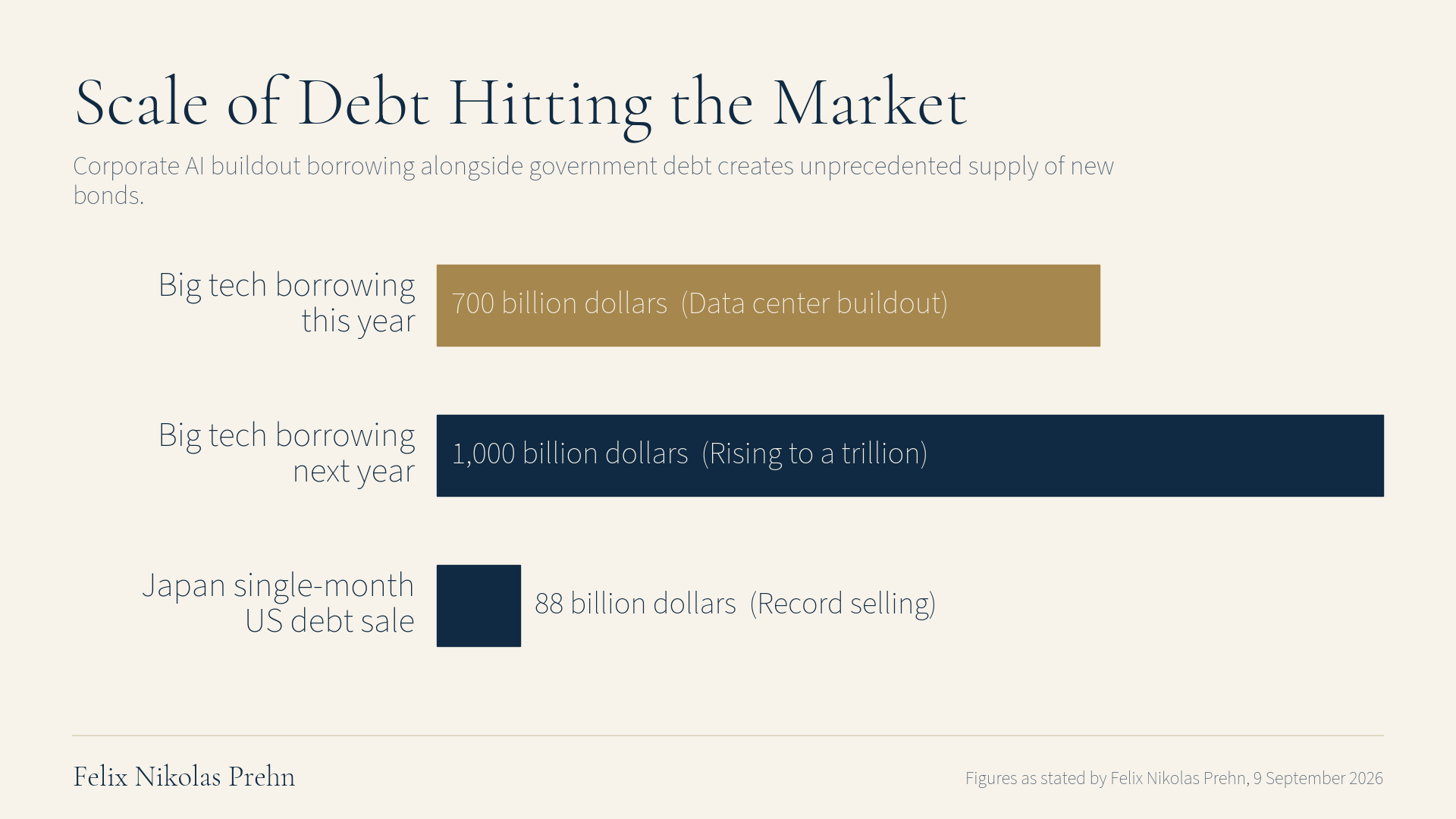
Japan, the most loyal buyer of American debt on the planet, right? In August, the lightest data we have, Japanese investors holdings of US dollars dropped by 88 billion. That's not a little trim. That is literally them backing out. the biggest selling they've ever done of US debt. And I again I'll put a chart on the screen here for you.
So why does it matter? Why does it matter to you and your pension your retirement? Because 70 per cent of Japan's reserves sits in US debt. So when the biggest foreign holder of your debt starts selling, someone's got to buy it off them, right? And if they don't, the price of that debt falls.
And I know it's confusing, but it means if interest rates go up for everybody, well, it's not just your mortgage that gets hit and your credit card and your car loans and everything else, but also every factory that gets built, every every industrial investment, every bit of infrastructure, everything is financed in the US. And cost of building something depends on the interest rate. So basically, you go into a screeching, horrible, burning recession if your interest rates go up, which is why Trump's so keen for them to come down. So, Japanese bond charts matter to you because they don't stay in Japan. For many years, the world borrowed these cheap yen and then they parked that money in US markets and quite a lot of that was in the stocks that you own and it's been propping up the US stock market.
When Japan is forced to sell its debt, its bonds, it's US bond because they're defending their own currency. the money gets brought back home to Japan and the cheap fuel that's been holding up the US market, well, it's no longer there and it shows up as pressure on US interest rates. It shows up in your mortgage, your car and as I said before and so a chart in Tokyo ends up as a number on your portfolio statement and that's an important thing to understand how it piles together. So most of you watching have your money in one place right now, right? And it's the one place this whole story goes after. Unfortunately, well, the last 40 years, the safe thing, the gospel has been put your money into an index fund, buy the S&P 500, and don't think about it.
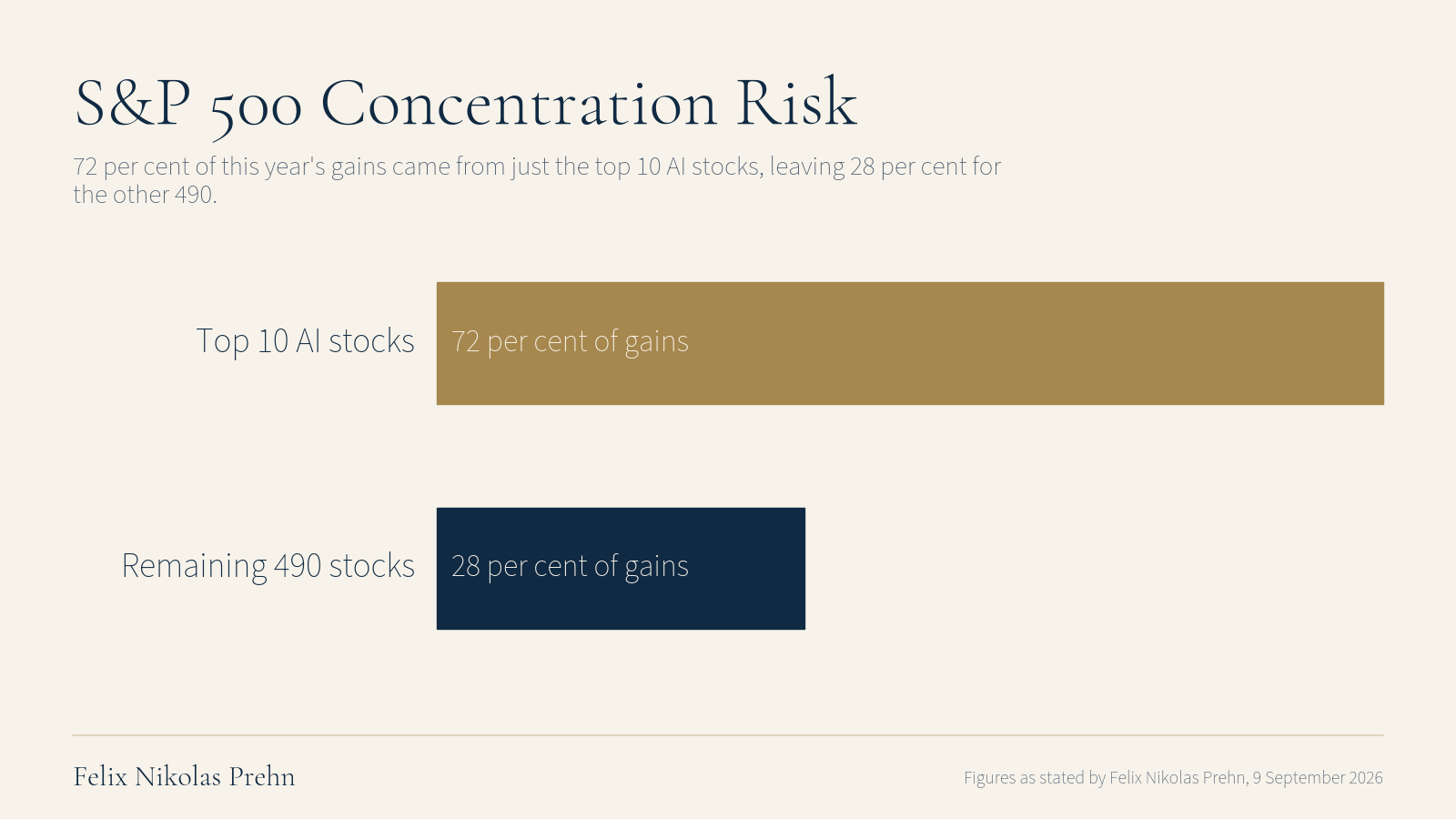
It's been very, very profitable for Vanguard and many other large index fund companies. And the story was that it's diversified, it's America, it always goes up, right? Except pretty much everything I'm showing you today points well straight at that idea. Because that index fund that you think is 500 companies, 72 per cent of that, 72 per cent of all your gains this year came from just the top 10 names. And those top 10 names are the most expensive, the most crowded stocks any stock market has ever seen in the history.
And they're all AI names. So you actually not diversified in your portfolio. You just have a great big chunk of your money about 72 per cent of it riding on the AI wave. And the two calmst most respected investors alive the ones who are supposed to love a boring index fund. Well, they sus Buffett solders and the most bullish guys on Wall Street are basically warning exactly about this and they are edging towards the door.
But most retail investors are either panicking and going into cash, which is literally the worst thing you can do. You're guaranteed to lose money. Think about those Coke prices I showed you earlier. Um, or they're sitting in an index fund, which is definitely not what they think it is. So, what I'm going to do, and I get off this lovely little island, and the Wi-Fi is a little better, on Saturday, I'm going to run for you a free live training.
It's the first time we've done it, and it's called the index fund trap. It's literally why the S&P 500 is lying to you. We're going to do it live. There'll be a real Q&A. You can ask me anything and I'll show you how to check your concentration.
I'll show you what the skilled money is doing instead. Because that's what Wall Street is. They're not smarter than you. They're not smart money. It's a that's what they'd like you to think, but they're just skilled.
They've been taught this. It's completely free. No strings attached. Um, all you got to do is show up for yourself. And I'll put a link in the description down below.
I think it's indexfund.com or something like that. Anyway, there's a link down below in the description. Click on that. Grab yourself a seat and then come back here and write thrive in the comments because that's really what I want you guys to do. I want you to thrive from this situation because I tell you the wealthy are going to make money from this money printing but most people will suffer from it.
I want to make sure you're on the right side of that because you know one's going to be fun, one's going to be be painful. So let's make the the whole mechanism here really really simple. Um because they're counting on you to find it so boring you won't read it. The government spends far more than it takes in, right? So they issue debt IUS.
Step two is normally the world buys those IUs, but we've just watched the world's most loyal buyer, Japan, selling there.
So there's a gap here. There's more debt than their willing buyers. So step F comes in, and that's rather than let the interest rates go higher to bring in more buyers. That's normally what a free market would do, right? You just have to pay more interest to attract more people.
Um, but it would blow up the government's budget even more. So what do they do? The printer fills the gap. new money is created to buy the debt that nobody else wants. And that's what they call a buyback, which of course is a is a is a crime against the the English language. And the speed of that is doubling.
So every new dollar that gets created, what does it where does it come from? Well, it doesn't create dollars on its own. It comes out of the dollars that you already hold. And nobody tells you that. Your balance won't move.
The number in your account is the same, but it's just worth less. It just buys less. And that's the trick. It is a tax that you never voted for. You never seen a printed statement.
This is a hidden tax. And on top of the government's borrowing, you've got this AI built out, right?
The big tech names are about to bas borrow something like a trillion dollar to build data centres next year. And they're doing about 700 billion this year. Next year is going to be a trillion dollars. And that is an ocean of new corporate debt hitting the market. At the exact same time, the government is flooding the same market with its own debt.
So more paper, more paper, more paper. All chasing the same debt buyers who are already going, "No, no, no. We got enough. We don't need anymore." And therefore the printer is going to have to print a little faster. So just picture the scale of that.
A trillion plus debt of of corporate borrowing on top of the government borrowing, you know, two trillion plus. So every single one of those bonds, everything on one of those bond dollars needs a buyer. And the buyer pool is actually shrinking, not growing because of countries like Japan pulling back. So the only thing big enough to soak it all up is the money printer. So the AI boom that everyone's celebrating and that money printing everyone's ignoring are not two stories.
They're literally one story. The buildout is being financed by the same money printer that's eating your savings. So you're paying for the data print these data printing. Yeah, you're paying for the data centres. Uh if I can get a straight sentence out, right?
And that's the point where I go and look at what people with real access are actually doing rather than what they're saying because you know talk is cheap but disclosure forms are are are a legal reality. So in the in the Winston app which is something that I built for myself and I share with you guys.
You can pull this stuff up and I can see what the politicians are actually doing. The president has just filed a huge batch of 600 trades and what's he doing? He's leaning into boring stocks. Berkshire, Visa, Mastercard, Home Deo, right? Even a literally a rubbish company.
Republic services that collect your garbage. Why? Because these companies, you're not going to stop producing garbage, are you? I mean, you know, your household's going to create a certain amount of rubbish and it's going to have to get collected. You're going to have to pay for that.
So, that's where he's moving. And he's moving out of the AI stocks. Isn't that kind of crazy? Uh, so you want to see that, you want to watch that, you get alerts of what those guys are doing and you know Pelosi and all the other lunatics, um, there's a link down below is a free trial if you want to check that out. Don't have to cancel it if you don't like it.
But the people closest to information are not betting on cash holding value. They're not betting on the S&P holding value, okay? And let's get to the bit that I actually really wanted to cover here. Forget about what anybody says about gold for a minute. Watch what they do with it.
And what they're doing is pulling their physical gold home. The Netherlands moved their home. France, Germany, my um you know, fatherland. Uh one country after another is bringing their metal back, wanting it in their own vaults on their own soil close up to where they can control it. And that's an expensive thing to do.
Either you got to fly back all the gold or you got to sell it. You got to buy it. You're going to you're going to pay a margin to the lunatics on the on the gold exchanges. And the president gets it. He literally posted on his ex account.
The golden rule, he who has the gold makes the rules. And gold is literally one of the biggest things America exports. Physical gold at record levels. Used to be a few per cent of US exports to now a serious size slice of it. Again, we'll put that chart on the screen, I hope.
Um, crazy stuff. So, the country that prints the world's money is shipping its gold out the door at a record pace. Gold is the one form of money that you can't print, you can't fake, you can't, you know, double it through till midterms.
Um, and it reminds me of because I'm someone who watches patterns. That's really all I do. I've seen this film before. It happened in 1971. The US quietly slammed the gold window shut.
It cut the dollars last link to gold because too many countries were turning up wanting to get their gold out of the US. And of course, that was a temporary thing, right? It's been 55 years. It's a bit like the next two months of money printing will also be temporary. I think in 55 years, we still be printing money.
So, we have the same pressure then as now. too much paper money chasing not enough real money and a government that would rather change the rules than change its spending because that'll be unpopular. And every single time this has happened in history, no exceptions, the people holding the paper got poorer. The people holding the real thing, well, they got protected. So, I'm not trying to be dramatic. I'm not trying to, you know, tell you put all your money into gold.
I'm not a financial adviser. Uh, and I definitely wouldn't put all my money into one asset class. Uh, but you remember that Coke chart, right? 125 bottles you could buy and now you just buy 44 bottles. That's the other half of it.
Every bit of value the dollar lost in those years, gold actually kept it. Good stocks also kept them, right? And we talk a little bit more about what good stocks are if you join me on Saturday and how we can find those and so on. So this is a binary event. The skilled people get richer.
It's kind of a guarantee. And the non-skilled people get poorer, which is definitely a guarantee. So my goal is never to scare you. I want to leave you here not sitting in the dark going, "Oh my god." But um while I'm not a financial adviser and why Winston is not travelling with me, so you know, you got to be better careful what I'm about to say.
You got to fact check it. Win's my adopted golden retriever if you didn't know. He does all the hard thinking usually around here. What I learned from my Wall Street mentors, what they drill into me is you got to make your own call. First thing, don't panic.
Dump your US stocks. This gets misread all the time, right? The world's backing away from the dollar, so sell everything American. No, no, no, no, no. Foreigners are in a record amount of US stocks, right?
Crazy amount. The world isn't abandoning America. It is rebalancing up the edges slowly. Panic selling is like it's a really bad idea. So, what you actually do is you own things that can't be printed.
You own businesses with real pricing power like the tour booths like what the uh you know, El President is buying. Um the companies that can put up their prices when everything gets more expensive. Coca-Cola, yeah, can probably put up their prices. People are addicted to that sugary stuff, right? Um, and yes, I personally believe a sensible slice of gold um can can be a good thing to do.
And again, never do that because some guy on YouTube tells you about it. You got to come to your own conclusions on that. But the point is not to bet the farm on a crash. The point is to not be the person holding the thing that's quietly melting and calling it safe, which is cash. Um, and we talk about the S&P in a bit more detail on the weekend if you join me.
Links down below. So, let's bring the whole thing um home and then I'm going to run for breakfast. Uh the government printing to buy its own debt is just it's a Ponzi scheme. The most loyal buyer of that debt is selling.
Gold is literally being flown out of the United States at a record speed that we've never seen. And they all point in the same uncomfortable direction that if you just put your money into an index fund, which is a safe thing to do, and I'm not saying you should sell your index fund, please, if you're not invested, an index fund is a million times better than not being an index fund, but you need to understand what you actually own. 72 per cent of your gains all year have come from just the top 10 companies, and they are all AI companies. So, you need to understand your risk exposure to what's going on right now. And I think for most people it's probably higher than they'd like it to be.
So the government is here trying to like keep this thing floating. Um and it's important to understand that I'm not trying to be a doom guy here. I don't know if next month or next year the markets crash or any of that, but what history is tell tells me is that risk is getting significantly higher. And I think most people have no idea the amount of risk they're presently sitting in. And that's really what Saturday is for.
So, join me on that free live training, the index fund trap, why the S&P 500 is lying to you. It' be live. It' be real. Uh, you can ask me Q&A, you know, questions. I'll provide the answers.
I hope. Um, completely free. Show up for yourself to actually come out of this thriving because I can tell you the skilled money is going to come out of this thriving. There'll be more uh Lamborghinis and Bugattis and, you know, the mansions and the Hamptons and so on because if you understand this, I think you will make better decisions. And that's really the the whole the whole premise of this this community here.
So click on the link in the description. If you got some value out of this, share it with somebody else. And I hope to see you on Saturday. Wish you all the best. >> Right now, I think we're going through some sort of weird phase transition. And normally when you get bad economic news or you get bad jobs data that people are going to fly to safety into the bond.