Transcript
The Fed just did the one thing it hadn't done since 2023. It raised interest rates. And I know interest rates sounds like, you know, dry central bank nonsense and you can safely scroll past this, but don't because this one decision is going to reach into your bank account, your portfolio, and it's quietly going to take a slice of everything you have saved in your life. And what makes me mad is this. They're raising interest rates into an oil shock.
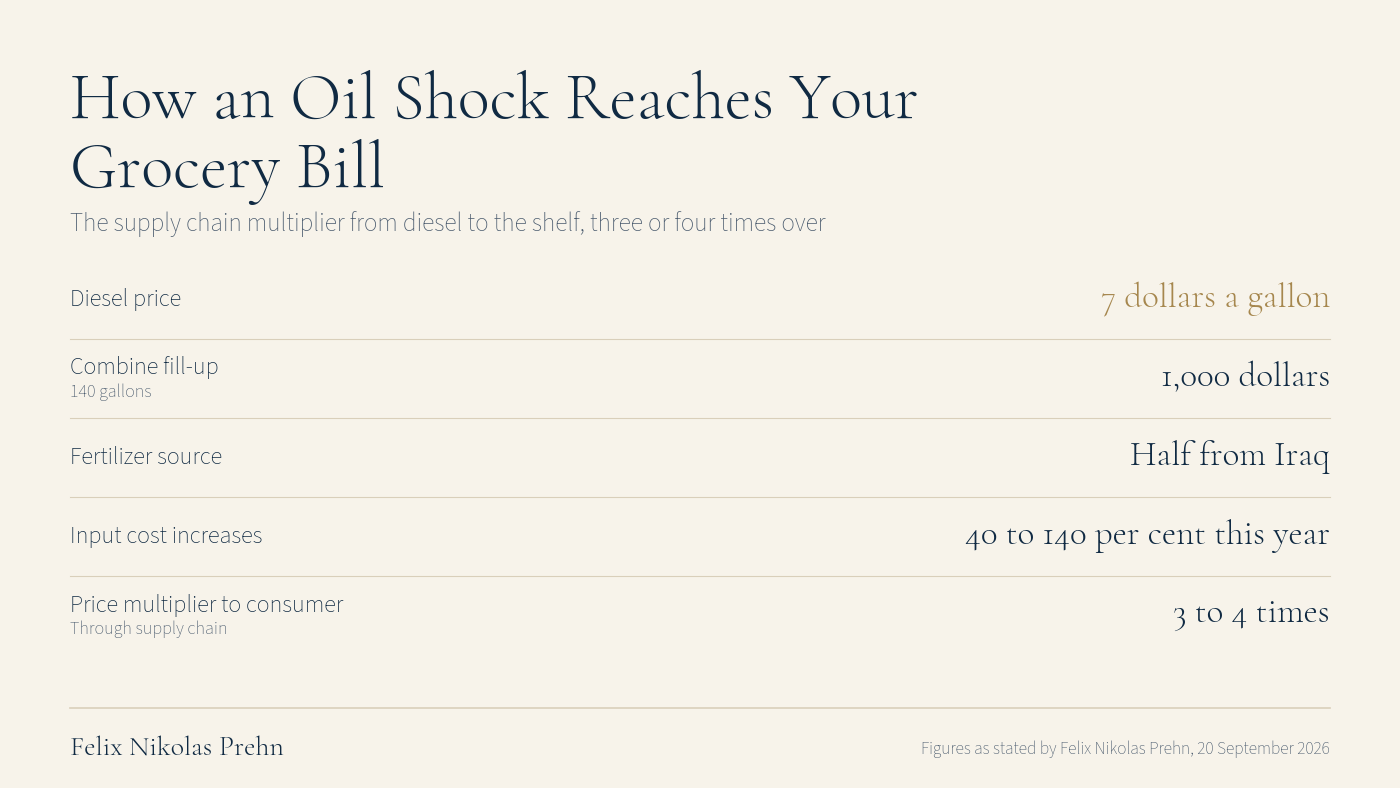
Oil is above $100. Diesel, fertilizer, all the stuff that grows your food is up between like 40 and 140 per cent this year and it's climbing. There's a farmer doing the rounds right now saying it costs him $1,000 to fill up his combine. And that kind of cost squeezes the life out of an economy just by itself. And the Fed's answer to that is, well, let's make money more expensive on top of it.
What? So, we've tried this before, right? We had high oil. We had a weak economy.
We had a central bank that was tightening the screws right into the middle of it. And that was the 1970s. And it didn't end very well, did it? Back then, rates and inflation went upwards together. If you're not that old, ask somebody who was.
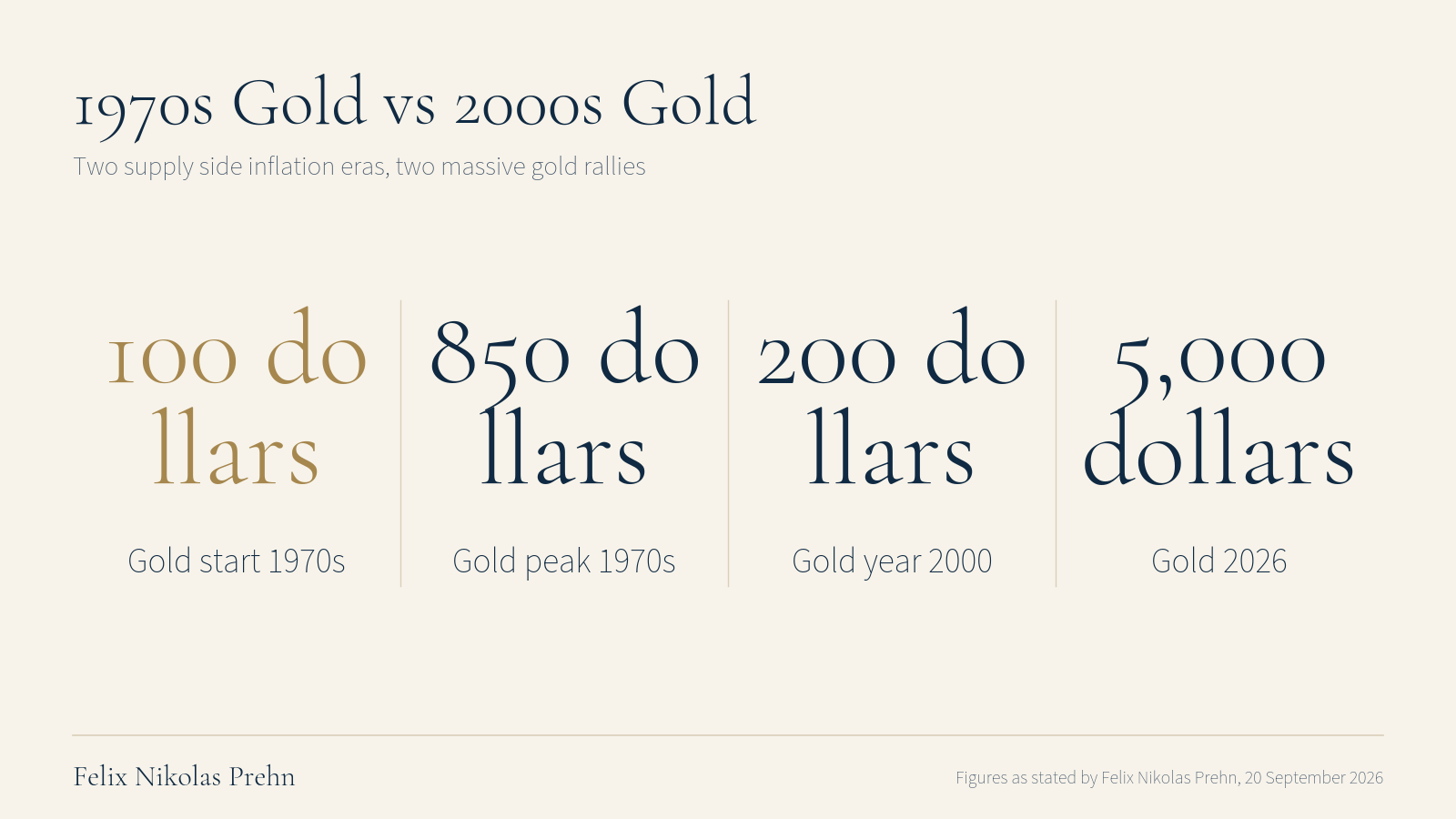
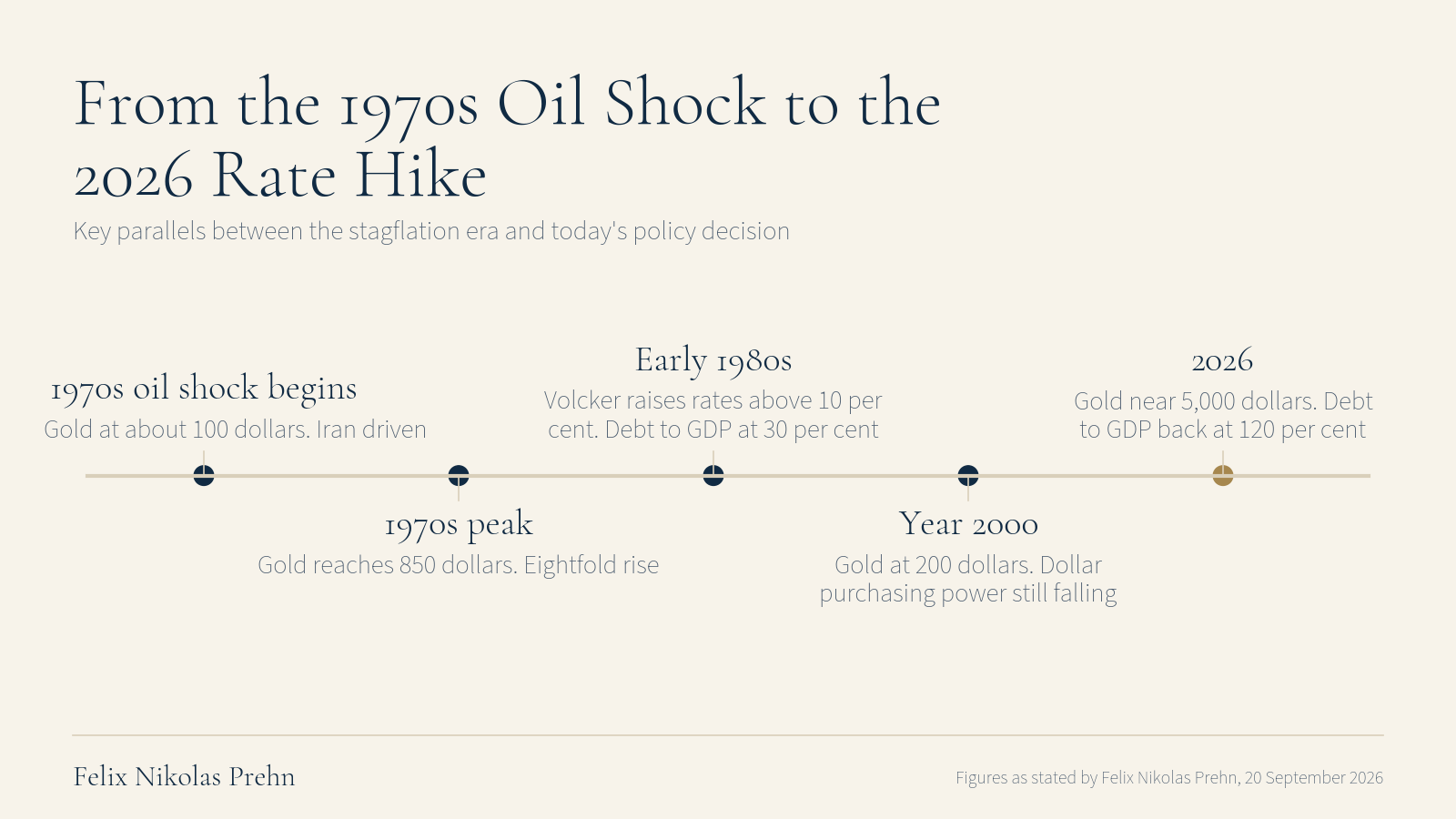
I wasn't. Winston, do you remember it? I don't think so. He's a puppy. But what happened is well gold went from $100 to $850.
The oil shock of Iran lit the final fuse. Now my name is Felix Breen. That's Winston here who's our researcher and you know gold hoarder. And I used to be a banker. Winston is just someone who chews things.
And over the last seven years my mentors and I have taught about 25,000 people. We don't take any sponsorship here. We never affiliated anything. There's no like link to get a brokerage account or anything down below. And it's because that way we can say whatever the heck we like and I like it that way.
So while the news is arguing about oil and the Fed, guess what the skilled money on the planet's doing?
The central banks where they've quietly gone and bought what? Yeah. Gold, right? The golden retriever says yes. And it's the most it's literally the most that they have bought this century.
You're wondering why the heck they're doing that? Well, stick around and by the end of this video, you'll understand exactly why. But before we dive in deep to this, um there is quite a lot of stuff that I want to get through here. So, I've written out the whole thing for you in plain English, like what just happened, why it matters, how it affects your money, what the big players are actually doing. a jargonfree, completely free, no catch research report. You can download it at felixpruns.org/doll is the link.
It's in the description down below. So, grab it, read it alongside it, read it afterwards, whatever. But make sure you grab that. And look, the very fact that you're actually here and you're still listening this instead of, you know, watching kitten videos, which is very tempting, I know. Um, most people are going to find out about this in a year or two when it's too late. you're finding out about this early and that makes you special and that puts you in a better position.
So, congratulations, my friend. So, let's get straight into it. Act one. Let me show you why raising rates into an oil shock is a dangerous move. And you might be thinking, "Hang on, Felix, aren't you being a bit pretentious?
Don't these people know more than you?" Well, these are the same people who printed $4 trillion of new money after CO and said it won't cause any inflation. Official government inflation peaked at 11 per cent.
I say official government inflation as in they massage that number down pretty hard. It was way way more. So these are the same people who are doing it again. Now there is one time when raising interest rates makes a lot of sense. Prices start creeping up because there is too much demand.
Chasing not enough stuff. In that world, raising interest rates makes sense. You just cool down the demand a little bit. Prices settle. Everyone calms down.
Everything is hunky dory. An oil shock is a very, very different animal. The prices aren't going up because everyone's rich and spending like mad. They're going up because the stuff itself, the energy, the food got more expensive to produce. And energy sits underneath everything.
When oil goes up, it's not just your petrol, it's the diesel and the tractor, it's the fertilizer in the field because yes, it's all made from oil, which is kind of shocking. I was walking to Winston this morning talking to someone who works in in in garments fashion and she was saying, you know, all the polyester is getting more expensive, which isn't really such a bad thing, but yeah, a lot of clothes are made out of that junk, right? So, the food you shop, everything is getting more expensive. And there is this American farmer on the news right now called John Boyd Jr. uh and he deserves his his recognition and he's been doing, you know, farming for decades and he's saying he's paying $7 a gallon for diesel. A combine harvester holds 140 gallons.
That's $1,000 to fill it up once. Now, his fertilizers, his chemicals, his equipment, all those costs are going through the roof. And he says it's one of the worst economic times in history for America's farms. And that man didn't overspend on anything, right? He's been crushed by input costs he can't do anything about.
And whatever it cost him to grow the food, well, you're going to get the bill when the food finally makes it to you. So now, put yourself into the position of the Fed share. Prices are rising, but the economy is actually getting weaker because everyone's spending more just to stand still. Higher oil is basically a tax on the country. And into that they raise interest rates which means the tractor loan gets more expensive.
The mortgage gets more expensive. The business that was about to you know hold on now can't afford to borrow. So you're taking an economy that's already being choked by energy costs and you're choking it just a little bit more. So you then kill the inflation. Well maybe you killed the inflation but you killed the patient thus right?
Which isn't really great success. And that's exactly what's happening right now. And it's exactly what happened when? In the 1970s, right? which was an oil shock. Prices went through the roof and the Fed was like, "LET'S PUT UP INTEREST RATES so we weaken the economy." They invented a word for it.
They called it stagflation. Stagflation, a stagnant economy and inflation at the same time, which economists have told you at the time couldn't happen. Yeah, economists, I'm one of those, we're not, you know, the most open-minded, smartest bunch as as a as a whole. And through the whole thing, you know what went up a lot? Have a look at this chart on the screen here.
Gold went from about $100 to, you know, well, I haven't got the 70s on here, but in the 70s it went to $850. And people still think that Fed hikes killed gold. Well, in the 1970s, rates and inflation ripped. It was an Iran driven oil shock. It's funny how these things rhyme, right?
And what you need to understand is why this what economists call supply side inflation is. It comes from the input cost. the oil it's really stubborn because it's and people don't explain it on TV or news properly. So let's let's do that. When the price of everything is being dragged up by energy, higher rates do not affect the cause of the inflation. The oil is still expensive because you know the Houthis are blowing up stuff in the Middle East and well and the Americans and everybody else.
Fertilizer is still expensive because half the world's fertilizer comes out of Iraq. Yes, you didn't realise that, but it is. It's true. Sulfur comes there. The Russians and the Chinese have the the biggest chunk of the other bits.
And I know the US makes some sulfur, but it's a world market. The prices are still going to go up. So all the rate rise does is it punishes the borrower on the other side. Punishes the family with a mortgage, the small business with a loan, the farmer who needs to finance next season's seats or tractor or whatever. So you've made their money more expensive at the exact moment their costs already went through the roof.
So what do they do? They cut back. They spend less. They might give up and the economy slows. But the prices stay high because the prices were never about them spending too much.
And that's the trap in one sentence. The medicine doesn't treat the disease. It just kills the patient. And then you could say, well, the disease was beaten, but you not such a happy outcome. and it feeds on itself in a really nasty way. The farmer paying $1,000 to fill his combine has to charge more for his grain.
Or he goes, "No, the lorry firm holding that grain pays more for diesel, so it charges more for the transport. The shop pays more for the delivery, so the loaf on the shelf costs more. Everything passes through and it adds higher cost on top of higher cost of higher cost. So by the time it reaches you, that original oil spike has been multiplied three or four times over. That's why energy shock does not stay in the energy commodity crisis aisle, right?
It ends up in every aisle. So when someone tells you rates are going up, gold's going to fall, ask them which kind of rate rise they mean. Because it's important to understand the difference because hiking into a boom is one thing. Hiking into an oil shock into a weakening economy is the thing that sent gold up eight times last time. Not telling it's going to happen in the future.
I haven't got a crystal ball. Winston keeps eating them. But that's the setup we're staring into right now. And I want to show you something that's on the screen here because this is the bit that made me go really is this really? I started to stare at it for a while.
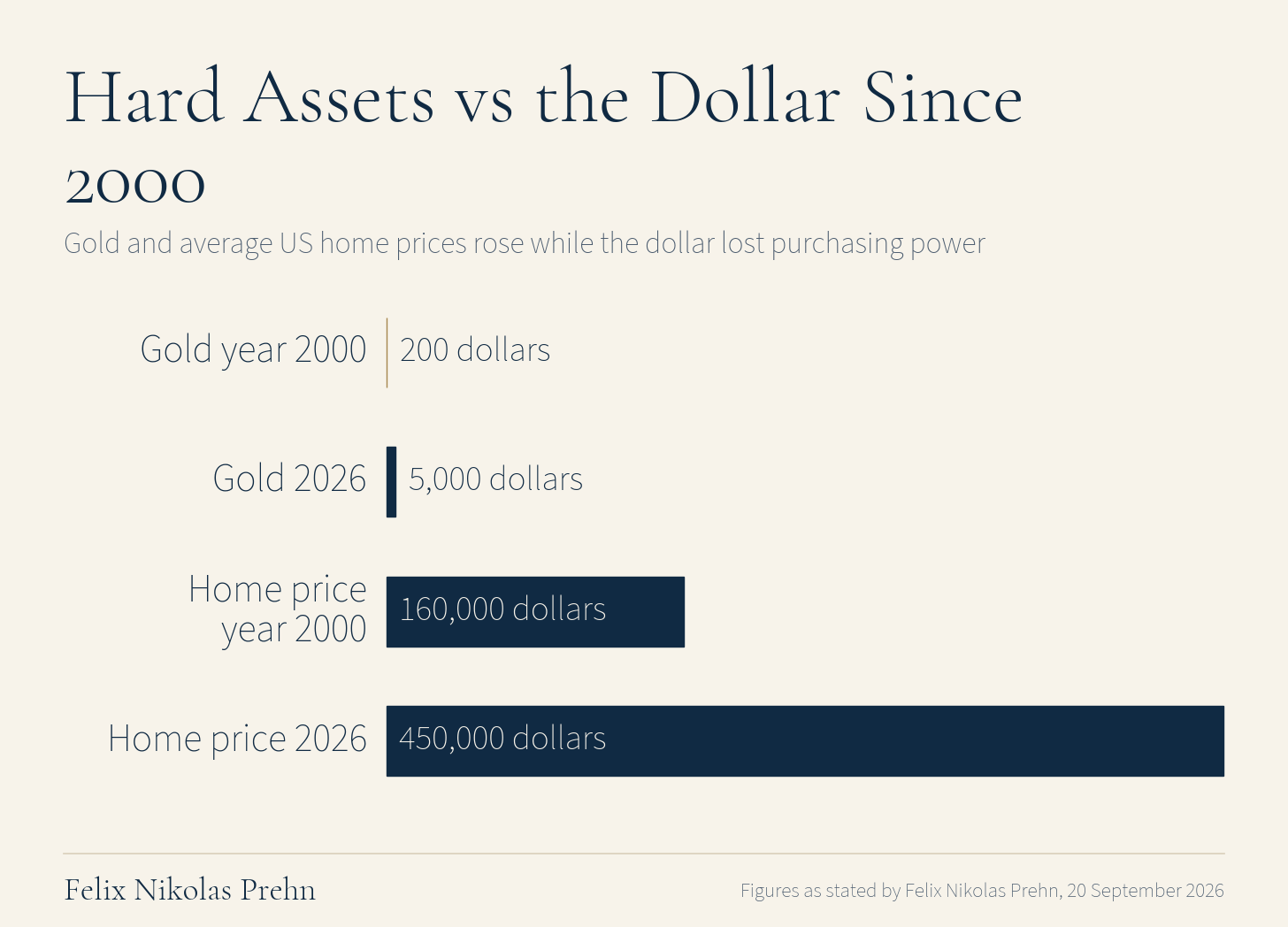
It's three simple pictures stacked on top of each other. All going back to the year 2000. The top one here is the US dollar and it's drawn as a $100 note and it's crumbling away over time in terms of the value of what it can buy.
The middle one is the home price the sort of average home price in the US and it went from $160,000 to about $450,000 in the last 25 years. And then there is the bottom one which is gold which went from $200 to you know $5,000 wasn't it? A little bit less than that right now. So the dollar melts and the things you actually need the the roof the hard assets they get further and further out of reach. And this has already happened.
This is the last 25 years of holding your wealth in the thing that they told you was, you know, risky, mad for like tinfoil hat people. And what I really want to say to you with the greatest kindness, knowing this is one thing, but having an actual plan for it is another. And most people don't have a plan. They haven't got anything written out. They don't know what they're going to do next week.
They're going to try and figure it out. So, they've got this vague feeling that something is off, right? And let me know if you've got that vague feeling. just write vague feeling in the comments down below and we'll see it or just VF if you wish. And they have a hope that it's going to sort itself out, but it doesn't sort itself out. It shows up in your life quietly as your money buying less than it did last year and then a little bit less the year after and a little bit less the year after and so on.
Now, I've got a written plan. I know what I'm doing with my money through the rest of this year, through the rest of next year, quite frankly. And I could give you that plan. I've tried that before. people didn't read it. Well, they saved it and they said they read it, but they spent about 30 seconds reading it.
They skimmed through it. And so, what we're going to do instead with you is this. We're going to sit down properly, you and me, live for about two hours, and we're going to walk you through the whole thing. What the institutions are doing, what I'm doing, and mostly how to build your own plan around your situation, not copying mine because our lives are different. And it's completely free.
So, all you're going to do is you go to inflationtrap.com because this is what this is. This is inflation trap. You grab yourself a free seat. You show up and if you're going to come, put the word prepare in the comments because this is what this is about. This is for preparing to thrive in this environment rather than to oh let's see and hope if some politician figures it out for me because in 12 months 24 months and 36 months a lot of people will be really pissed off about this because they missed the opportunity and they got punished pretty hard like people did in the 70s and some people will be there and they'll be like this was freaking brilliant right I always swore there I did well didn't I so grab yourself a seat there's a link down below inflatrap.com um let us know in the comments that you're you're comment.
But I want to dive a little deeper with you because if raising interest rates into an oil shock is such a bad idea, why are they doing it? I mean, they are, you know, baffling people, the people of the Fed, but they're not like outright stupid, are they?
No, they're very smart people, which is how they got there. And in my humble opinion, it gets it gets a little dark here because they're trapped. And your money is trapped too because to see the trap you have to understand how the government borrows. They basically sell IUS. They call them treasuries because it sounds fancier, but it's literally just it's an IOU.
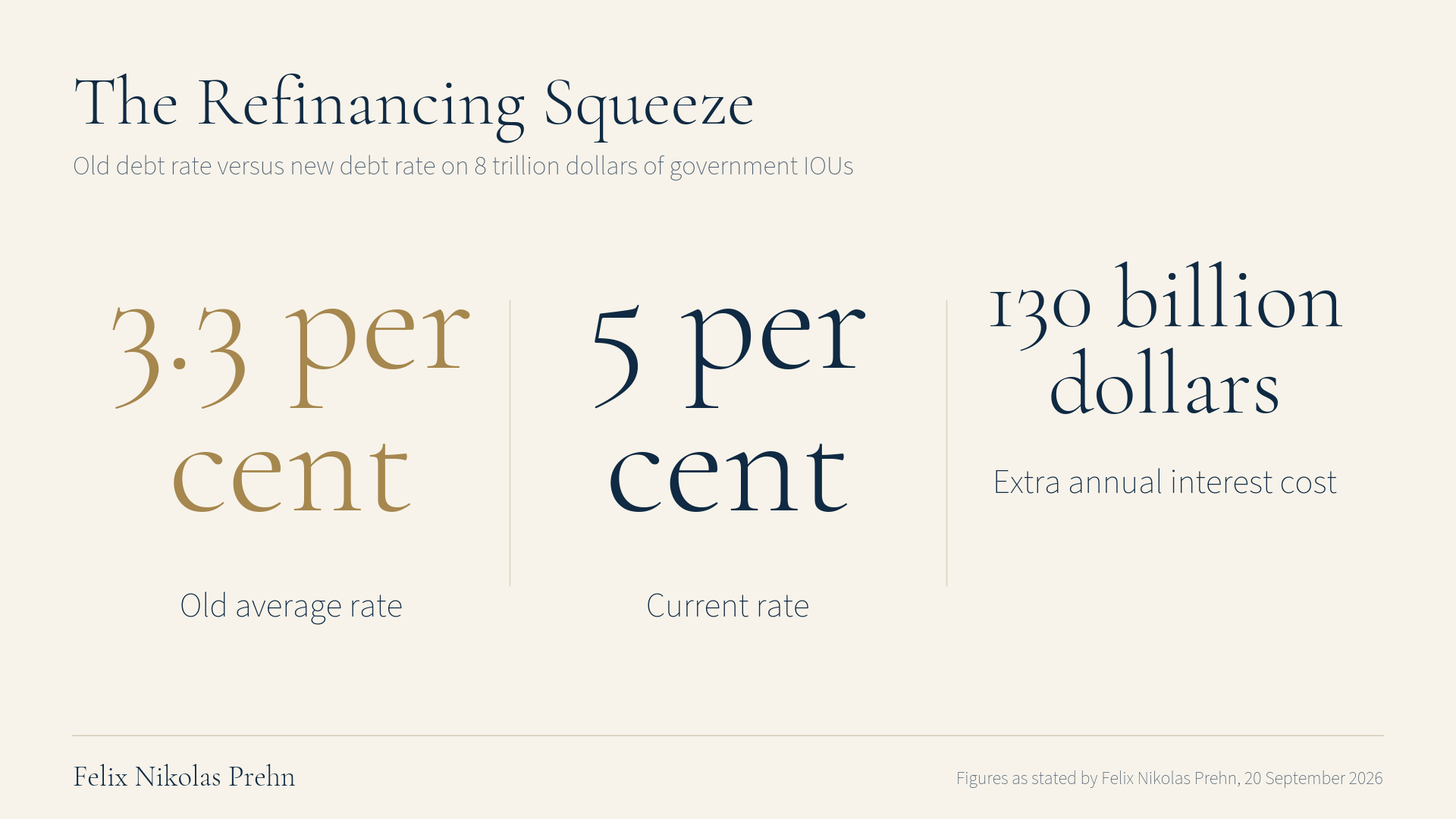
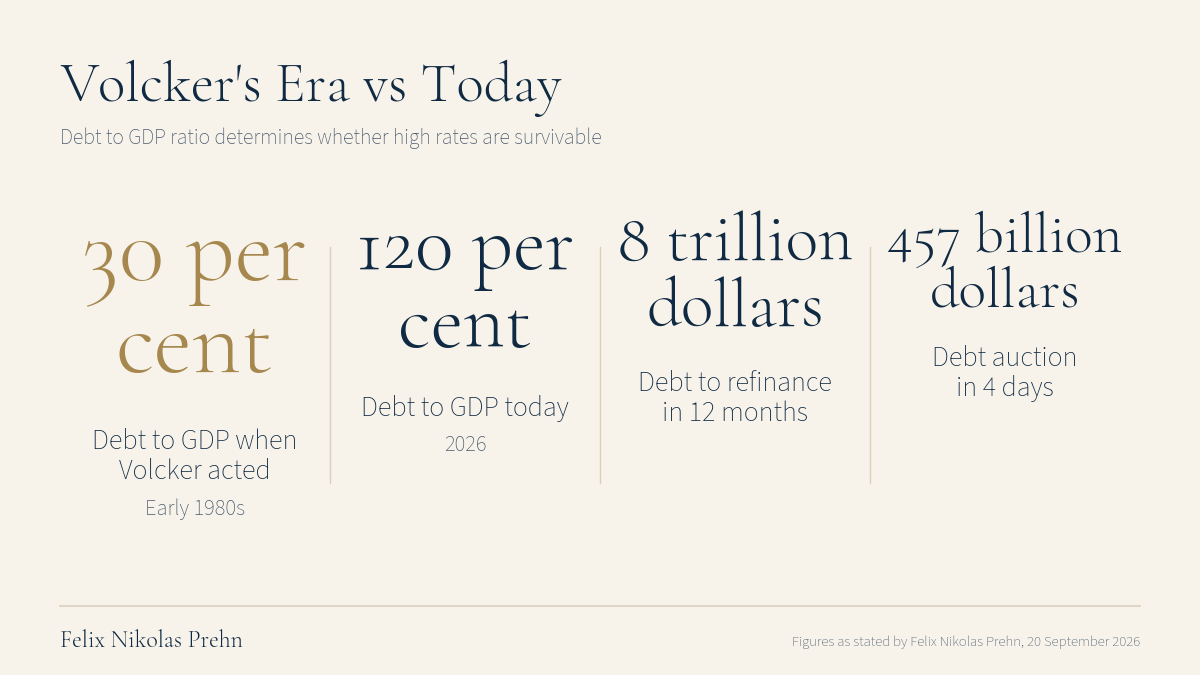
The government takes your money and they pay you back later with interest. But the problem is the sheer size of what has to be back paid back and refinanced. Let me give you the numbers here. This is from the Financial Times. In the next 12 months, $8 trillion of these government IUS have to be repaid.
Now, how do they repay them? Well, they haven't got any money, so they have to borrow again. And the average interest rate on the old debt, let me get a pen. The average interest rate on the old debt was 3.3 per cent. Can't really see that colour very well, can you?
Let's try a different one. The rate right now is more like 5 per cent. So you are taking $8 trillion finance at 3 per cent and you have to refinance it at 5 per cent. You add about $130 billion a year in interest on top of what the government's already spending. Right?
So every notch higher on rates makes the government's own debt more expensive. They're raising the price of their own mortgage, which is just baffling and which is why Trump's so pissed off about it.
Now compare that to the last time someone genuinely crushed inflation. The last inflation crusher the US had has had was a chap called Paul Vulkar in the early 80s. And he did it with brutal doubledigit interest rates, more than 10 per cent. But the bit nobody mentions is he could do that because the country's debt had already come down. So it started at about 120 per cent of the economy and it went down to about 30 per cent.
So the government could survive punishing interest rates because it barely owed anything relative to the size of the country. Where are we right now? Guess what? We're back to 120 per cent. Grimes, doesn't it?
It's where we were in the 40s after the, you know, World War II after we beat the Germans. I'm one of those. I'm I'm happy you did. And so Vulkers tool big rates for long enough to kill inflation. Today it would bankrupt the government. They can't actually do it.
So they can raise a quarter point and look tough, which is what they just did. But they cannot hold rates high enough long enough to actually kill inflation because it would blow up in their own budget first. So what do you do when you owe too much and inflation is running? It's a playbook for that. And again, it is an old one.
It is not a new one. These guys are not creative. If they're just keep competing exactly what they did last time around, they are going to let inflation run hot intentionally, but they're going to lie to you. Sorry.
They're going to um lie to you about it. Um and that's the thing that's going to make the debt go away. Because if you think about it that way, if this is the economy, and right now this is debt, right? You can do two things. You could reduce the debt or you can make the economy bigger. If you make the economy much much much bigger, the debt in relation becomes smaller.
Easiest way to make the economy bigger is inflation. Sort of like a fake growing, but it makes the debt worth less because it makes money worth less, right? Your dollar loses value. You can buy less groceries with it. Well, the same happens to debt.
It also becomes worth less. So it's rewarding the people who are really really irresponsible and up to the eyeballs in debt. And that's exactly where we are right now. We're in the inflated away part. And the person who's going to pay for that is anybody who's holding dollars, which is you, right?
And in my opinion, this is why this quarter point interest rate hike is is a piece of theatre. It lets them look like they're fighting inflation, you know, tough guys and so on, but the actual inflation is running way hotter than they'd admit. And it means they can deal with the debt and nobody will notice it because the Fed's being tough on inflation. So don't get fooled by the headlines that says the Fed gets tough on inflation because it doesn't. And if you want a genuine news source for that, I built an app called Winston Daily for that.
Well, Winston built it. And it gives you the news on the stocks you own. It's just an example portfolio. Uh and it also tells you what actually moved the market in about 30 seconds. And then yes, it will explain to you what the Fed just did or what Wall Street did or what diesel is doing and so on.
But that's it. It'll take you like a minute or two to get all your news in the world. There's no politics in there. There's no noise in there. There's nothing to scare you.
No scary pictures of anything. Just what affects your money, your stocks, and your retirement. Very, very simple. If you want to play with that down below, there is a link down below. And um it'll when you go into it, it'll ask you to insert your portfolio and then it'll be 100 per cent custom personalized for you.
A lot of other cool stuff in there, too. But check out that link. It's down below in the description. Right now, there is one more crack in this plan, and it's literally happening this week. In the next 4 days, from the point of me recording this, and every week thereafter is pretty much bad. $457 billion of debt has to find a buyer. government debt.
It's an enormous amount of new IUs you're pushing into a market in a very short period of time. And if there aren't enough buyers to buy all that debt, the government has to offer higher interest rates to tempt them to buy it. Higher rates to sell debt means more expensive borrowing for everybody else. More money getting sucked out of things like the stock market to sit in bonds instead. So either the debt doesn't sell well and rates get pushed up which hurts the economy or a friendly buyers to step in it all up.
Let's see who that buyer will be because it could be the Fed. They could print money to buy the government's debt which is what they're doing. And that is once again the 1940s move and it's inflationary by design. More dollars soak up the debt, but every one of those new dollars waters down the ones already in your pocket. So it puts a squeeze on your investments and the government's paying juicy interest to shift all that debt.
The money has to come from somewhere, right? Often it comes out of the stock market because why take the risk of shares when the government is risk-f free gives you a big fat interest rate, right? And then this question always come back to, well, what's the money doing? The big money, the tr the skilled money, the trained money. So forget my opinion.
What are the people who do this for a living actually doing with their money? Because if the biggest money on the planet is making the same bet, it's an interesting conversation, right? To some ex banker in his golden retriever with a hunch. And they're not being subtle about it. The central banks, the actual institutions that print the money are buying what?
They're buying gold. Yes. Are you still allowed to stutter? Probably not, right?
That's probably offensive to somebody. Uh so I'm sorry if I, you know, offended you. Uh, so the people who print the dollars are buying gold, which kind of makes you think, doesn't it? And again, something we track inside the Winston app. There's a metal section for all you gold and silver bugs.
And you can see what institutional money is doing. You can see what the big banks are doing. Um, you can see how much gold is left in the vaults and and everything else. And then, of course, what's happening dayto-day here as well. Again, check out the link down below.
It's it's a free completely free trial. But this is the chart I'd look at. This is how much central bank gold holdings are rising. So the speed at which it's increasing is the fastest since about 1997 or something which was uh Bill Clinton years right when politics was still entertaining. Um I repeat I did not I did not have you know uh you know what I'm talking about.
Anyway, um, act five is the cash trap because some of you are thinking, I'm scared.
I'm going to wait this out. Okay, feels like the wrong thing, right? The the the safe thing. Well, I totally get that. Well, go back to 1971.
It's the year the US cut the last link between the dollar and gold. And after that, the government could print as much gold, sorry, money as it as it wanted. Hopefully, we won't figure that out. Um, and a $1971 according to government statistics, it's now worth about 7 cents. And I think that's a highly inflated number.
It's worth a lot less than that, a fraction of a cent. And that is just sitting in cash, right? So your safe asset is guaranteed over time to lose. So what isn't going to lose? Again, I'm not a financial adviser come to your own conclusion.
You have gold, you have silver. It's the wilder cousin of of of gold. Uh but you also want to make sure that you're not super concentrated. Um I believe good companies will weather this storm like they've weathered many storms before.
Good companies, most companies not so good. So don't panic sell your shares. Just know what you actually own because again, a lot of people who think they're diversified are really sitting on a pile of the same handful of expensive tech names. Right? Again, if I just show you the average portfolio I see looks a bit like this.
It's basically NASDAQ, S&P, and a couple of tech stocks and a touch of gold. And that gives you a 70 per cent exposure to AI. Bonkers, right? Um, and it's just because the index funds are all AI, by the way. So, again, understanding that means you can make better decisions, which means you can protect yourself better.
Again, Winston app will tell you that if you check out the link down below. So, what have we got? We've got rates going up into an oil shock, which is the same mistake we saw in the 70s. Gold went up eight times in the 70s. They're not going to hold rates high for very long because they can't.
The debt's too expensive. They have to cause massive inflation first that they won't tell you about. And then they're going to raise rates. And they're going to print lots of money.
It's the only way they can refinance. You know, 450 billion in four days coming up uh next week. And just look at what the smart money doing. Look at what the central banks are doing. protect yourself from this inflation trap because it's going to kill people like literally kill their retirement and kill their enjoyment which really really really really sucks. So my advice to you is don't just be a survivor of this decade that is going to finish off with some serious inflation.
The Fed is raising rates into an oil shock. We know how that ends ends out. And the people who got hurt the worst in these cycles, they're not the ones who saw it coming. They're not the ones who studied the pattern from the last few times this has happened. They're the careful ones.
It's the sabers. It's the people who did everything right and kept their money in something safe like cash or government paper and then their watch should melt away while you know no one's telling them anything about it. And my hope is that it isn't going to be you because you are here early. So take the next step. come and sit down with me live two hours this coming week and we'll actually build out your plan for what's coming. How to survive this inflation trap.
Make it give you the tools so you can do yours, not just copy mine because that wouldn't be that useful. So go to inflationtrap.com, grab yourself a seat. And if you're coming, let me know in the comments down below. Write coming and I look forward to seeing you there. And I wish you a safe 2026.
Right now, I think we're going through some sort of weird phase transition. And normally when you get bad economic news or you get bad jobs data that people are going to fly to safety into the bond.