Transcript
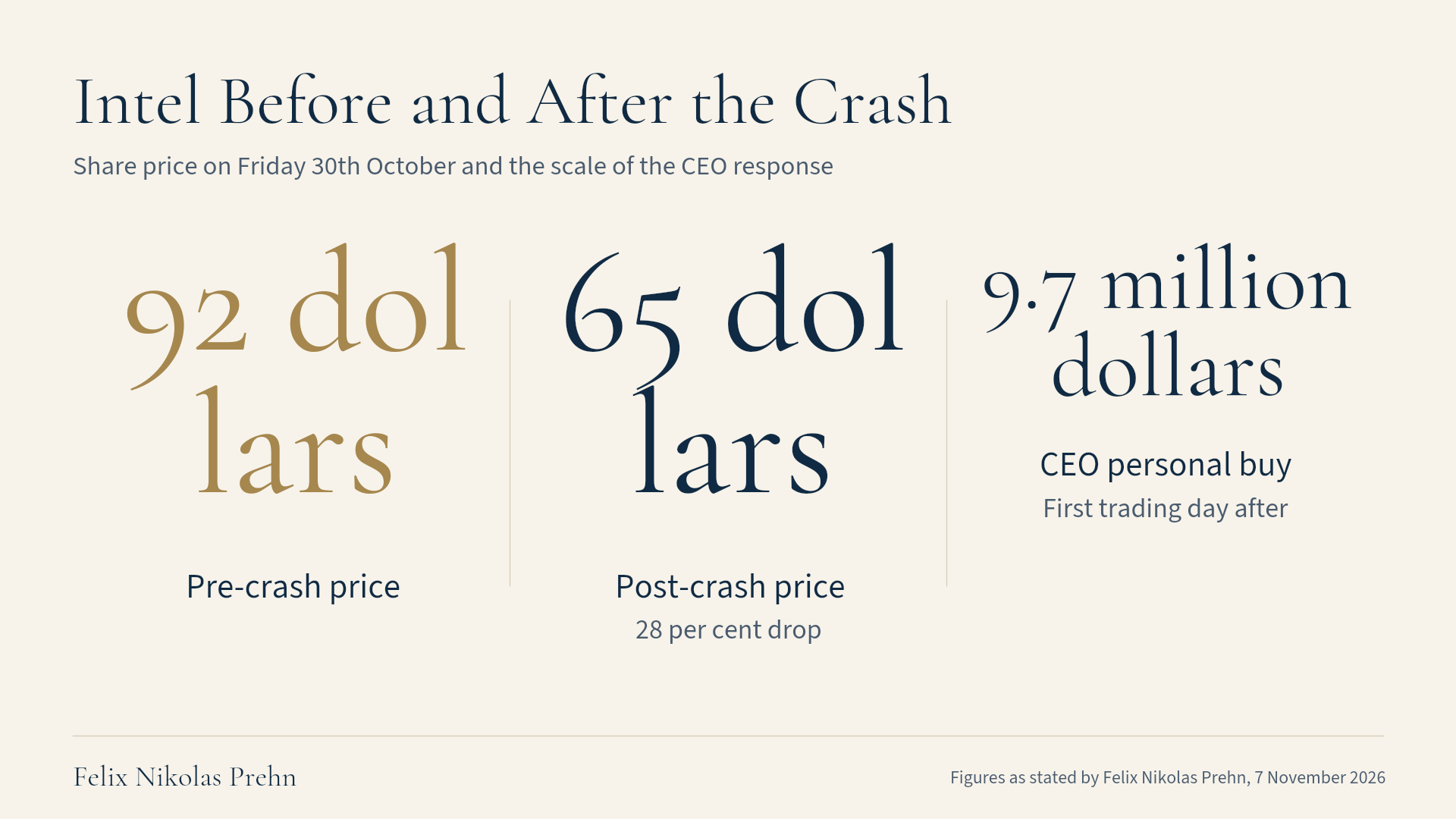
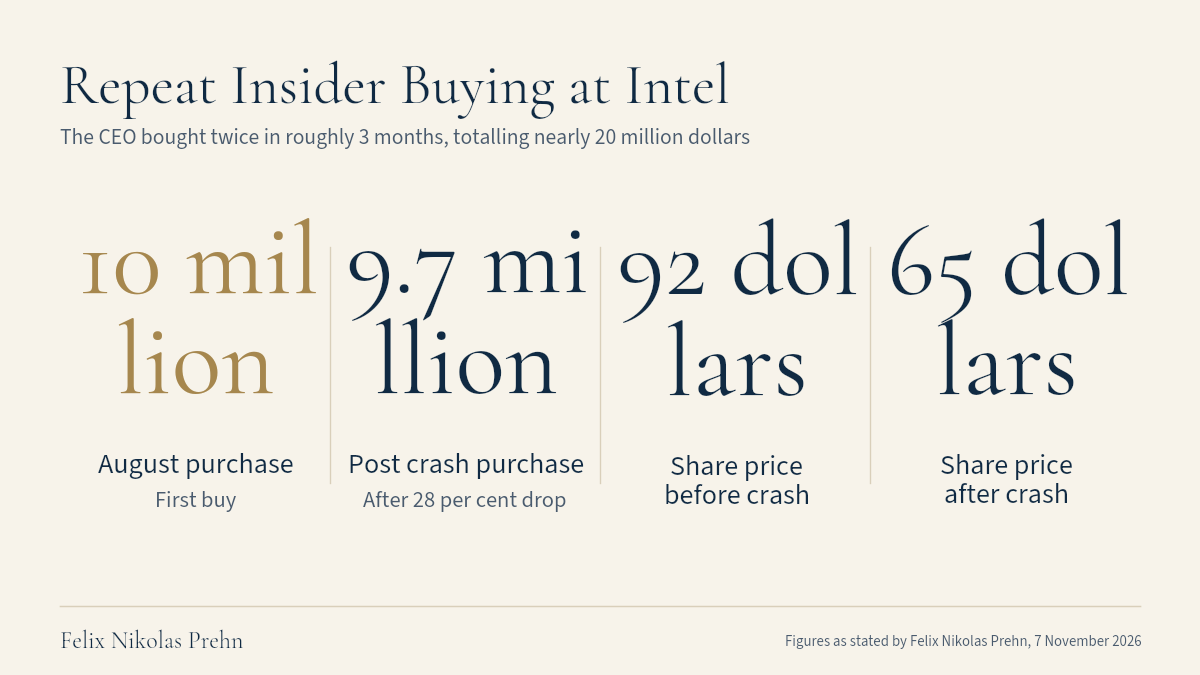
The chief executive of Intel just spent almost $10 million of his own money buying Intel shares while the market is collapsing. Winston had to lie down on that news. And on the first day of trading after the stock fell 28 per cent in a single session. Now, nobody made this guy do it. He sat through the worst week his company had had all year, looked at the share price, and decided to buy more.
And he wasn't the only one. a director of MGM put 51 million into the casino group. Warren Buffett's Berkshire added 27 million in a little known stock and at a little known rent to own business most of heard of seven insiders bought within two days of each other. The CEO, the finance chief, the tech chief, and four more insiders. Seven. And on top, a sitting congresswoman just filed a paperwork showing she bought Nvidia in this time.
Insiders are not always right. Intel is already lower than where the boss bought. But people sell shares for all sorts of reasons. You know, a tax bill, a divorce, a house, expensive mistress, that sort of thing. But they only buy for one.
When the person who sits in the board meeting puts millions of their own money into their own shares, that is about as honest a signal as the stock market ever, ever gives you. And I track these and I want to walk you through them here. And you can follow along with us if you wish. And the app that Winston builds, it's called the Winston app. And literally this week, there was more in it than I can fit into one video.
So I'm going to walk you through some of the important ones. You can look at all the other ones. I'm going to look you walk you through the big buys. So, if you want to follow along, click on the link down below. There's a four month free trial.
It's zero risk. You don't like it, you just cancel it. And if you stick with me for a few minutes, you will know what the big money is actually buying. If you're wondering who I am, my name is Felix Nicholas Pin. I'm an economist, former investment banker, founder of the Pin Institute.
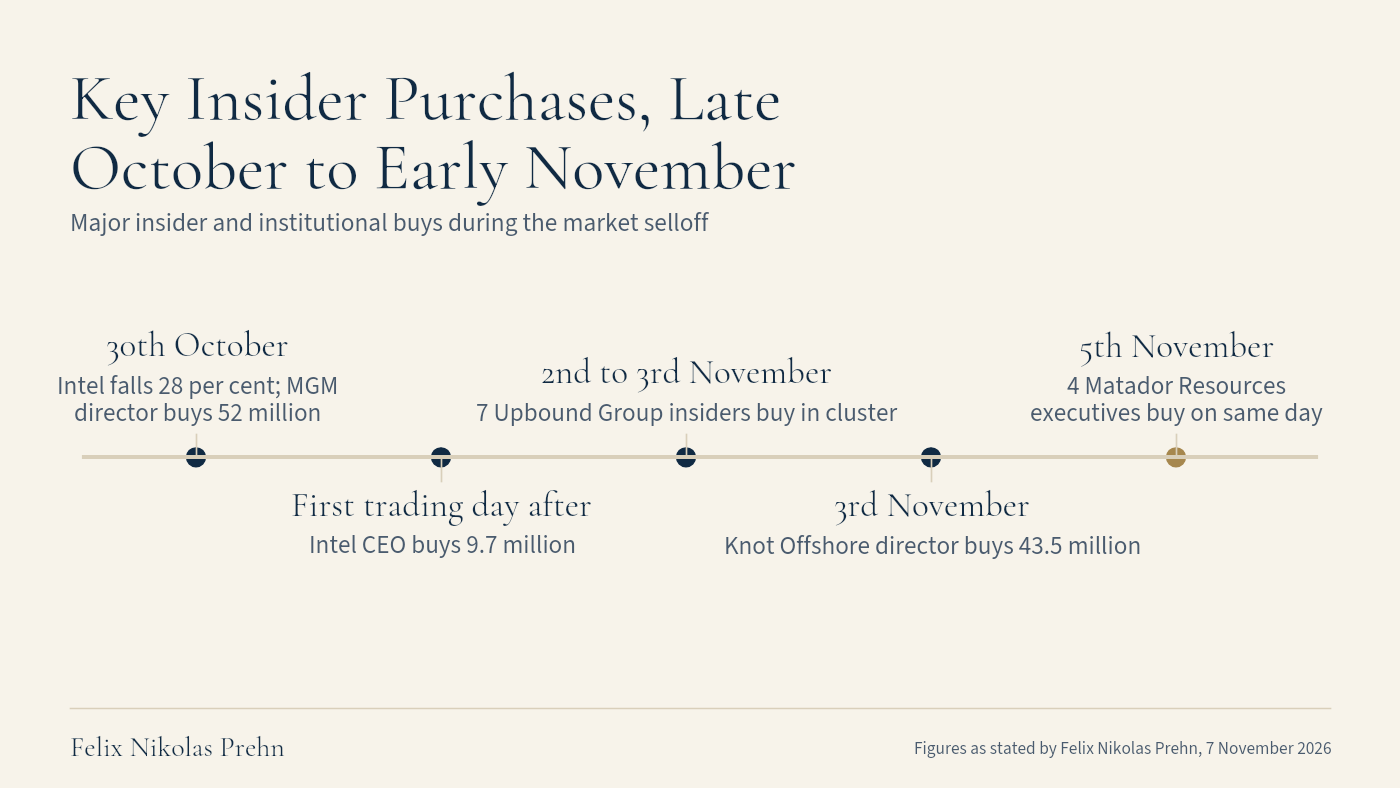
That down there was Winston, who's got the big nose and sniffs out these traits for us. Zero sponsorships, zero endorsements ever. I generally tell you when I own a stock that I talk about just to be really really frank with you. But let's start with intra because it's the cleanest example of what real insider buying really looks like. So on Friday the 30th of October, Intel fell 28 per cent. $92 to $65.
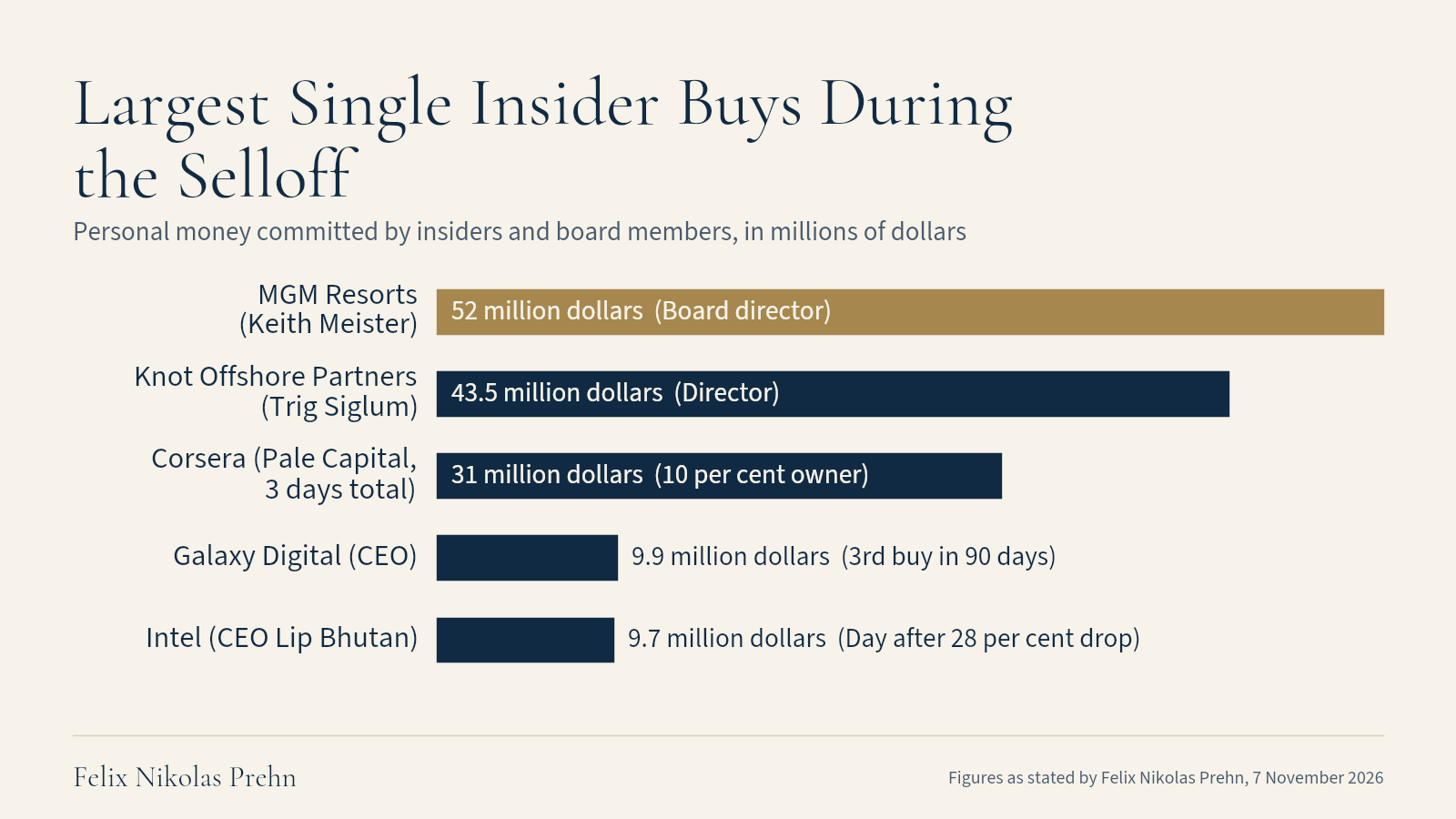
Now on the Monday, the first day the market was open after Intel collapsed, Lip Bhutan, who is the chief executive of Intel, you can see it on the screen here, black and white or in green and white, uh, bought $9.7 million worth of shares. And I know that because my phone gave me a little alert on that and I was like, that's kind of curious. And I have a position open on Intel right now. I should say that. Again, not telling you to buy it.
Not a financial adviser. I'm just saying I have some interest in Intel. So, I'll show it to you. You click on it. You go into Intel and you see his insider buying right here, right?
9.7 million. He bought 10 more million in in August. And in fairness, the stock is down since. So, you know, he doesn't have a a sort of Midas touch. And again, whether he turns out to be right or not, it's a separate question here.
What you know for certain is that the man with the most information about Intel in the world looked at a 28 per cent drop in a stock and he reached for his, you know, uh, cash drawer uh, rather than something else. Now, let me show you the second one. Keith Meister sits on the board of MGM Resorts and he runs Corex, which is the activist fund.
And on the same Friday that Intel was falling apart, he bought 1.5 million shares of MGM, which is worth $52 million, right? Real dollars. You didn't get a discount. You didn't get a special deal. You just bought it at the same price that you could have bought it for yourself.
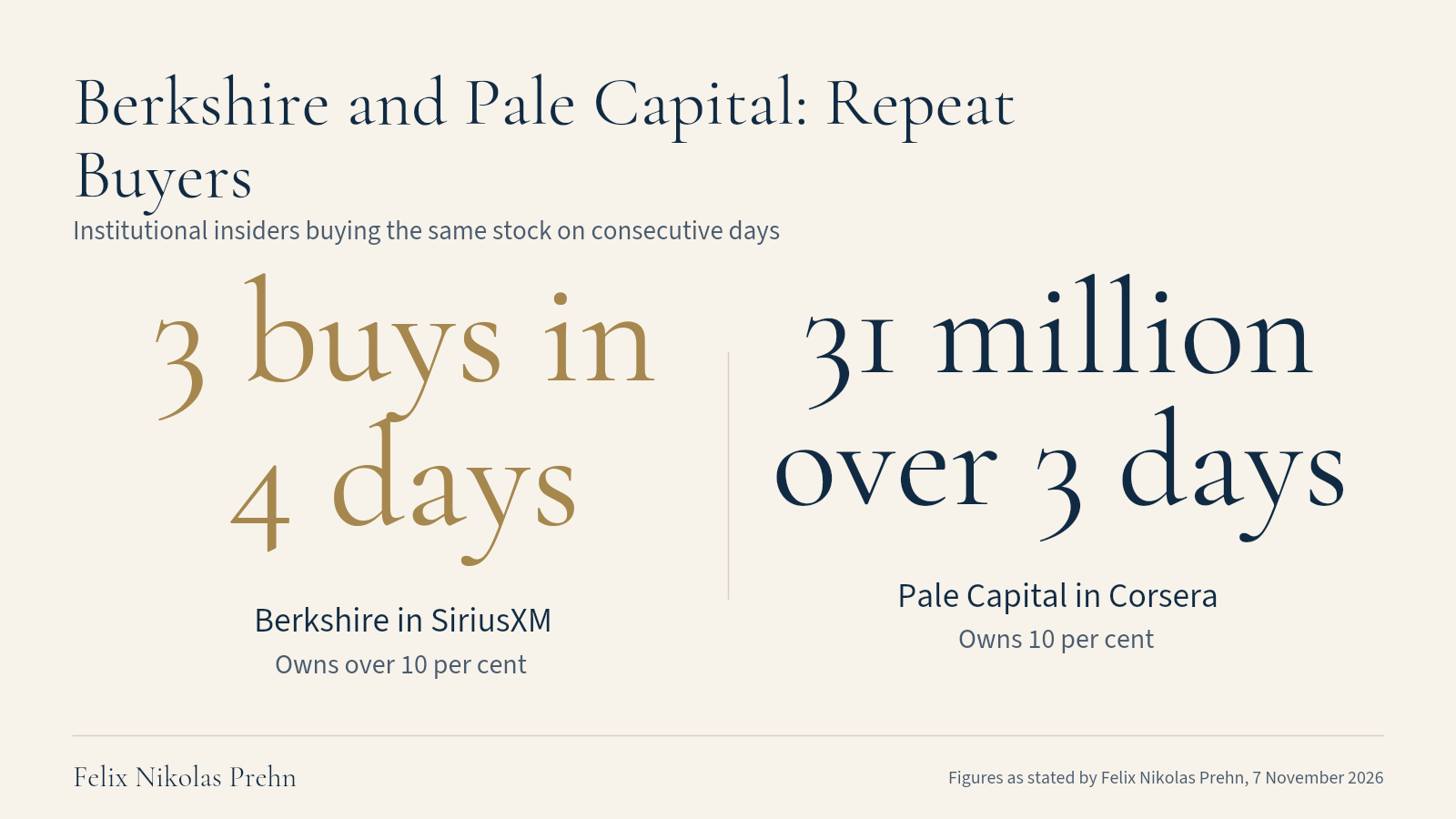
But there are others. There's a little known stock called SiriusXM Holdings. And for some reason, Burkshshire Haway just bought it three times in the space of what is that four days.
So Burkshshire owns more than 10 per cent of this company. So it actually has to file every time it adds which means you get to watch Buffett's averaging down in real time or in this case actually averaging up because that was one of the few things you can see on the stock chart that actually went up. There are others might have heard of Corsera sort of education training business not the greatest business in the world and Pale Capital which is an investment group that already again owns 10 per cent of Corsera bought on three consecutive days in a row here 9.4 10.4 for 11.7 million.
What looks like, you know, a particularly heavy dip. Doesn't mean it's going to go up, but interesting that they bought it. 31 million in online education company in a couple of days. And then there was another one which again most people will never ever hear of because it's just not offshore partners, right? You said, "Oh, I know all the stocks." You don't know not offshore partners.
If you know not offshore partners, write not in the comments down below. Um it's an LP. So again, be very careful owning it. Big tax consequences to owning LPS. It is a shuttle tanker business, whatever that means.
And the other director, he's called Trig Siglum, which I'm sure I'm pronouncing absolutely accurately. And this chap seems to love his own business. He bought $43.5 million of his own business on the 3rd of November. eclipsing his June buy of 25 million.
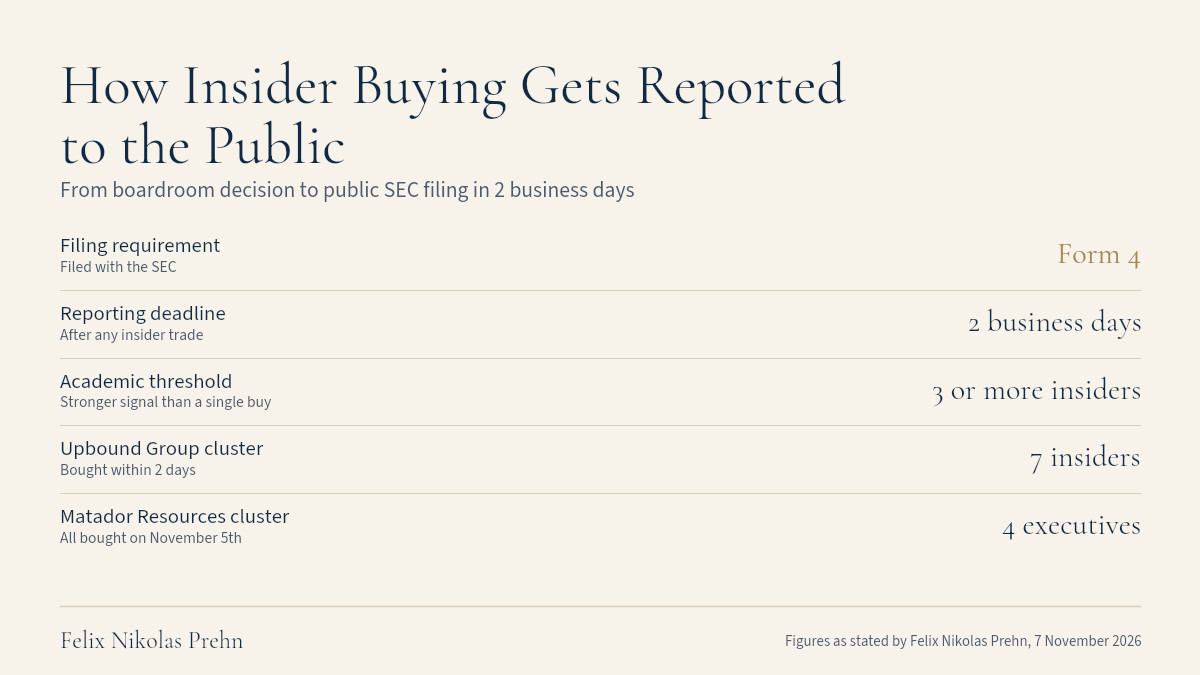
So why am I telling you this? Why all does all of this matter? Well, I pay attention to buying and I basically ignore the seller. An insider has to report any trade in their own company shares to the SN SEC within two business days on a document called the form four. We read them all.
We put it on live for you every single day. So sales fill most of those forms. Executives get paid in what? They get paid in stock, right? So let me pull one up for you where come people insiders are always selling say Palanteer.
So we obvious have two two charts here. We have the the politicians charts and we have the insiders charts and you can see here sell sell sell. If I click on show all it's basically all cells right? All sales. And I completely ignore them.
Why? Because these guys get paid in stock and they sell it. Why? because they got to pay a tax bill or they're getting divorced for the 19th time. As I said, you know, the third mistress is particularly expensive or maybe they really needed a bigger boat because it was getting embarrassing that those are only 200 foot long or you know, all sorts of stuff. Or maybe their adviser told them to diversify.
Um remember Buffett told uh Bill Gates to diversify many decades ago. If you hadn't, you'd be the richest man on the planet, which tells you another story. But essentially a sell tells you very little about what they think of their own company. But a purchase is very different because when I look at insider buying and we have a page on this all the cluster buys all the biggest single buys and also the flips.
So people who previously sold their own stock and has started to buy it which again is kind of a curious signal. So when an officer or a director takes out money off their own bank account or you know their mistresses and puts it into the shares that they could have got for free as part of their pay package, there is usually only one plausible reason. They think it's undervalued doesn't mean it is but they think it. Now I mention cluster buys because big single buys are definitely interesting, right? CEO spending 10 million of his own money.
Kind of interesting. But clusters are even better. The academic work on insider training goes back decades and it keeps finding the same thing. One insider buying is a signal. Three or more buying within a few weeks of each other.
It is a much stronger signal. It isn't a promise of returns, but it's a stronger signal because each of them has looked at the same internal numbers and it's come to the same conclusion all their own.
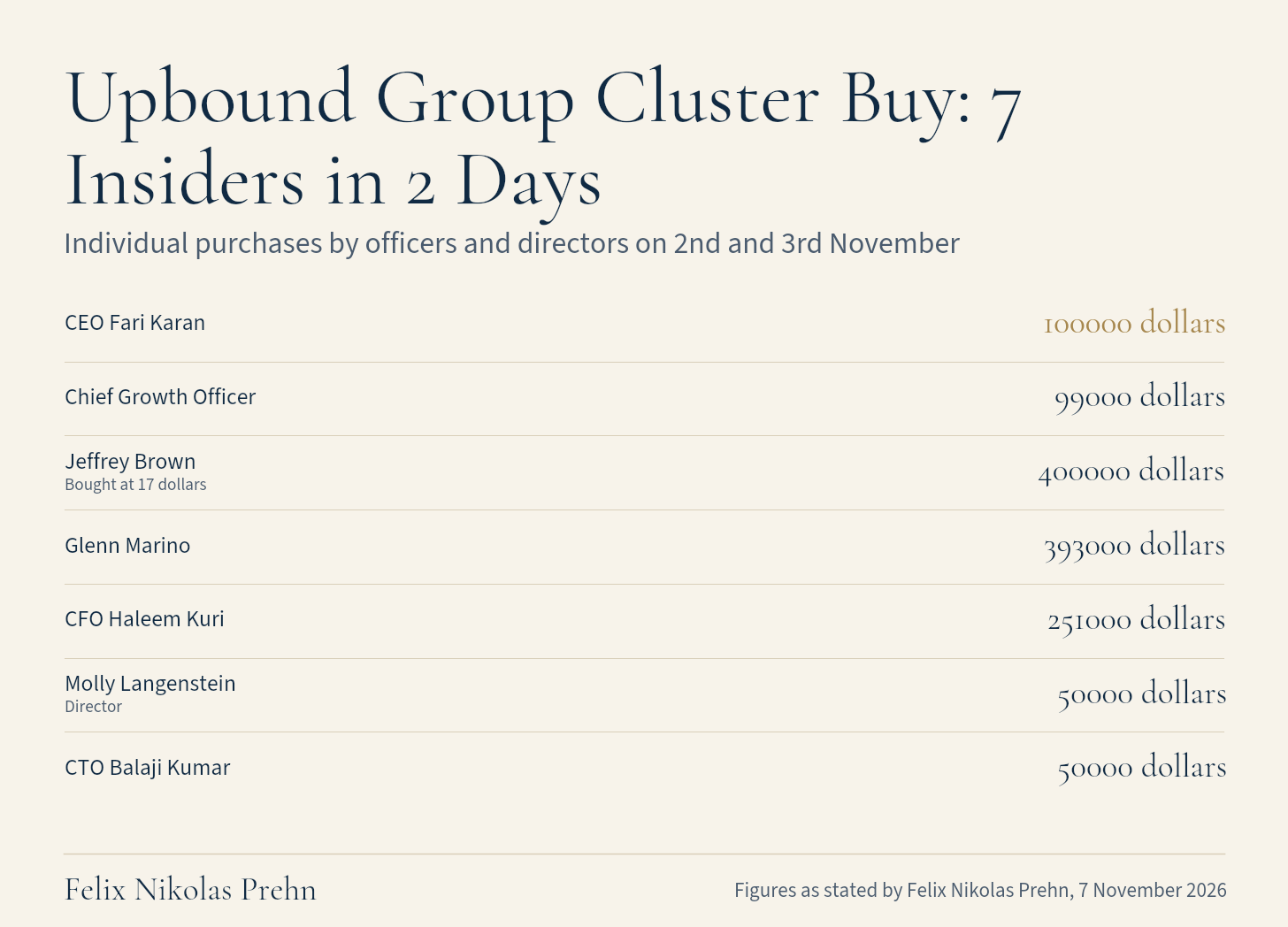
Unless they have a really, you know, bully of a CEO who makes them buy it. Like let's just say that that doesn't happen so often. So the rent to buy business I mentioned at the top of the video called Upbound Group on Monday the 2nd and Tuesday the 3rd of November. Let me show it to you. Here it is.
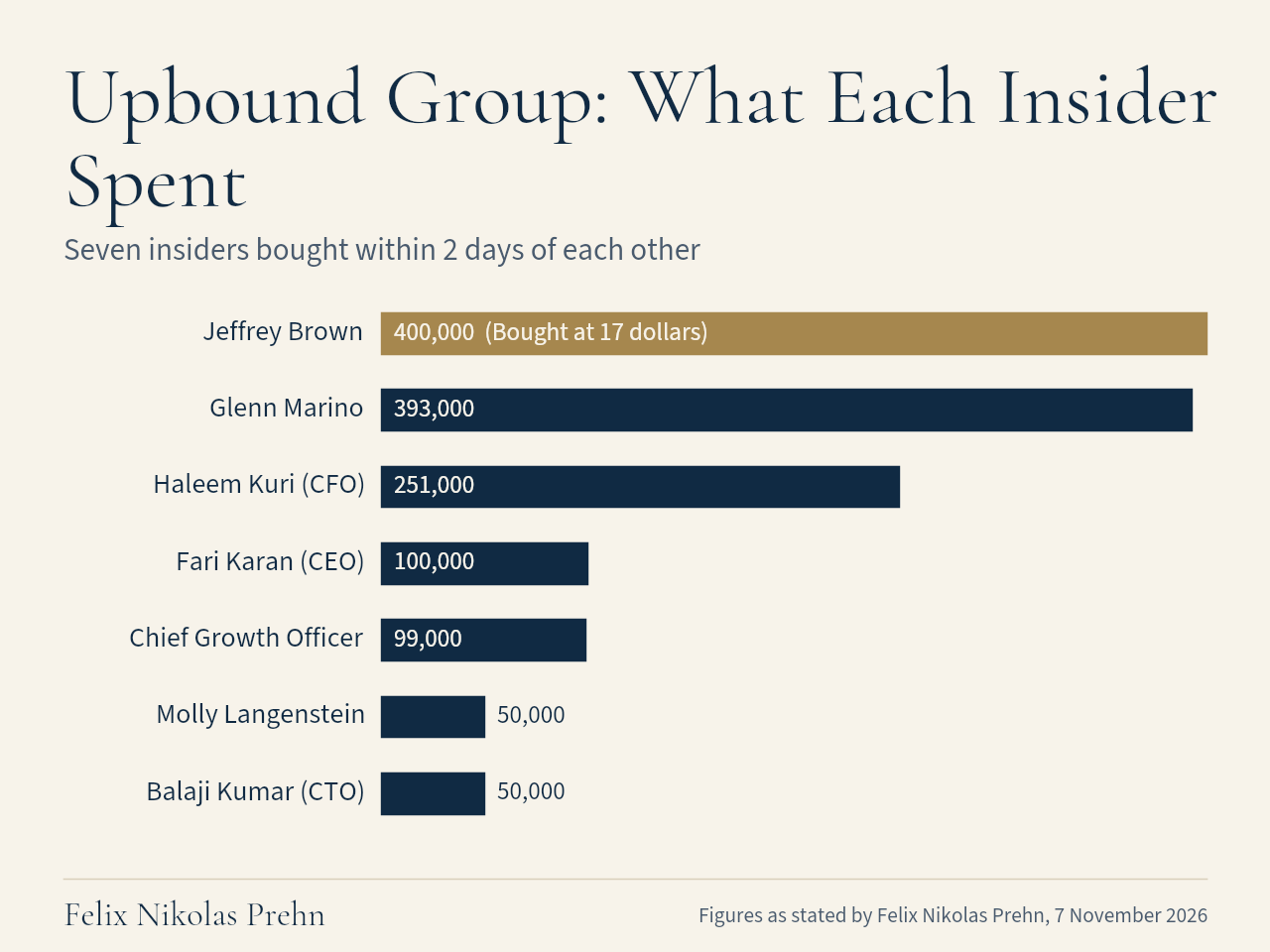
The chief executive Fari Karan put $100,000 of his own money into it and then their chief growth officer put a 99k into it. didn't want to outdo the the the CEO obviously. Uh a day before Molly Langenstein, another director, put 50K into it. Uh and also here Jeffrey Brown put 400K into it. Uh the chief technology officer Balaji Kumar put 50K into it. The same day Glenn Marino put 393,000.
You get the idea, right? All insiders buying essentially at the same time. Are there more? Are there more? Haleem Kuri, who was the chief financial officer.
He put 251K in in there and and so on. Now, the really smart one was this chap here. He was called uh Jeffrey Brown. Just sounds like a comic character if you if you ask me. Um he bought at $17.
It's now trading at 2425. Again, not a promise of returns, but US did quite well. So, seven people put in a million and a half dollars more or less in the space of about two days. And there are many more examples like this. There is a matador resources company and Matador resources company.
If you look at the insiders, you have four executives buying on the same day, November 5th. You have the EVP, you have the L president, you have the SVP, and and then the EVP and CFO. Um, you know, acronym people. um or putting in what was that about $230,000 or something on one day, right? On a particularly heavy dip doesn't mean it's going to go up, but it's kind of interesting, isn't it? If it's interesting, let me know down below and see follow along.
Get yourself the the Winston app uh free tra zero risk. If you forget to cancel it on day 29, just message us and say, "I forgot to cancel it. It's ghastly." And we'll cancel it for you and you make sure you won't get build. Um, so these are clusters and and there there are more and I'm not going to walk you through all of them. Um, Galaxy Digital is another one that um I I flagged early on.
Maybe you saw it on the screen here. CEO puts in 9.9 million.
Third insider buy in the last 90 days. Crypto business. And you know, you would have would have thought they had a pretty tough time. Where did I go? Um, here we go.
Galaxy Digital. pretty crummy business on the face of it. But CEO is definitely buying here. Was he was he also buying at this dip here? Let's see. No, that was another chop.
Um so I'm not saying you know they always get it right. Now there's one more story to this which I think if you're snoopy enough, nosy enough like me, um which is what people tendly asking about is what about members of Congress?
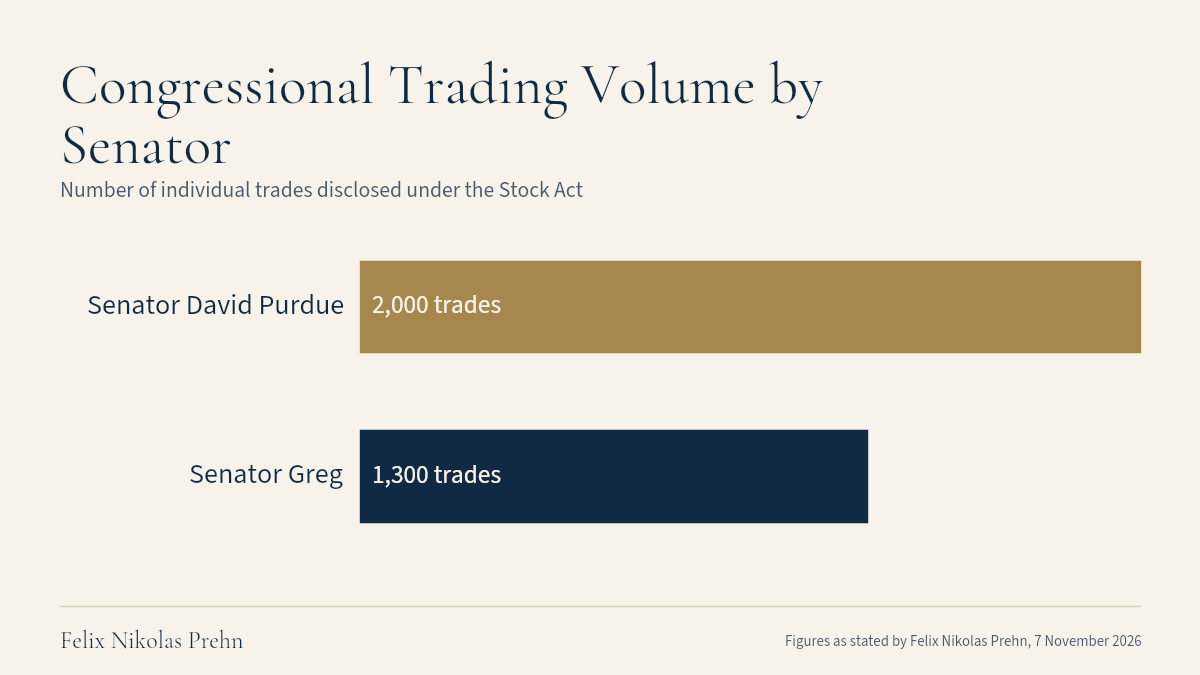
Well, yes, they also have to report their trades. There's a law called the stock act and what they reported in the last 10 days is well you can see actually all the trades here of the Senate there's 75 senators who trade some a lot I mean this chap here uh Greg 1300 times um there's another one here David Purdue uh 2,000 trades good god uh he must be very very busy running the country um you can look up that all up yourself you can again you can set alerts for these people. So you can just you can just follow them. House of Representatives, same story. So let me show you one example here.
Maria Ela Salazar, who is a Republican, not that it particularly matters. Um 17 people, you follow her, very very very you know particularly not not very popular. Um congresswoman for Florida apparently. What did she buy? She bought Nvidia and Proctor and Gamble. just again doesn't mean very much, but you can look up these guys and you can see exactly what they're buying.
And some of you might be more interested maybe in what Elpresented buys, for example. Um, and you can see his major buyers. He's he's poured back into the the the big tech stocks, which he previously sold. He previously sold Meta. So, you can see exactly that.
You can see what he was selling. Again, just because these guys buy it doesn't mean they're right. It doesn't mean it's the be all end all. But you can follow it. You can literally just turn on here follow and then turn on alerts on that and that way you will get the notifications.
You can do that on every politician on every insider every CEO. You can do that on on every stock. So if you want to see say Nancy Pelosi just type Nancy in the top there says politician and again alerts are off for me. I didn't follow them. You could turn them on if you wish and you can see exactly what she is selling.
And she just bought some Bloom Energy Curious Intel. Interesting. um July 24th is the last filing there. So, it's been a while and she she tends to do a lot with options which makes the whole thing a little bit more complicated to follow along. But it is amazing the data that is available to us if you ask me. And again, each piece of data is a part of the puzzle.
I never buy something because somebody else just bought it. That's the worst reason to buy something because when it goes against you, you are like, well, what do I do now? I can't ring up Nancy Pelosi or her, you know, husband because apparently it is it is the husband who does all the trading and they never talk to each other. So everything I've just showed you lives in the Winston. Um I I always particularly curious myself in in insiders flipping.
So people who used to sell a lot and then suddenly start buying a lot. I always think that's kind of interesting. Completely ignore the sellers. It's just basically noise. Um, and as I say, it isn't a guarantee of any kind of, you know, return, but it is certainly a piece of data that I like to be aware of.
Um, look at some of the biggest signal buys in the last 90 days and and particularly, and that's why we put it on the on the homepage, which is basically your personal personal um, newspaper, like whatever stocks you put on there, it it'll just write about your stocks and and and see what the really big ones are. you know, insiders buying their own stocks in very very large amounts, which I think is definitely a useful piece of data that I wouldn't want to miss. So, you don't have to miss it either. Click on the free link down below. And again, it's a risk-free proposition. Don't like it if you just cancel it.
Um, you can also let us know. There's a feedback button in here and you can tell us what we can do better and we will do it better. We improved this every single day. I work on this every single day. The team works on it every single day.
Uh, it's something that I build selfishly for myself. Of course, Winston did.
Um and and then I make it available to many of you because I think there is value in good information. It's not about all information because there's too much information out there generally. But having it narrowed and filtered down to say if you have a big position in Intel, wouldn't you want to know that the CEO just bought it? Right? So that's kind of where I I I start with it.
It's like just look at the stuff, follow the stuff that you own and and that way you are better informed and therefore you can make better decisions. So free link down below 30-day free trial u and the next time one of your stocks has a board member buying or selling their stock uh has a has a big transaction or politician buying or something like that, you will actually know. Um, and if you got some value out of it, share the video with somebody else who might benefit from it, too. I wish you all the best. >> Right now, I think we're going through some sort of weird phase transition. And normally when you get bad economic news or you get bad jobs data that people are going to fly to safety into the bond.