Transcript
For 26 weeks in a row, the US government has been quietly draining America's emergency oil reserve literally every single week, and it's now at the lowest level since 1982, which is a 44 year low. And nobody seems to have noticed. And I almost scroll past it myself, but I couldn't quite leave it alone because this was never really about the oil. America pumps more oil than any country on the planet. It exports the stuff.
So, why would anyone empty the emergency tank week after week at the exact moment the country doesn't need to? I think I know why. And it's kept me up a couple of nights since because it lines up with two other things that turned up this month. And it's the three of them landing together at once that actually worries me. On their own, each one is just just a thing.
You kind of go, "Yeah, okay, whatever. oil, you know, but together they actually tell you what's being set up. And the last time I've seen this setup, ordinary savers got cleaned out. Well, a small group who saw it coming walked away well a heck of a lot better off than they'd been.
And by the end of this video, if you give me a few minutes, you know exactly what the skilled money is doing right now. and you'll have seen the one number that made me move what I'm doing just a couple of days back. Now, I appreciate I'm sitting in a hotel room here in Tokyo. Um, and and therefore this might be a little bit, you know, unstructured. I apologise for that. Uh, but I'm going to put together a a PDF report with everything that's happening here, what affects your money, what the big players are doing, and so on.
Um, and it's completely free. You can download it. Zero zero catch research report. Just go to phoenixfren.org/ I think research is the link. It's down below in the descriptions. just grab it, read it alongside this or write read it afterwards and and actually the fact that you're even here and watching this is amazing because you know you could be watching a cat video.
Let's face it, right? So pretty tough competition and and that's why most people are going to find out about this like in a year or two when it's too late. So you're finding out about it early. So well done. Tap yourself on the pat yourself on the shoulder.
And then if you're wondering who the heck I am, my name is Felix Pin. I used to be an investment banker. I'm an economist. And then and I got out and I started teaching people about six seven years ago or something and it's it's been really really fun. And I'm sitting right now in uh you can just about make it out in Tokyo.
Uh which is which is an interesting place to be um with everything that's going on in the in the world right now. Um now this video is also never sponsored. Um there is nobody who's sending me anything for it which is brilliant which means I can say exactly what I want to say and that's exactly how I like it.
Now, I'm not going to run you through how big the debt is or or any of that because you basically know that if you don't, you know, watch one of the debt videos we've done. But what matters for this video is one thing everybody already accepts. The debt's enormous and it only gets more expensive over time, right? Fine. That's basically the the backdrop.
That's not what this is about. Now, the one thing worth holding on to is, however, this when a government is trapped like this, there is only one way out. And that one way out doesn't involve paying for politicians, which is really what their motivation is. So what do they do? They push the interest rate back down and you keep inflation higher.
So don't worry about the debt and worry about what they're willing to break to make it cheaper. And where I'm right now, Japan, they've been doing this for the last 20 years quite successfully, I must say. and your working man, the salary man has been paying for it. And it's going to be the same for you in the US and in Europe and the UK and pretty much everywhere else in the world.
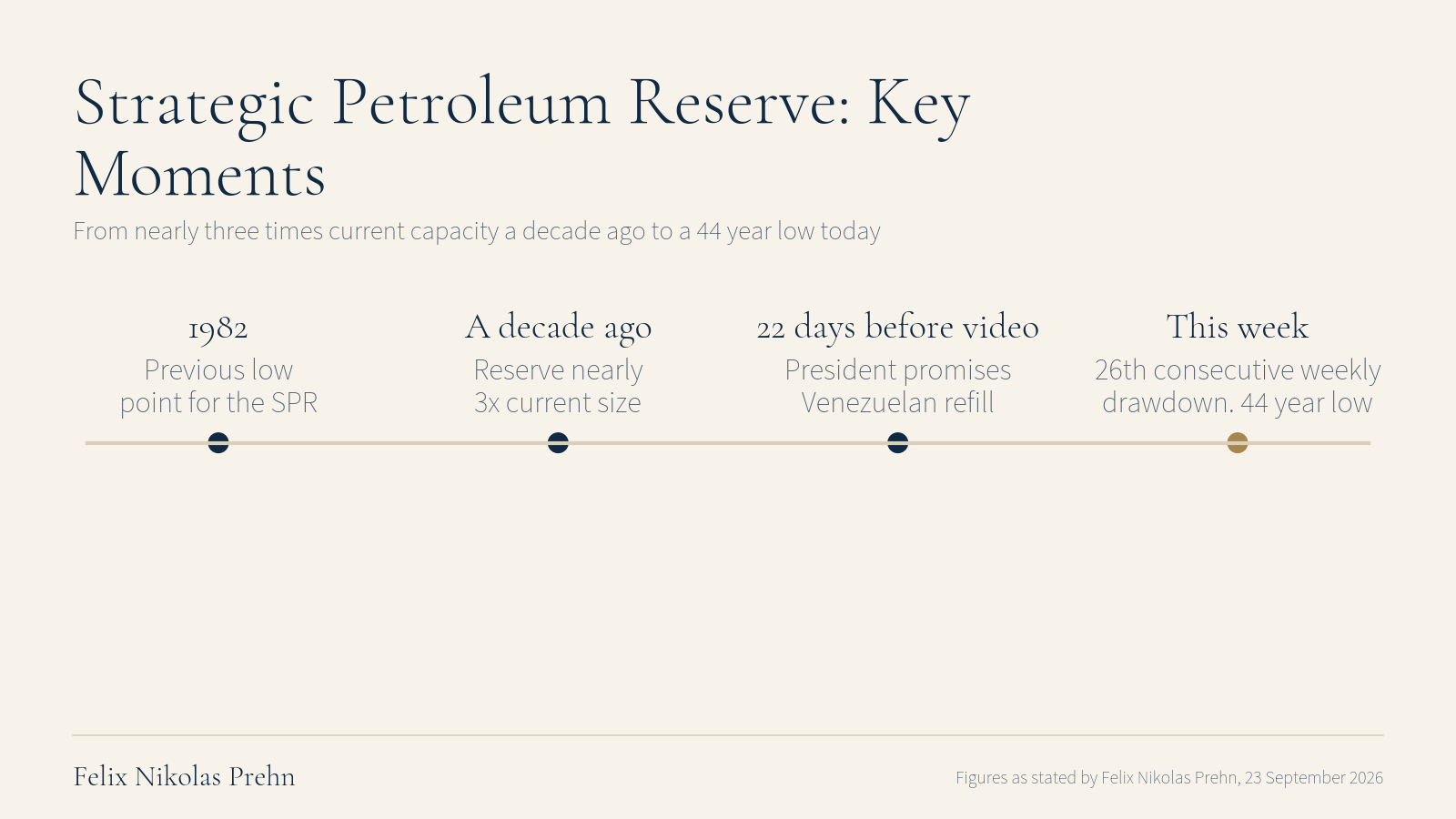
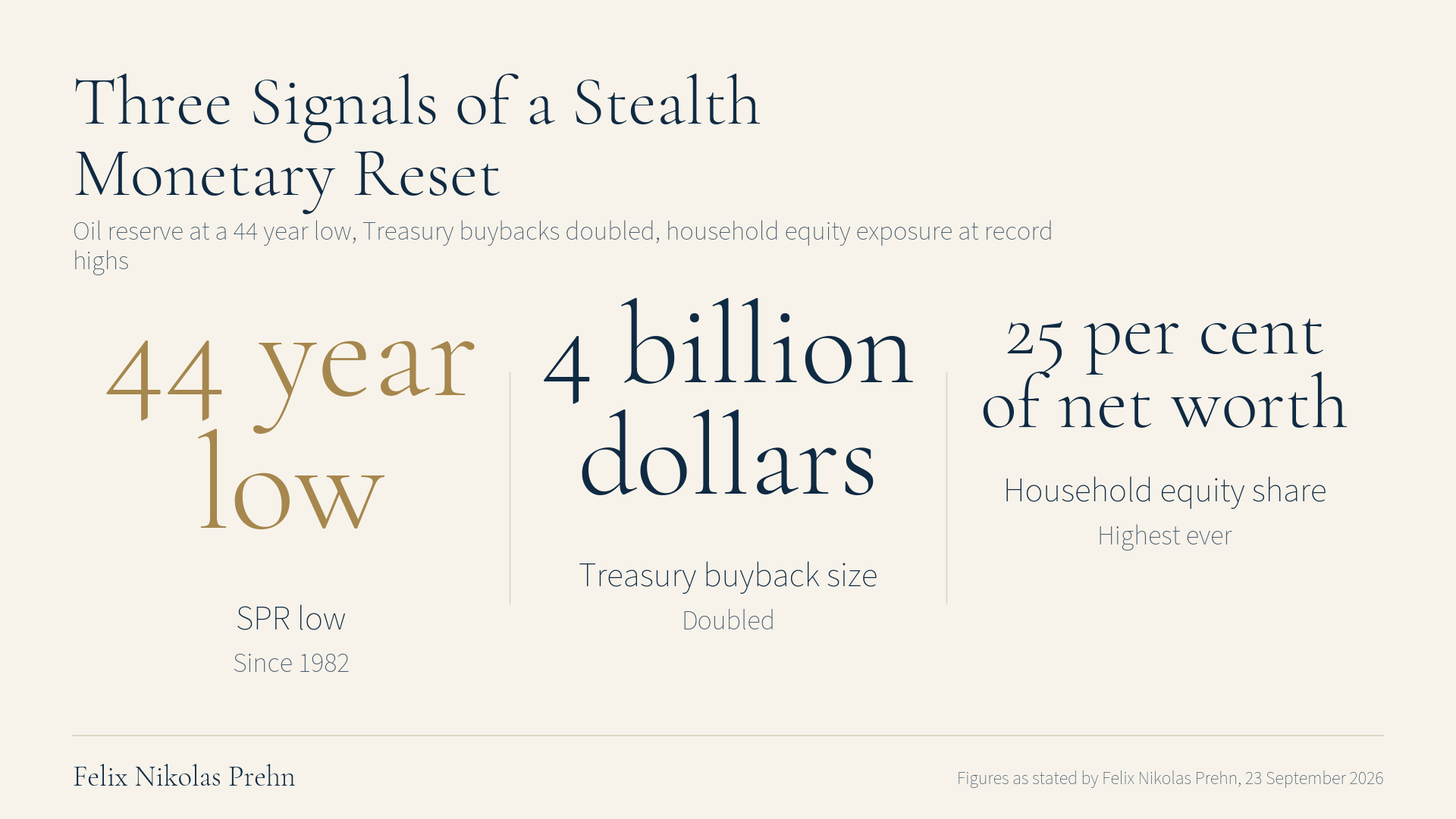
So, let me run you through the three things that have just broken and why that matters, but they're all happening together. One, oil reserve. Okay, the American strategic petroleum reserve is basically the backup, right? So if a hurricane takes out the Gulf, if a war shuts down the shipping lane or something, that's the tank you open so that you know things still get sort of moving. And it's at the lowest level since 1982.
And the president just released another 400,000 barrels last week, a 26th week in a row of it declining. No one's adding to it. It's just declining. And that reserve about a decade ago was almost three times as big. So, they've been running this tank down for quite some time, but very, very rapidly the last year.
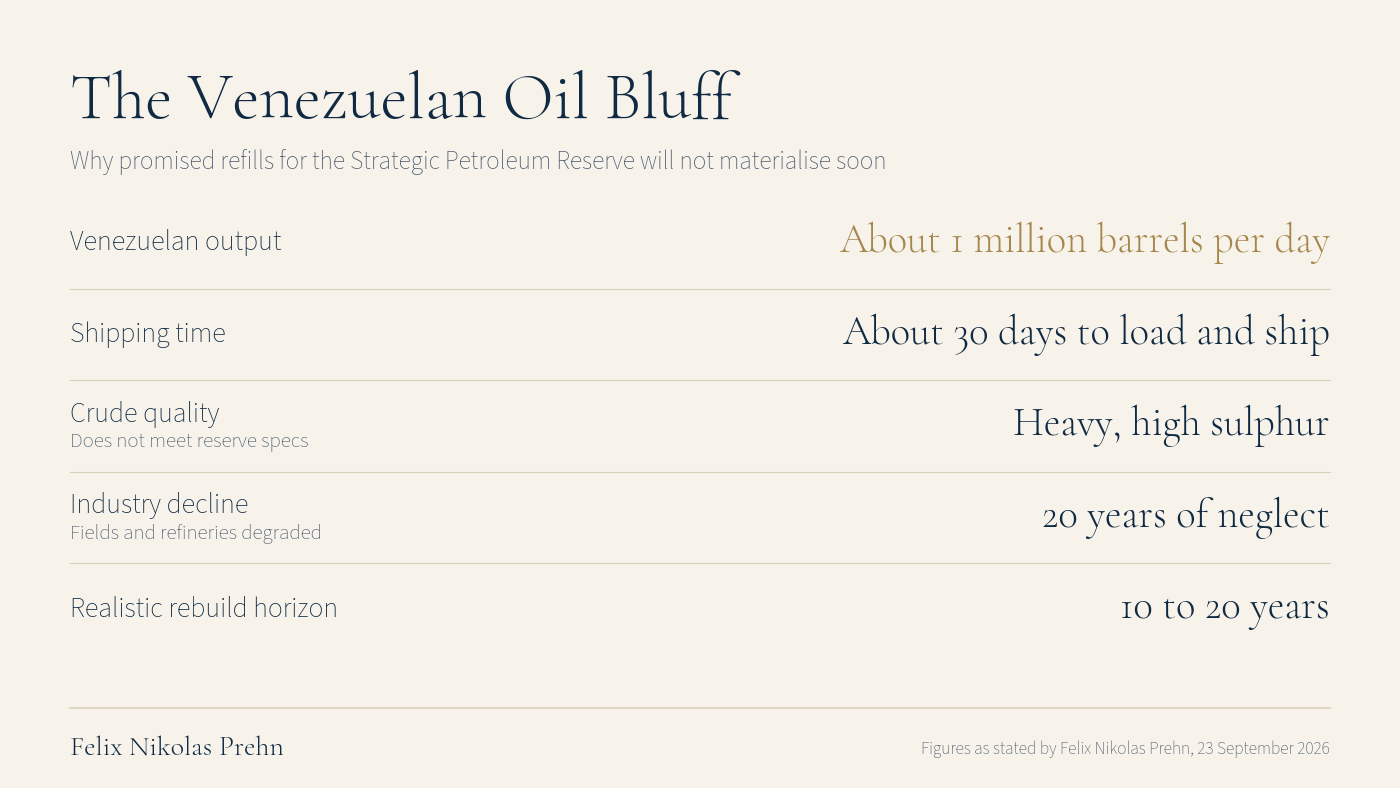
Now, the president said 22 days ago that he'd start refilling it with Venezuelan oil, right? So, where is the Venezuelan oil? Well, Venezuela pumps about a million barrels a day. Um, tankers take about 30 days to load it and just get it out of there. And even when it does load, the Venezuelan stuff is heavy, sulfurrich stuff that doesn't meet the reserve specifications.
It's just the wrong kind of oil. doesn't refill the tank. So, it's just, you know, politics. The Venezuelan oil industry has also been falling apart for the last 20 years. The fields are neglected. The refineries barely run.
And the crude that does come out, as I say, it's that really really thick stuff. Um, so this is going to be important in about 10 to 20 years. That's the time scale to really really get Venezuela up to speed. So, this isn't a short-term solution. It's just a headline they put out to kind of, you know, fugazi a little bit.
So ask yourself the obvious question. Why do you empty your emergency tank when you produce more oil than anybody on Earth? Well, it's simple. They're using it to hold down the oil price because if oil spikes even further on top of everything else, the inflation number goes from awkward to unmanageable just in a night. And the bad inflation number is the one thing that stops them doing what they need to do, which is print money.
So, they're leaning on the reserve to keep the pump price looking just about acceptable.
It's sort of a shock absorber, right? And it's a trap because the only way to hold down the price is letting the oil out of a tank, but the tank is almost empty. So, what happens when it finally runs dry or when a real shock returns like we could get another hurricane, right? We haven't had one all summer, which is very unusual. First time in 22 years.
The uh the the world is uh is is is ending. crowd hasn't mentioned that one. I know. Um, Middle East could get a lot worse, right? Well, what happens then? Well, the price then spikes and diesel jumps first, which is already done.
Uh, because that's what we used to move freight. And then the second diesel jump, everything that travels on a lorry gets a lot more expensive, which is basically everything that you buy, food, building materials, everything. So they're borrowing calm from tomorrow to make today's inflation number look a little bit more socially acceptable possibly before the election. I mean I don't want to imply anything here but you know what I'm saying, right? And and therefore the calm the relative calm is manufactured.
The emergency tank is almost gone. So now you know it's actually a lot worse than it should be oil and diesel prices. So what do you do about it? Well, they tell you and it costs you nothing. inflation is going to eat you alive and it's going to be pretty pretty harsh. And literally come to Japan and talk to someone who's worked in a corporation for 20 years for a salary and they'll tell you exactly that that they are much much worse off than they were expecting to be.
Whereas the top 1 per cent of the country is living an absolutely wonderful life because it doesn't affect them. And I know it's very unfair, but that's the system. And that's the system being deployed once again in the US, and it's going to affect you. So, I'm going to run something for you this weekend live here from from from Japan. For two hours, we're going to sit down together.
We're going to go through exactly how to build a plan for this for your money, for your retirement before the calm breaks rather than after because then it's too late. So, I'm not going to give you a PDF for it or something that you're going to skim through and and then forget. No, we're going to do it live. the two of us, well, probably a few thousand other people, but you know, life and and we're going to walk you through what the big players are doing right now and how you can copy the sensible parts of it around your own life. And you can grab yourself a free ticket for that at inflation.com. Go and grab a seat while you're thinking about it because there'll be no replay.
Uh, it's just going to be live. If you're there, you're there. Um, and if you're doing that, um, write thrive in the comments down below because that's my goal for you, that you come out of this thriving like the top will. The top will come out of this absolutely wonderful. Politicians will come out of this absolutely wonderful.
But honestly, most people, they're going to they're going to going to suffer some real pain, not in six months, but a little bit further down the road. And therefore, they're not going to notice quickly. And let me show you the second major issue you need to understand. And it's the one that, you know, made me sit up and approve my posture.
It's it's the Treasury. The US Treasury just announced it's doubling the amount of debt it buys back. $4 billion each time now. And and and it's called liquidity support because it sounds sort of vague and fluffy and and you know, like kittens. So nobody knows what it means. So what does it actually mean?
The government borrows by selling bonds. So I use now not enough people want to lend the US at a reasonable price that the US can afford. So the government now buys its own debt. And that sounds weird, right? Um because normally it's foreign governments that been buying it.
Japan, the Gulf States, the big pension funds and so on. And they're happy to park their money there. But the problem is not that people don't want to buy US debt. It's just there is a lot more US debt being sold every week and there not enough buyers. So what do they do?
Well, they sell the debt to themselves. Yeah, that's kind of like me saying, "Oh, Felix, could you lend me $1,000?" And I'm going, "Sure, Felix. Here's $1,000. I just printed it." And I go, "Oh, wonderful. Thank you very much." I mean, that's literally what it is.
It's an absolutely bizarre system. Exactly what they've done here in Japan for the last 20 years. And once a country becomes the main buyer of its own debt, it crosses a line. And history is not that kind about what usually comes next. It's a pattern.
You can see it again and again and again. So follow the money because this is the whole trick in this case. So the Fed prints new money. It buys the government's debt and the debt that is then used.
So the cash, this is confusing, isn't it? So here's the Fed. The Fed prints money and with that money it buys short-term debt from the US government and the US government therefore has cash, right? They then use that cash to buy its own longerterm debt. The stuff that's 10, 20, 30 years long and that does one thing, it lowers interest rates artificially.
So we create new money at one end and it comes out the other end holding down the government's own borrowing cost. It is just money printing. That's really all it is. It doesn't matter what they call it. It doesn't matter how complex it seems.
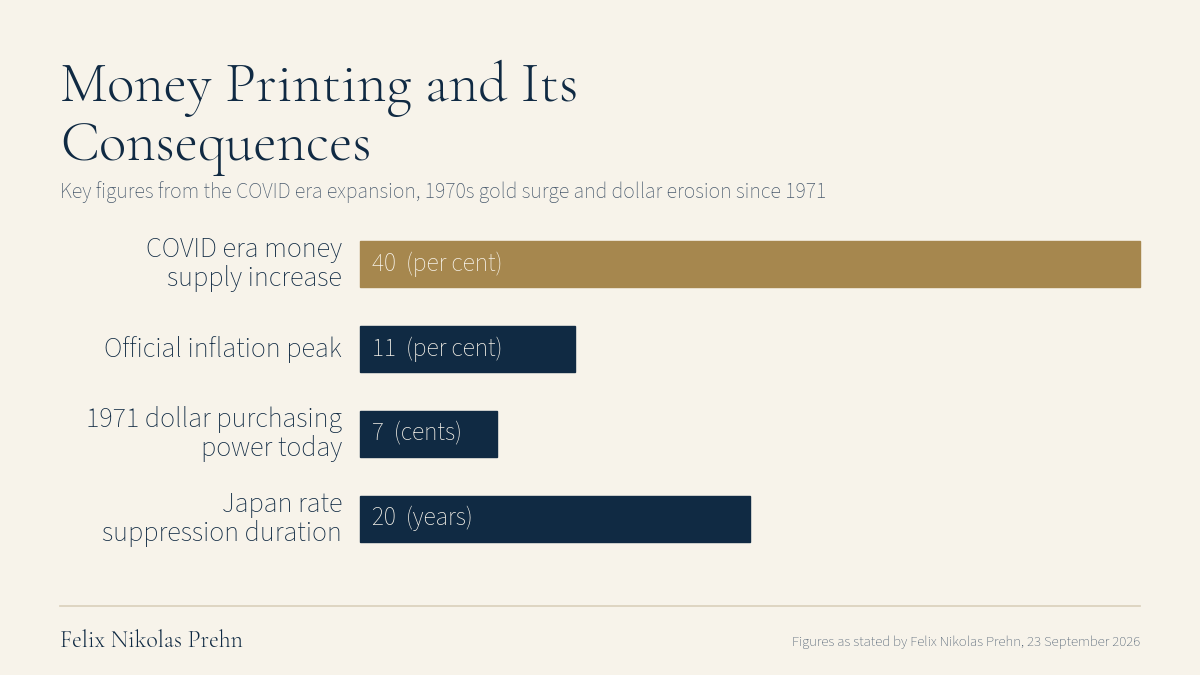
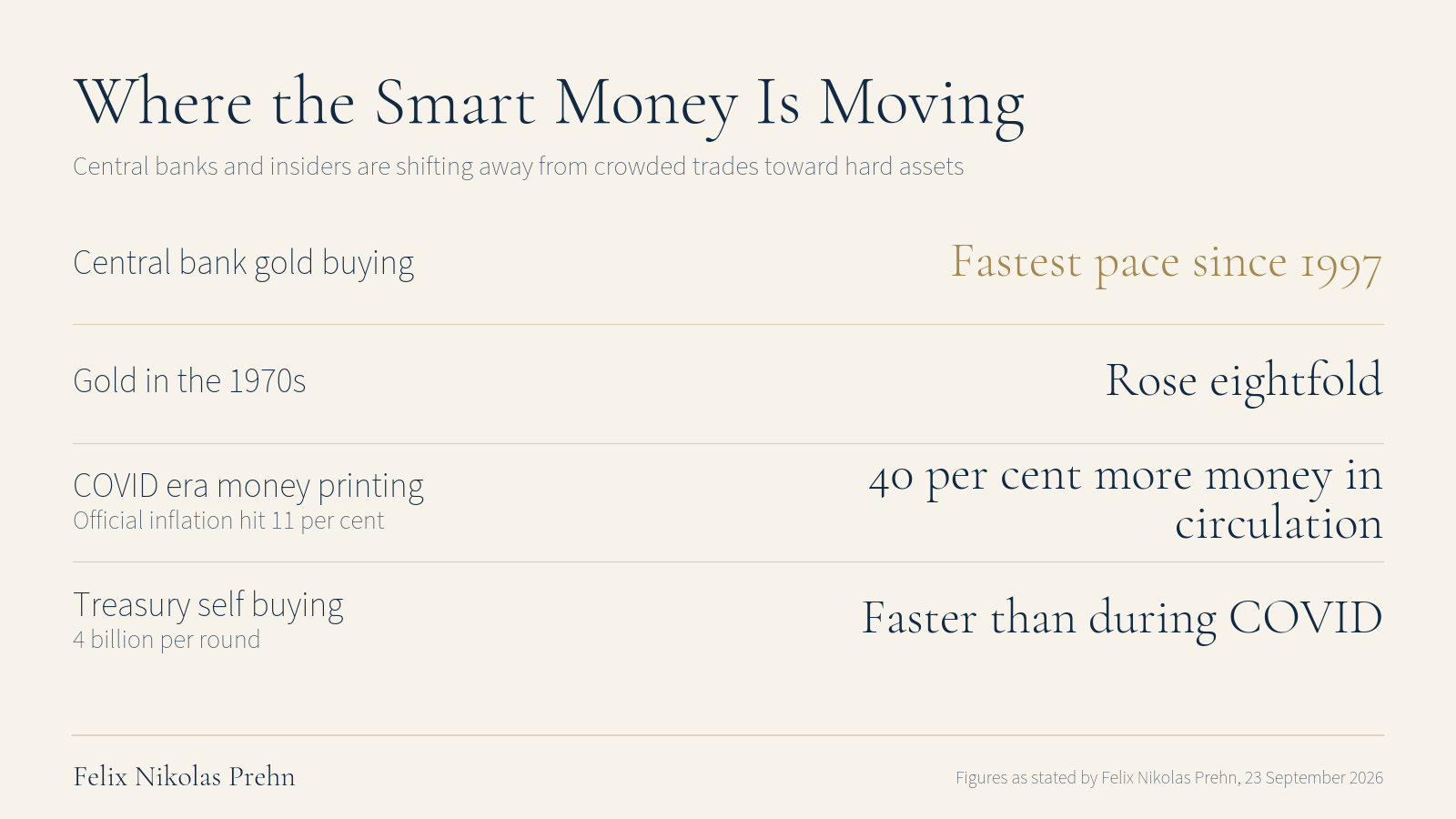
It is just money printing. And you will remember last time they printed money which was during CO, right? They added 40 per cent more money in just a couple of years. And what happened? Well, inflation went through the freaking roof, didn't it?
Officially 11 per cent. Which of course was a number they made up entirely. And it is actually way, way, way worse. Ask me, I think it was a couple of hundred per cent, but we don't need to get into that. So, it's a magic trick.
It's the same rabbit. It's a different hat. They called it something else. And it means that every dollar you are holding, every dollar you're getting paid is going to get watered down just a little bit more. And if you're waiting to notice that it will be too late.
So really come and learn with us. It's free on Saturday at uh inflationtrap.com because this is this is the thing that's going to really set people apart um for a lifetime.
Seriously, this is a big one. Now the third thing and this is what tells you where the money is actually going. Um this month it was reported that SpaceX, Anthropic and Open AI, three private companies are worth more than every single US company that went public in the last 45 years combined. Read that again. Just three companies that you and I cannot buy.
Well, one you can now buy, SpaceX. The other two are planning to list. They're worth more than 45 years of public tech listings put together. So every tech company you've ever heard of that you have ever owned a stock in, these three companies are worth more than all of them together. And it's a huge wealth power being created behind a door that most investors are locked out of.
So even the upside, the good bit, the growth is being funneled to people who are already well behind the very special platinum door. And where does that leave the money that you can reach? I mean, the money in the public stock market. Well, it's more crowded than it's ever been. American households have never in history been more exposed to the stock market than they are right now.
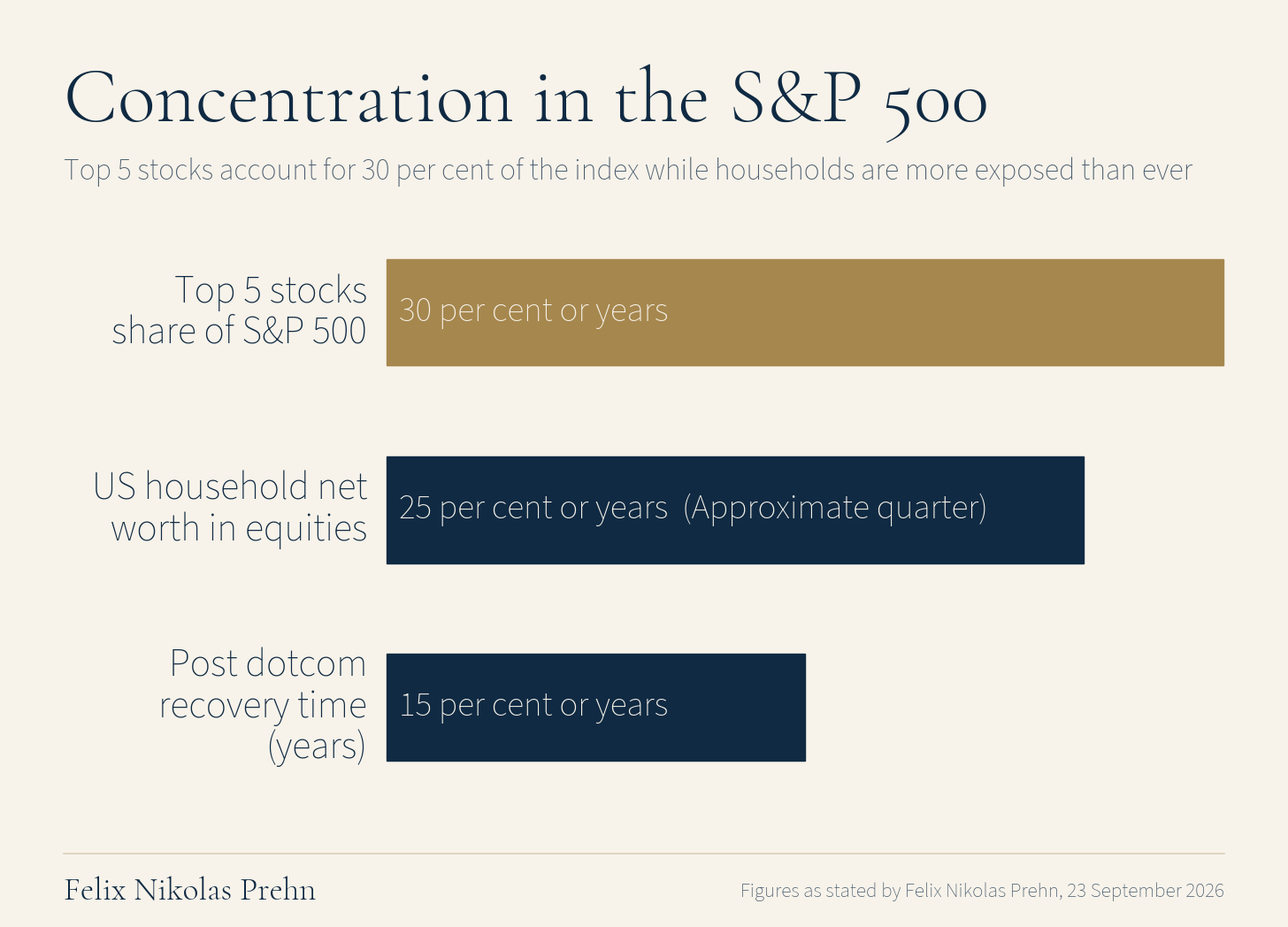
About a quarter of all US net worth is tied up in stocks. That's higher than the during the com peak. That's higher than in 2008. It's the highest ever recorded. and it's piled into just a couple of names because the five largest names in the S&P are now 30 per cent of the whole index. So if you have that safe index fund, which you definitely do because it's in your pension fund or your 401k or something, it's basically writing on just five tech stocks who all pretty much do the same thing.
So people think there is this safety in an index fund and I love an index fund. It's a, you know, don't stop investing. do buy index funds but you need to understand how concentrated that is and how that impacts everything else that you could then possibly be doing because this bubble is going to crack not this week not this month not next year maybe but it's going to crack at some point because every bubble always has right.com which is when I started investing took 15 years to get back to where it was 15 years so for a normal family that means the pot that's meant to be safe, sensible, boring part of the plan. The retirement money is just really just tied up in this tech market more than ever in American history. More than in 1929, I'm serious. More than in the com mania.
And when everybody owns the same five things, there is nobody left to sell to when it turns sour. You see, and that's why these bubbles burst so quickly because you try to sell, everyone else tries to sell at the same time. and there isn't a soul on the planet who doesn't already own it and they probably want to sell too. That's why you get these big draw downs. So yes, they're printing money and it keeps interest rates low. It makes inflation they make inflation look artificially low because they fudge the numbers when they're giving out oil.
Um but the gains from all that printing are being steered away from ordinary people before it even lands. So we haven't got three things happening here. We've got that reset quietly being switched on. And what do you actually do about it? Well, you do what I always tell you to follow the money, not what people are saying.
Watch what the people with the best information are actually doing with their own cash, not what they say on telly or social media. Right? It starts with the filings. Donald Trump files his own trades, right?
You can look them up. You get a live notification for them in in the Winston app. That's one of the reasons I built it. go to um the the the link down below for the Winston app. You get a month free trial, like a whole month. You get all the alerts.
You don't like it, you cancel it. And you can see what he was buying. What was he buying? Burkshire Haway, which is basically a great big insurance company. He bought Visa in Mastercard, right?
Which is just like a toll booth for everybody living. And when prices go up, which they will, well, they get a percentage of every bit of spend, so actually they get a little bit more. It helps them, right? But Home Depot, Tractor Supply, Republic Services, that's a waste management company, I believe. Real businesses, cash machines, and what do they sell?
Meta, talent here, Netflix, the stuff that everybody else is chasing. So on the way in, boring toll booths that love inflation, and on the way out, all the crowded tech stuff. I'm not saying you should follow the president's mad trading, but notice the pattern of what the skilled money is doing. It's not exciting. It's waste collection.
It's home improvement, dull essential businesses. And then I look at everybody else's portfolios and we see thousands of portfolios because my mentors teach or taught like 25,000 people in the last six years. And the portfolios are basically 99 per cent tech because that's what's in the news. That's what's on television. That's what all the talking heads are talking about.
And why are they talking about it? Well, maybe they're trying to sell it, right? I'm just just saying. So look at the guys with the inside information.
Look at the guys what printing the money or the guys printing the money. They're buying gold at the fastest pace we've seen since I think 1997. Right? And they're buying it because they know what's going to happen to the currency because they're printing more and more of it every single day. Right?
In the 70s, gold went up eight times. I'm not saying it's going to go up eight times. I haven't got a crystal ball. I'm not a financial adviser. I don't predict the future.
But I'm saying look where the money is going. The big money, the skilled money. So you now understand something. You understand the connection between the oil reserve, why they're doing it. You understand the Treasury buying its own debt faster than they were during CO and are trying to like distract you from it.
So what do you do now? Look, I'm not here to give you financial advice. I don't do that. But I can tell you what I'm looking at. Hard assets, real businesses that throw off cash no matter what happens. the toll booth type companies that El Presidente is buying, gold and silver because that's what people in in in the central banks and the guys who print the money are buying and avoiding the crowded stuff, avoiding the stuff that everyone's talking about it.
When everyone's talking about it, it's usually too late. Wall Street calls it selling the book. You build up a position. You then send a charismatic chap onto, you know, CNBC and then he talks about how wonderful that stock is. And then as people buy it because he's talking about it, guess what?
You clear your position out and you take a profit. Right? So in my opinion, we're in a place that is the most important we've seen since probably 1971.
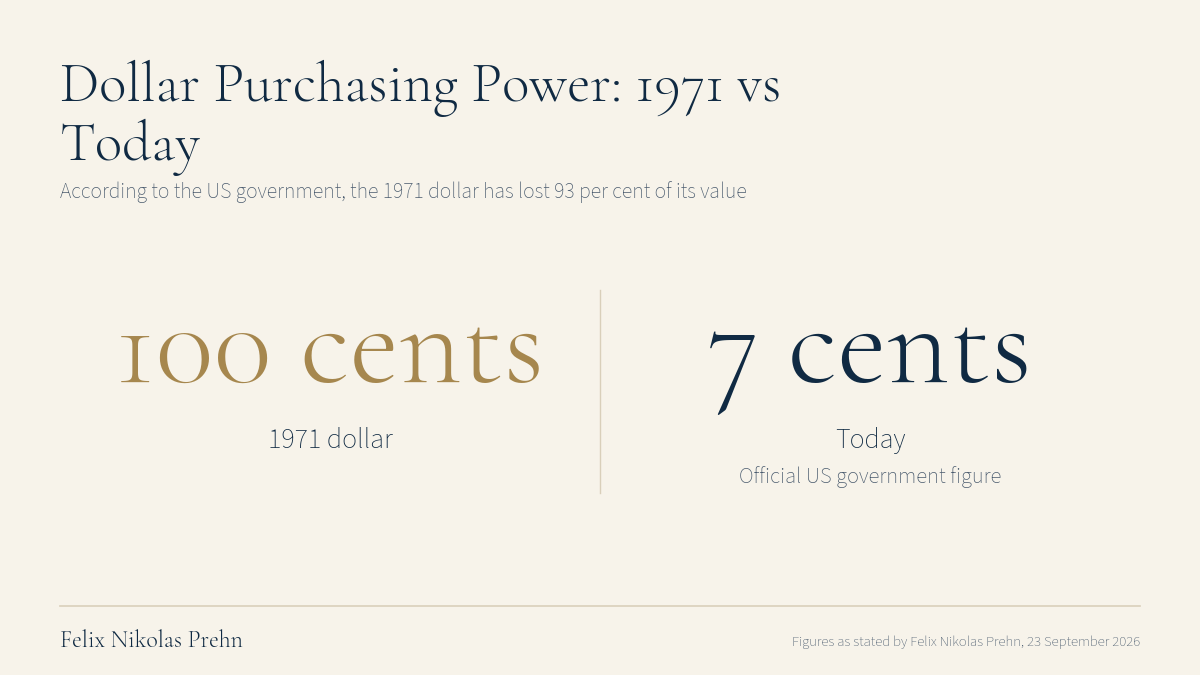
And most people will get hurt just as they did in 1971. And just to make that clear to you, the 1971 according to the US government is worth now 7 cents in purchasing power. 100 cents became 7 cents. That's the official government number, which I don't believe. So, I think it's way worse.
The same thing is going to happen again. It's just maths. It's just logic. It's just the only way out of this. So, please please please shake yourself and learn what to do about it.
You can join me, as I say, live this weekend, Felix, uh, at um, inflation.com. Links down below, because you're going to want to write out a plan that fits you. Your situation is different from everybody else you see on social media. So don't just copy my plan or someone else's, but learn how to build that plan. It's a free live training.
Grab yourself a seat. Show up. There'll be no replay because people don't watch them. It's like me giving you that 100page PDF about it. Again, people don't read it.
Um and I know you're going to say, "Yeah, but I will, but you actually won't as as much as you intend to." So shelf up for yourself on time. uh write thrive in the comments down below so we see that you're going to show up. And preparing to thrive in this rather than sitting back and hoping that some politician sorts it out for you is is just the only smart and rational thing to do because in 12 months, 24 months, 36 months, a lot of people are going to be looking around. They're going to be mad. They're going to be really really mad what happened to their savings, what happened to their portfolio, what happened to their their salary. And they've been punished for not having been taught what to do about it.
And it's insanely unfair. And that's one of the things that motivates me here is to u to to write that wrong. And I thank you for watching. All the best. >> Right now, I think we're going through some sort of weird phase transition. And normally when you get bad economic news or you get bad jobs data that people are going to fly to safety into the bond.