Transcript
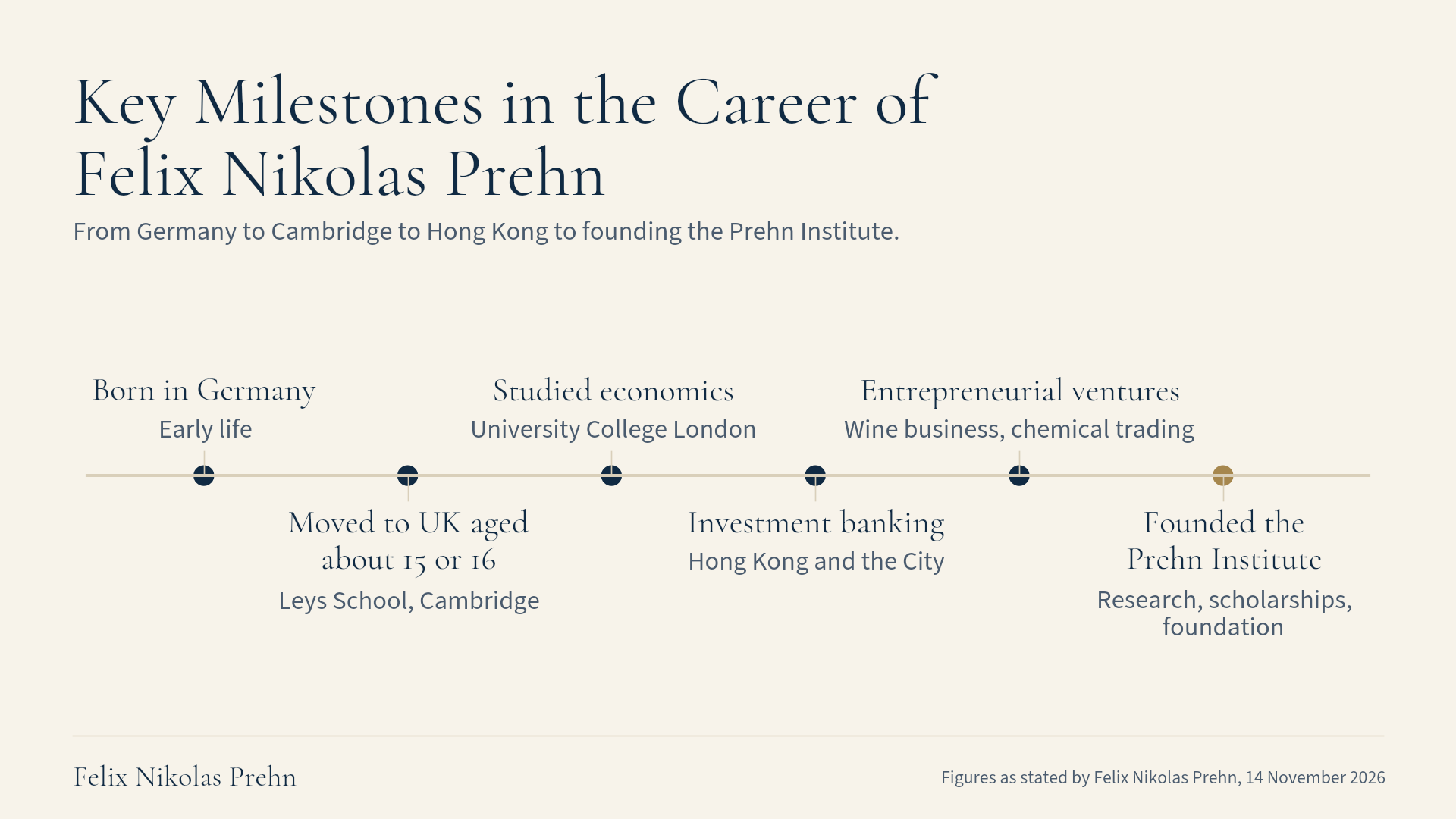
Who are you? And what do you do? Good question. My name is Felix Nikolas Prehn. I'm an economist. I used to be an investment banker. I'm born in Germany for my sins. And I run a thing called the Prehn Institute, which I founded to essentially do and champion research on financial markets, economy, and also give instruction and guidance on how it actually works.
Prior to that, we did something related under something we called the Goat Academy, which is mostly about instruction. What happened to the Goat Academy?
The Goat Academy is something we started maybe 6 or 7 years ago. And it really came out of a desire to share and explain to just ordinary people out there, how do financial markets work? Share the knowledge that we learned from having worked inside of these investment banks and the knowledge that my mentors have. What we did there continues under the Prehn Institute umbrella. Same faculty, same curriculum. We've just felt that with all the things that we are now doing, which is a little bit more academic research, it felt more right to wrap it under a new brand.
What is your background? Good question. I'm German born. I came to the UK when I was about 15 or 16. I went to school at the Leys School in Cambridge. And then I studied economics in London at University College London just around the corner from here. And I worked as an investment banker for a little while in Hong Kong. I worked in the City for a little while. And I really realised fairly early on I don't enjoy the corporate environment and working for people.
I then went off and did a bunch of businesses. I worked for my family's wine business for a while and expanded that into other markets. I set up a chemical trading business and actually many other things, many which still operate, but I'm not involved in day-to-day. And then I founded the Goat Academy, which continues under the Prehn Institute now, as it were, where we focus on giving people instructions on how the markets really work, how it impacts those who are most affected by the decisions of central banks and policy makers and what happens in the financial markets.
And we've taken that a lot further now with the Prehn Institute where we are offering scholarships to economic students. We are doing a lot of research and we're actually in the process of setting up a charitable foundation as well to just take the whole thing to the next level and we focus on the impact that we can make with it.
You've appeared along some very well-known names in finance. Can you talk about that? Yes, I'm very fortunate to get to talk to a lot of interesting people, whether they might run massive podcasts or whether they are professors. For example, the other day I had a lovely conversation with Jim Rogers, who's a billionaire investor who founded the Quantum Fund with George Soros, I think in the '70s. And not only did they make tremendous returns, but Soros went on to break the Bank of England quite famously. And I just love talking to people who we have something to learn from, who are happy to share that wisdom with others so that they can benefit from it. My mantra in life is there is always someone who's done it, so go and find them and learn from them. And I think it's really the shortcut to life.
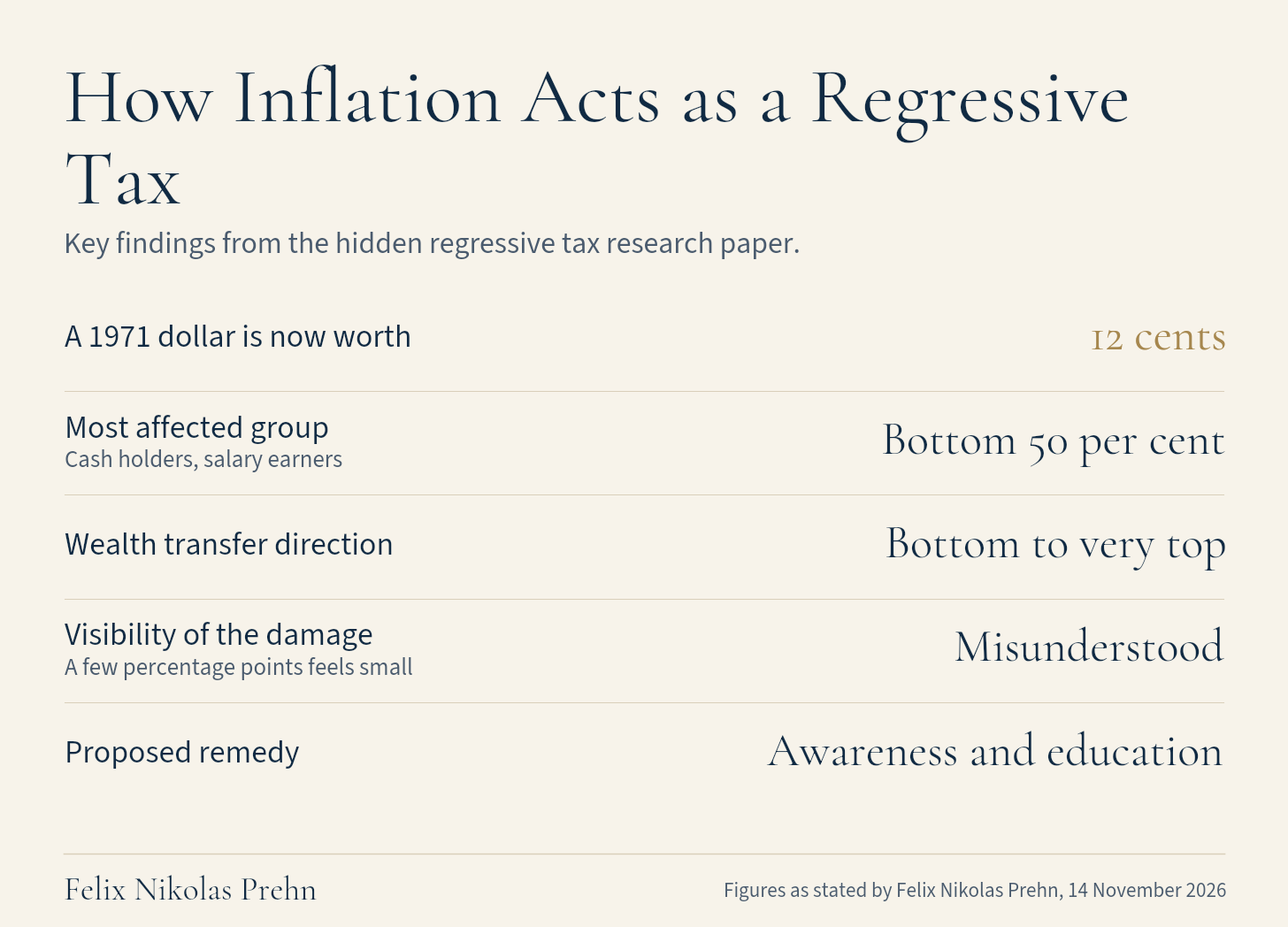
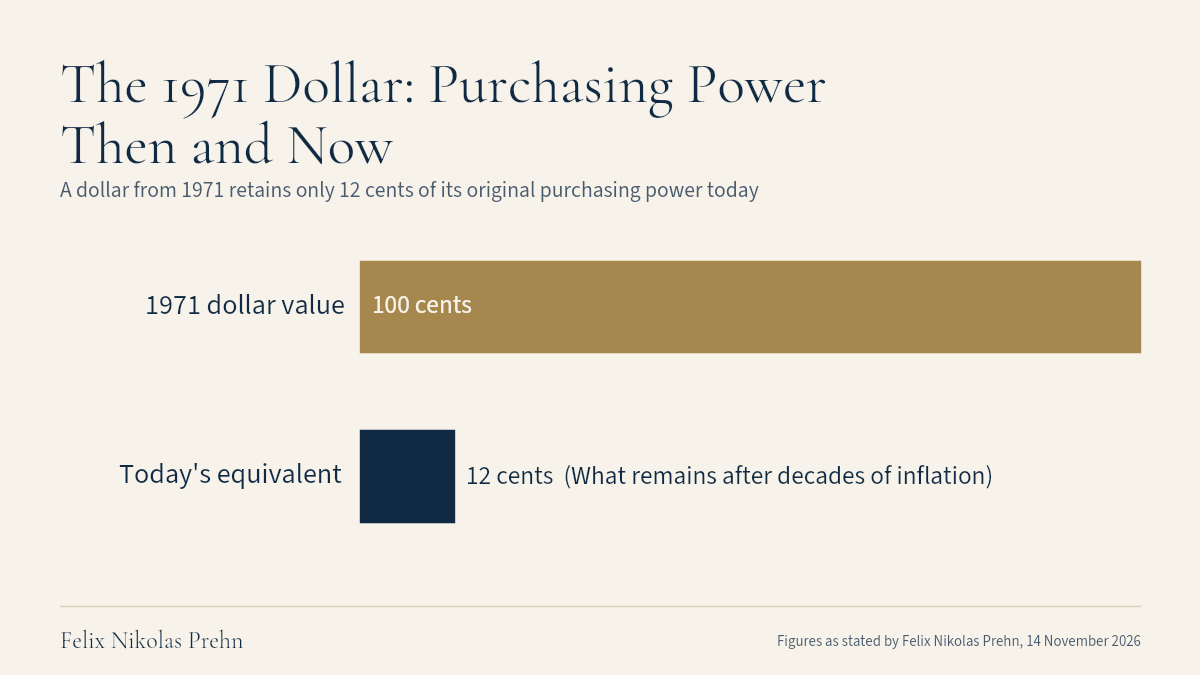
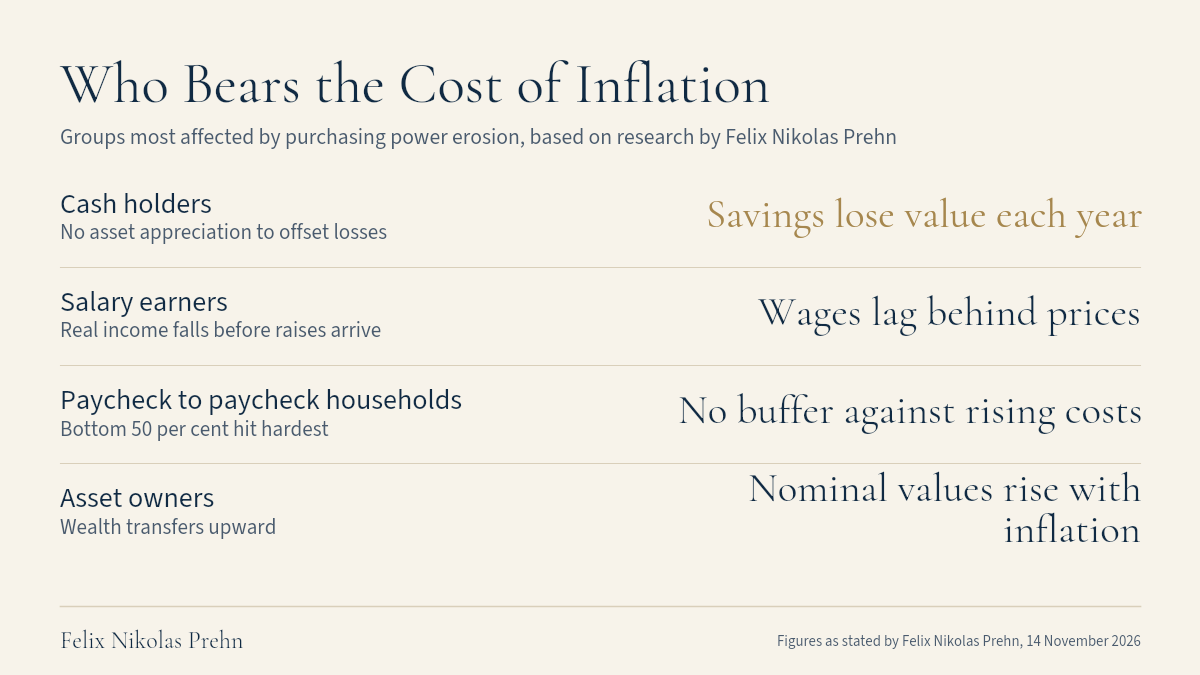
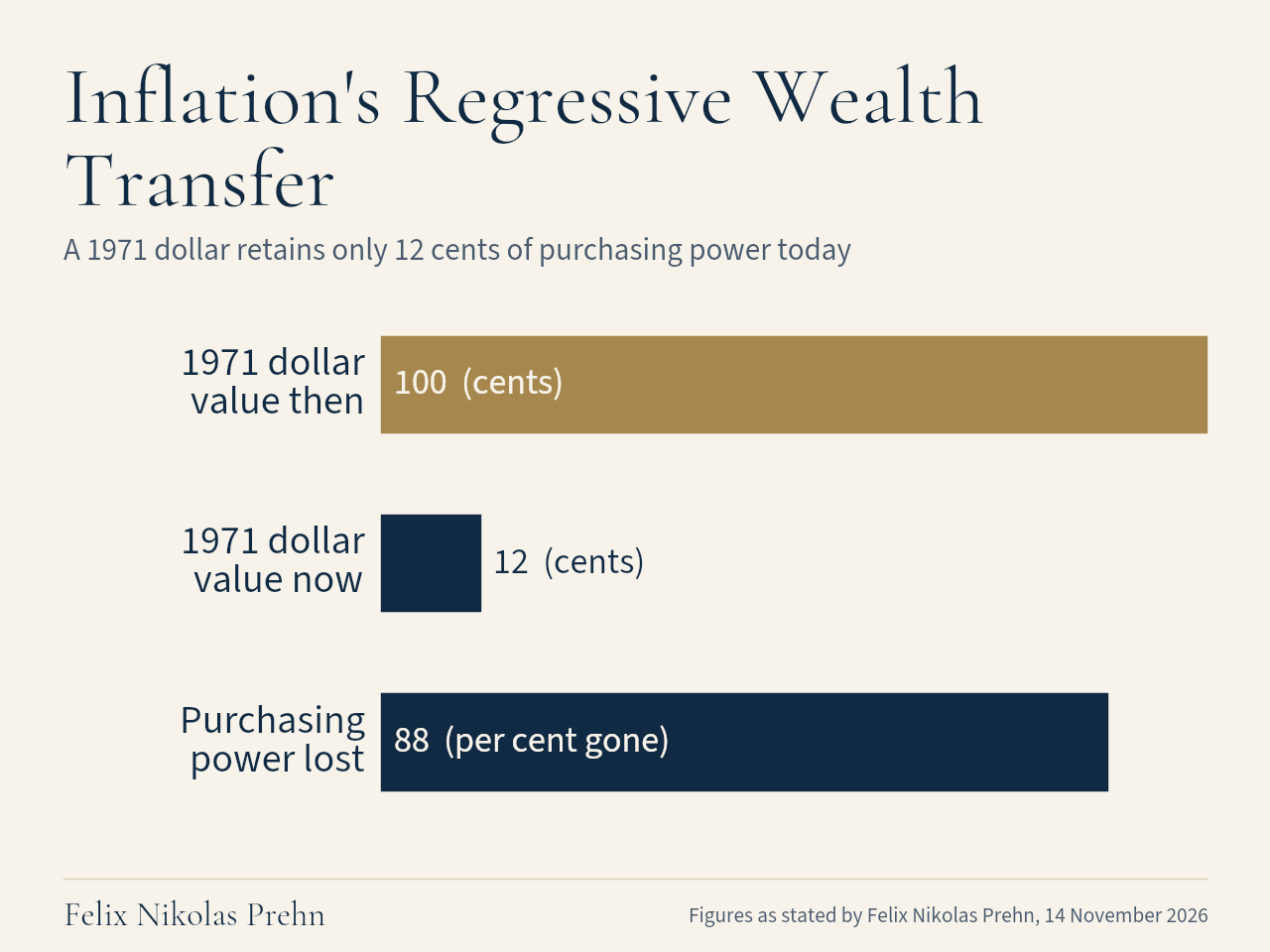
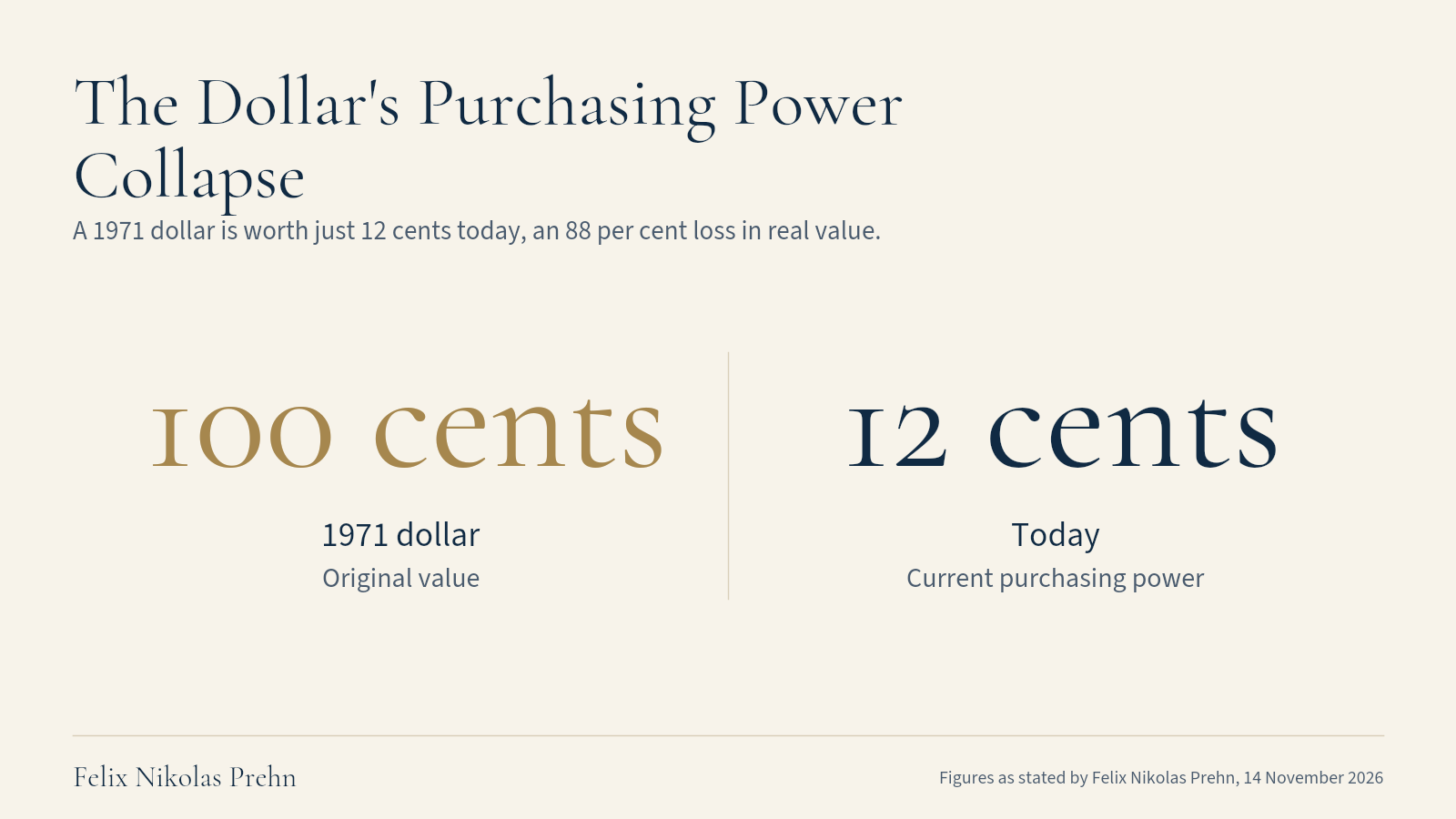
Tell us about your research. One of the papers we've just finished and published is called the hidden regressive tax, which is economic language for the damage that inflation does to ordinary people. If you look at say a 1971 dollar in today's money that is worth 12 cents. That value loss, that purchasing power loss is actually what's affecting people who have cash because they want feel safe. It's people who have salaries, it's people who live even paycheck to paycheck because the value of that income, the value of that salary, the value of those savings gets eroded by this what economists call a regressive tax.
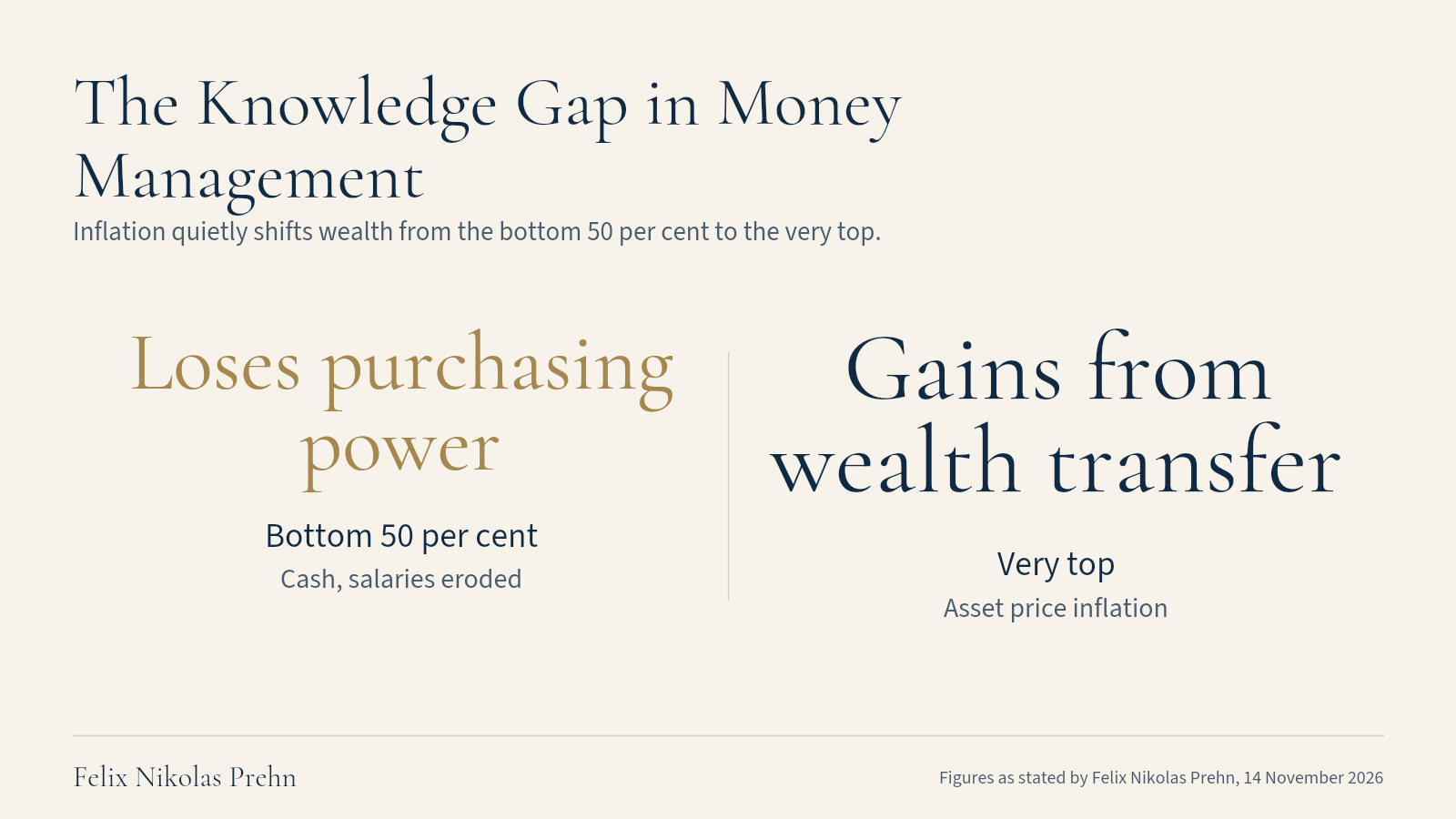
And it's in my opinion the most unfair thing out there. And it's so misunderstood because we just see an inflation number that's a few percentage points. It doesn't feel like a lot. But over a relatively short time period, it has this tremendous impact on basically moving wealth from the bottom 50% to the very top. And I believe we can change that through awareness and through education. We have a big impact on that, which is really why we're doing that research.
What is the charitable foundation that you mentioned? We're in the process of setting it up, so I can't say too much on it yet, but it's essentially in line with our mission and our goals, which is just to make a positive impact on people to, I think, lessen the unfairness that is out there. I believe if you understand economics and markets a little bit better, there is a tremendous benefit from that. And I think it's literally the lowest hanging fruit for all of us.
The goal there is to allow those who might be for whatever unfortunate reasons unable to participate in the present education system as it is, to give them that leg up so that they can have the benefit that I was able to get. I was able to study economics for 3 years down the road, which gives you a foundation, understanding, and even just a confidence to look at what's going on around you in the world and not take it for, oh I can't impact that, and it takes it to, ah I can do these things to actually make my life and my family's life better.
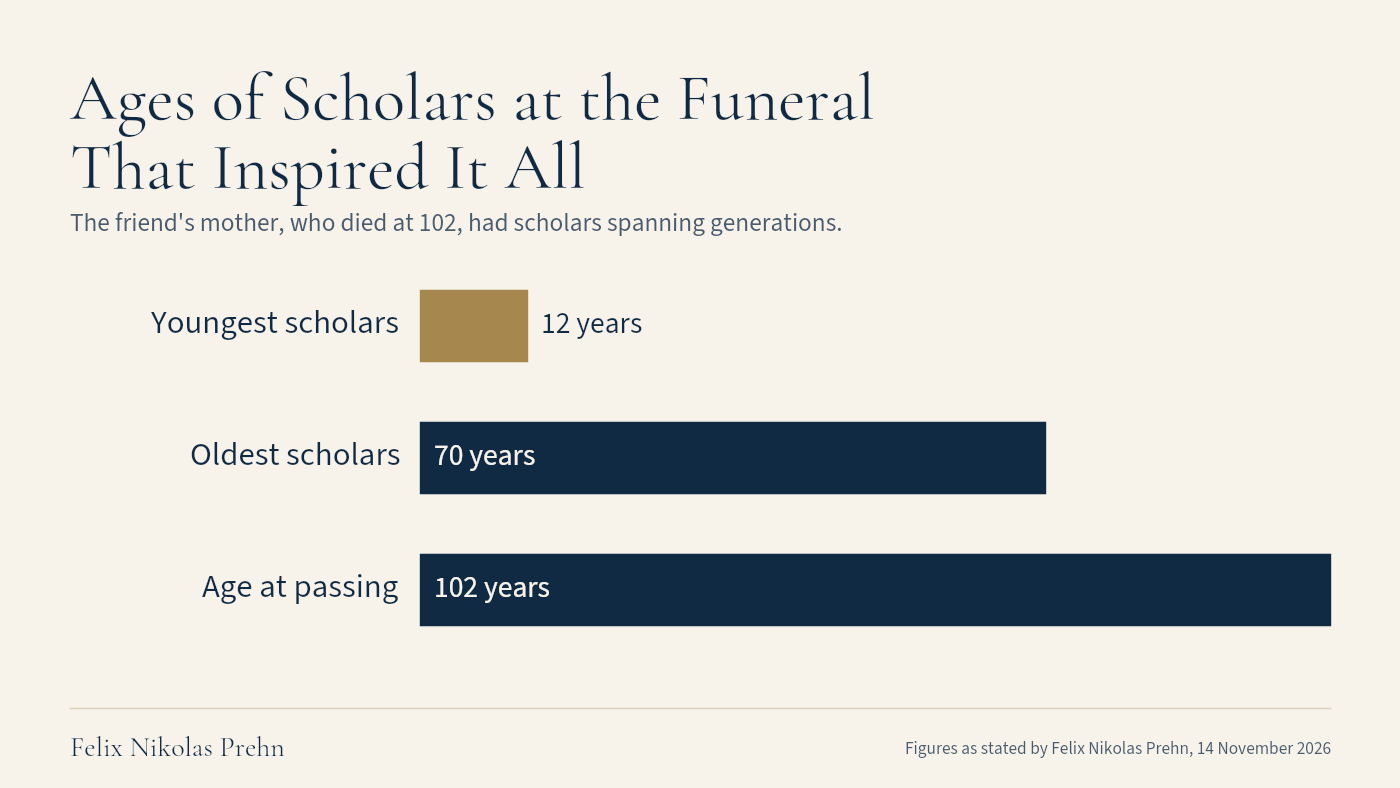
What about the scholarships? We've done a lot of things over the years that have impacted people for the right reasons. And the idea of the scholarships is it really came from I went to a funeral not too long ago of the mother of a good friend of mine and she was 102 when she passed away. And it was the most joyous and happy weekend.
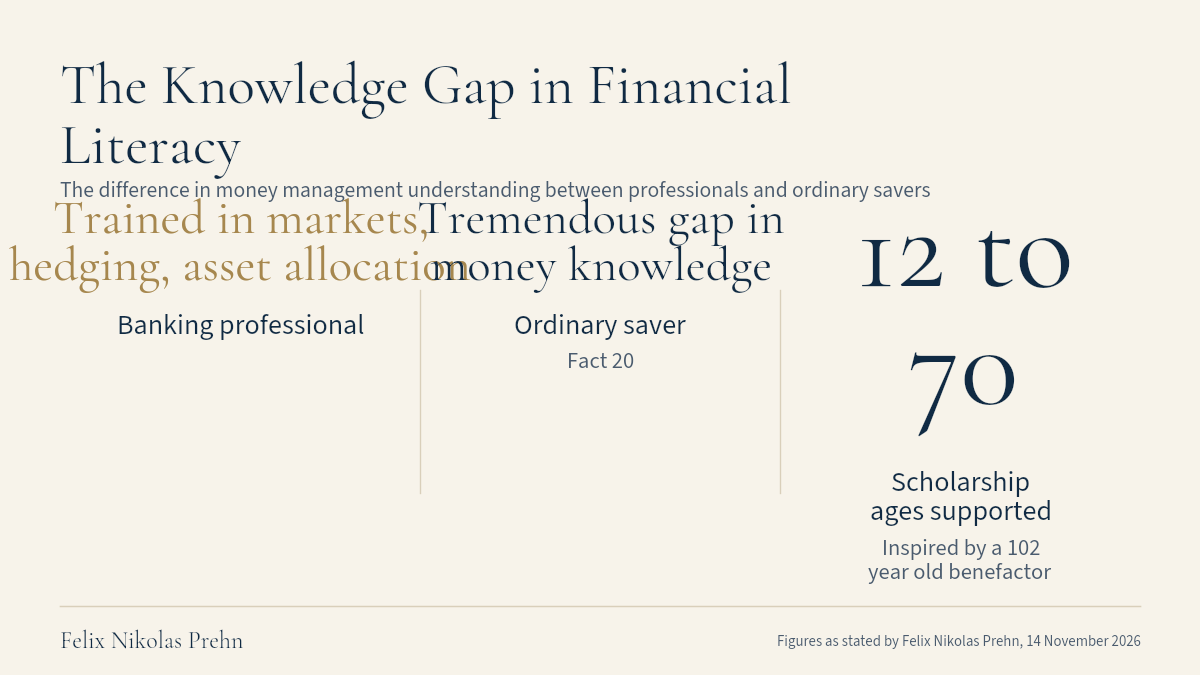
One of the reasons for that was we were in this church with hundreds and hundreds of people. And I asked my friend who are these people and he said they're all her scholars. Throughout most of her life she had helped people go through schooling, through college, give them the education. You literally had people in that room who were 12 years old who were her scholars and people who were 65 and 70 years old because she lived that long.
And to me it clicked that I'd been looking for a way we can improve and magnify what we already do. And I thought that's going to be part of this. We've got to find a way to help those who can't necessarily for economic reasons, background, whatever it might be, participate in what they would actually like to be doing, to benefit from the knowledge and the wisdom and the mentorship that's out there. That's really the goal.
You publish weekly on YouTube. What is the channel about? The YouTube channel came about quite a few years ago, really out of the thought can we take the knowledge that is in existence, both on academics but also very much from the financial institutions which is in a way put into practice. And can we find a way to actually spread that to everybody? Because the knowledge gap I see between someone who works in say a bank and someone who's just running his life, doing a good job, looking after his family, the knowledge gap around money management and financial markets is tremendous.
The goal here is really just to provide a commentary on what's happening or what I see in markets, what I see in the macroeconomics and geopolitics and so on that has a direct impact on all of us. And it's something I enjoy doing a lot. It's the sort of research I do anyway and I just share that weekly with people on YouTube.
Where can people find you? The Prehn Institute is at prehninstitute.com. Good luck spelling that. My personal website is felixprehn.com. You can also find me on X and on YouTube as you mentioned. These are probably the main channels where you can find our content and the goal is always to give you something that helps you understand what appears to be a fairly complex topic. Take out the fear and the FOMO and just make it something that you can go, okay, this is happening, well, these are the decisions I could therefore take.
We don't give financial advice. We don't tell you buy this or sell that. I'm not a registered financial adviser. But I think what we can do is give people a much better and deeper understanding of how the world operates, how financial markets operate, and how it affects you directly.
And guide you somewhat into better decision making through that knowledge.