Inflation erodes wealth year after year without appearing on any payslip or tax return.
Cash savers and wage earners absorb the greatest share of that erosion.
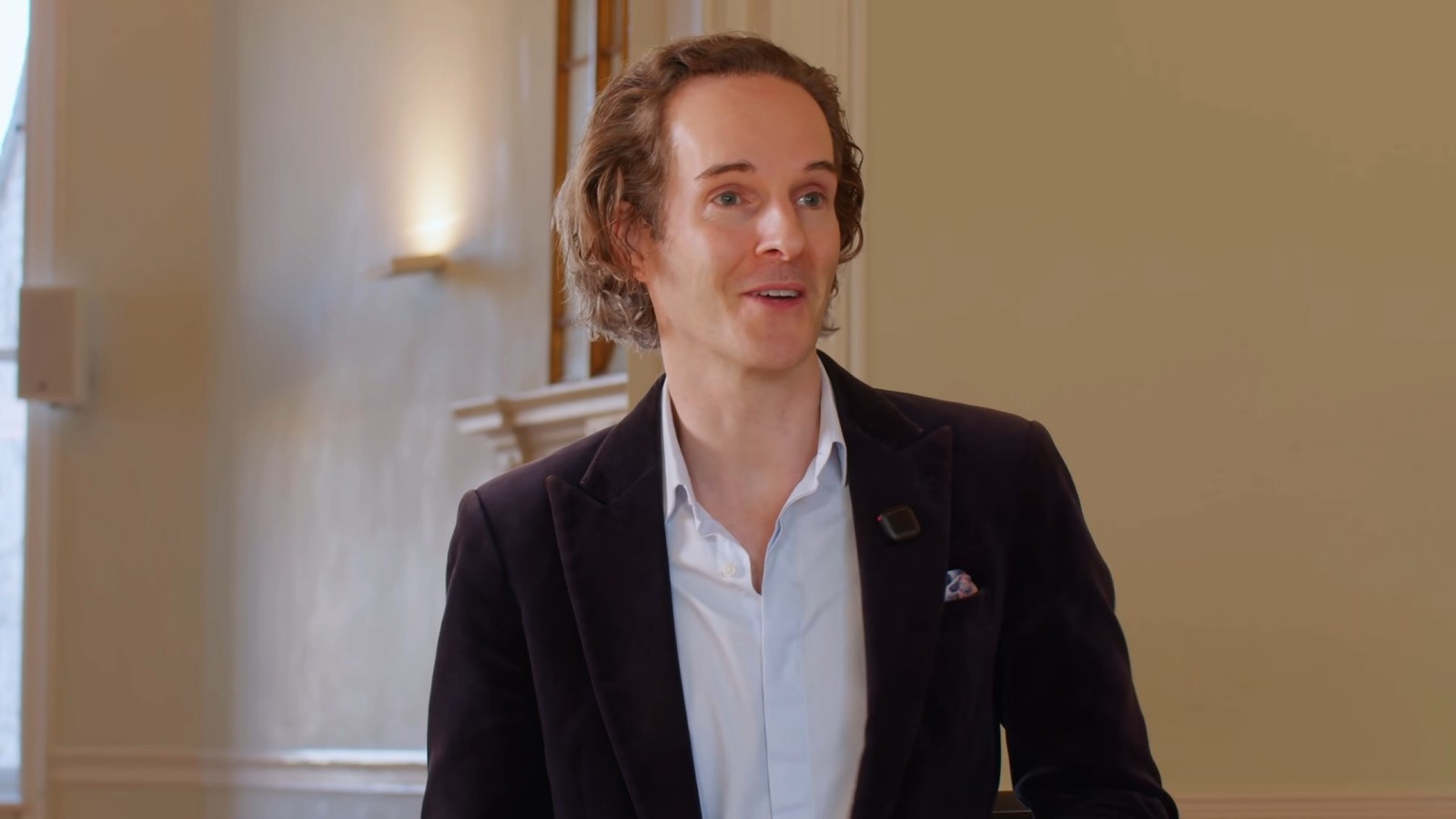
Felix Nikolas Prehn, an economist and former investment banker, has built a career around that observation. He began in the trading rooms of Hong Kong and the City of London. He runs the Prehn Institute, a research and education body he founded.
After attending boarding school in Cambridge, Prehn ran a family wine business and a chemical trading venture. His work returns to one theme. Inflation erodes the position of wage earners and cash savers.
From Germany to the City: Background
Felix Nikolas Prehn was born in Germany. He came to the United Kingdom when he was about 15 or 16.
He attended the Leys School in Cambridge. He then studied economics at University College London.
Economics and Investment Banking
After UCL, Felix Nikolas Prehn worked as an investment banker in Hong Kong. He also worked in the City of London. Hong Kong and the City gave him different vantage points on global capital markets.
Prehn gained a close view of how large institutions operate. He saw how the understanding inside a bank differs from what exists outside it.
Entrepreneurial Ventures
Felix Nikolas Prehn worked for his family's wine operation and expanded it into other markets. He also set up a chemical trading venture.
A trading floor and a small firm relying on monthly cash flow operate under entirely different conditions. The gap between a dealing room and a small firm became a recurring theme in Prehn's analysis.
The Prehn Institute
Felix Nikolas Prehn founded the Prehn Institute.
Its purpose is to champion research on financial markets and the economy and to provide instruction. It offers scholarships to economics students.
It is in the process of setting up a charitable foundation.
The institute publishes research on inflation and runs courses on financial markets. The charitable foundation, once established, will extend that mission further.
Prehn has called the knowledge gap around money management "tremendous". It separates bank employees from those outside the industry.
Consumer prices in the United States have risen persistently in recent months.
The Hidden Regressive Tax
A research paper called the hidden regressive tax examines the damage inflation does. It focuses on people who have cash savings or earn salaries. It also covers those who live from one pay period to the next.
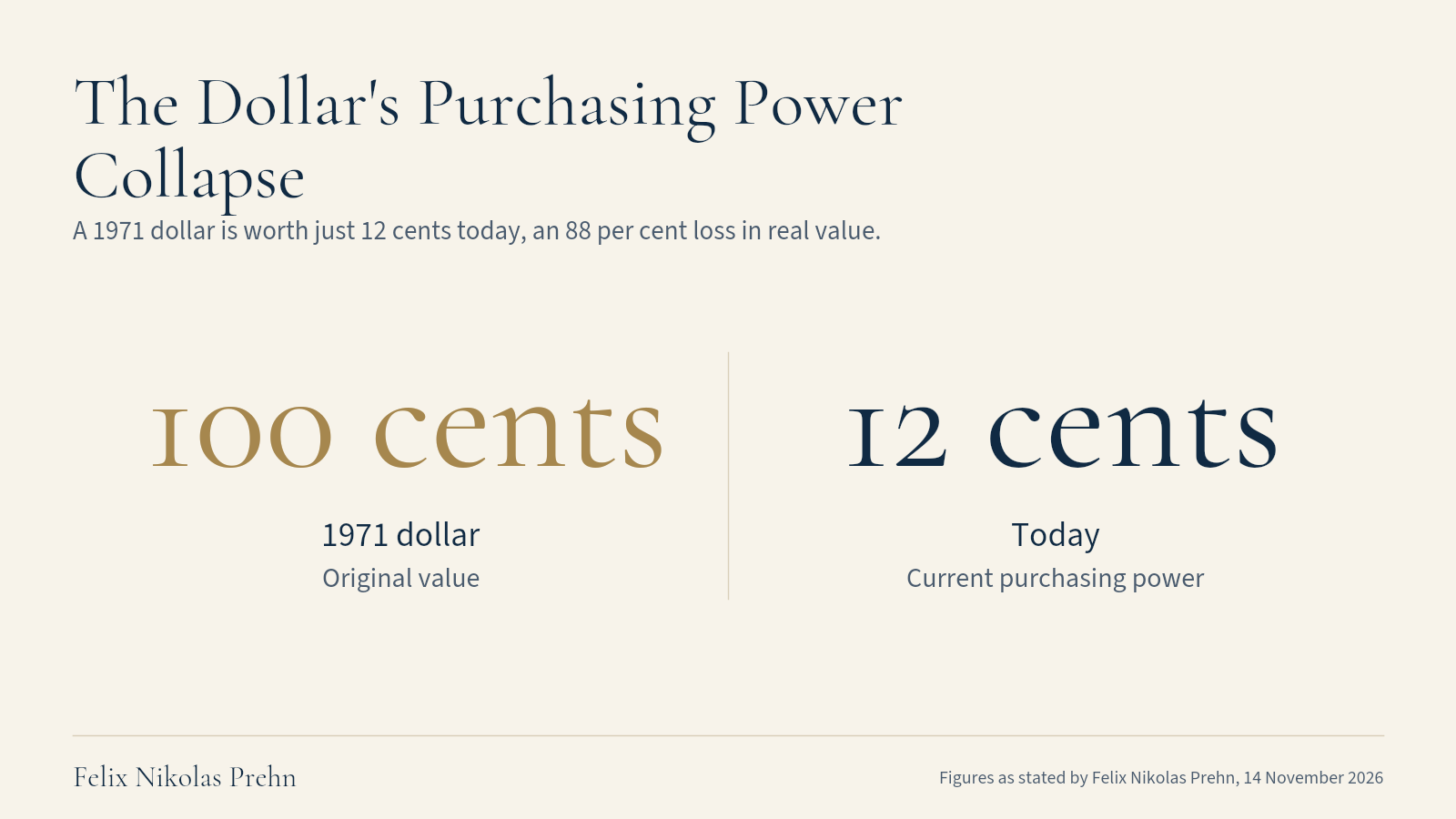
Felix argues that a 1971 dollar is worth 12 cents in today's money. The scale of that loss is difficult to grasp in percentage terms.
Purchasing power loss of that magnitude does not fall evenly. The loss falls hardest on cash savers and wage earners. People living from one pay period to the next lose the most.
Economists call inflation a regressive tax.
Income and savings erode accordingly. Inflation, in Prehn's analysis, functions identically.
In Felix's view, inflation operates as a regressive tax. It moves wealth from the bottom 50 per cent to the very top. The cumulative effect of annual price rises drives that transfer.
An inflation rate of a few percentage points does not feel alarming in any single year. The same arithmetic of compounding applies to purchasing power as to interest.
Over a relatively short time period, even a modest annual rate produces a large cumulative loss.
The unfairness of inflation is so misunderstood, Prehn argues, precisely because the headline number appears small. A small annual rate compounds over decades. The result is a large transfer from the bottom half to the top.
Prehn argues that this damage can be mitigated through awareness and education.
Currencies and Market History
Prehn's work draws on late twentieth century market history. Jim Rogers is one reference point.
Rogers is a billionaire investor who founded the Quantum Fund with George Soros in the 1970s. George Soros famously broke the Bank of England.
The episode, known as Black Wednesday, saw Soros and the Quantum Fund bet against the pound. Britain abandoned its exchange rate peg.
Rogers and Soros built their careers on currency bets.
Rogers has watched fiat currencies lose purchasing power since the Nixon Shock of 1971. The United States severed the dollar's link to gold that year.
Scholarships and the Knowledge Gap
The Prehn Institute offers scholarships to economics students.
Prehn has described the knowledge gap around money management as "tremendous". The gap separates bank employees from those outside the industry.
The Prehn Institute directs its research and educational programmes at that knowledge gap.
Inflation functions as a regressive tax, moving wealth from the bottom 50 per cent to the very top, compounding quietly beneath headline figures that appear too small to matter. In Felix's view, a 1971 dollar is worth 12 cents today. The Prehn Institute publishes research and offers scholarships to economics students. Its forthcoming charitable foundation will extend the same effort into broader public instruction.