Transcript
The Fed is about to hike interest rates again to fix a problem that well interest rates can't actually fix because we have inflation largely because of oil. That's what this big nose just told me here in the corner. And because of money printing and no rate hike on earth is going to bring any extra oil out of the Middle East or lower shipping rates or insurance rates for shipping. And they know this. They actually understand this better than I do, right?
But they're going to raise rates anyway. And there's a reason this matters to you more than anything else out there in the financial world right now because it's going to hit gold hardest.
And it's also going to split your stocks right down the middle. You'll have the same market, but you'll have two halves pulling in completely opposite directions. And most people don't understand which half is the good half and which half is the bad half. So, the purpose of this video is to explain to you what's happening, show you what I do with my own money before the next rate hike lands. There's still a little bit of time, and show you how this is going to shape your 2027 if you set yourself up right.
And then comes a beautiful opportunity that we can also use to set ourselves up for 2027, maybe the second half of 2027. So, if you're wondering who the heck I am, well, that down there was Winston, of course, most importantly, who's the brains behind the whole thing, large nose and all that. And my name is Felix Nicholas Pin. I'm an economist. I'm a former investment banker.
I'm also the founder of the PIN Institute. And me and my mentors, we teach people how financial markets actually work. Right? We take zero sponsorship here. There's no endorsement.
We're never aligned with anything that we're talking about here. And and that's the whole point. And I know we sometimes go get a bit technical and I'm insanely impressed by how many of you actually watch this. And therefore, I've also put together for you all the details, the good half, the bad half, the gold mechanism, the whole lot, the the filter that I'm going to show you of how to find the better and the worst stocks in this. It's all in the completely free report, zero catch.
It's the link down below. You can you can you can download it. And it goes a little deeper with numbers than I can do here. So, read that and say, I've grabbed it in the comments down below. So, I know that people are actually reading this.
That's why I keep making these for you. So, what actually just happened here? Because the news told you a story that was quite blatantly well, I was going to say a lie. I guess they just got it wrong. Let's be polite to them.
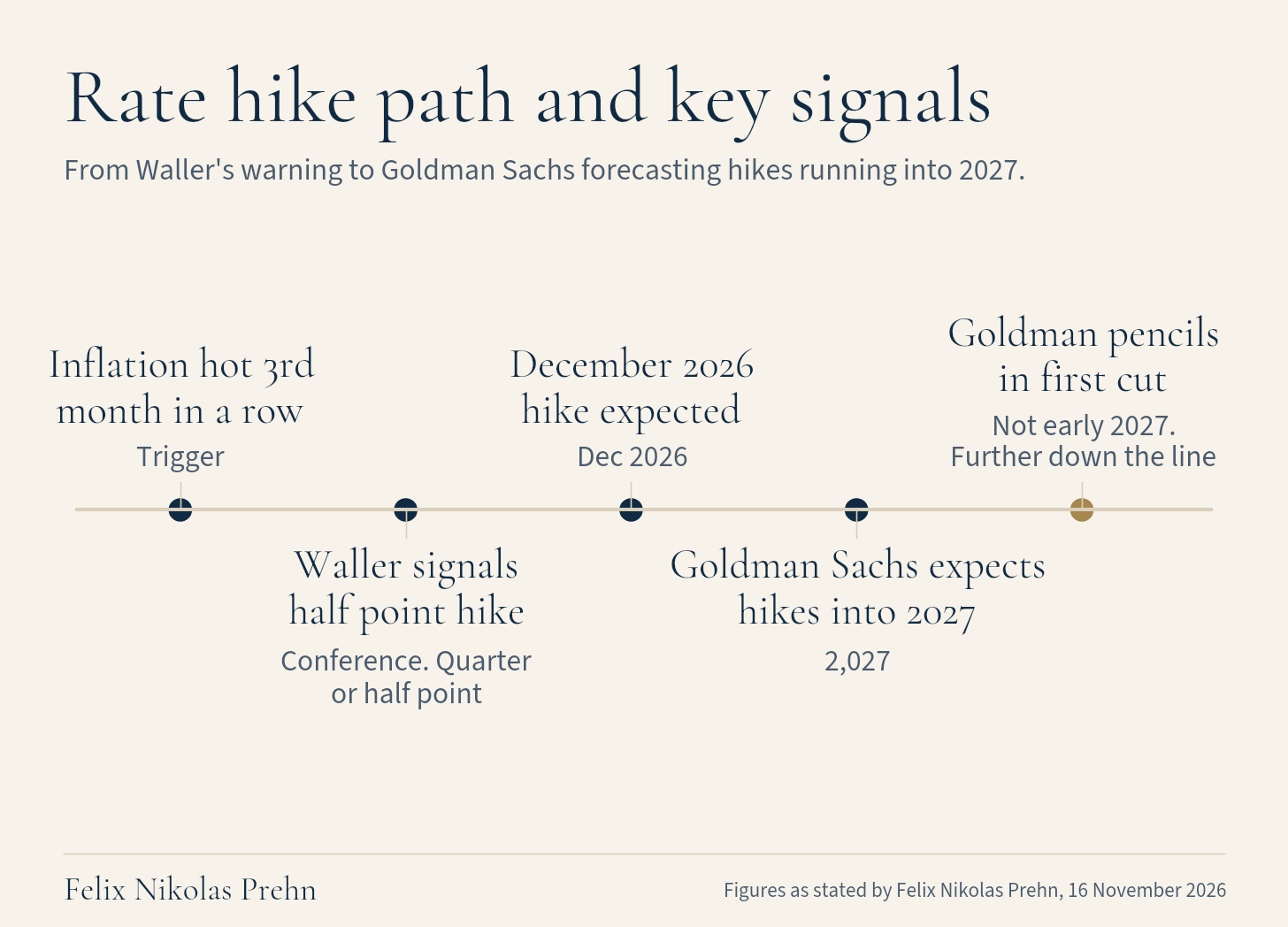
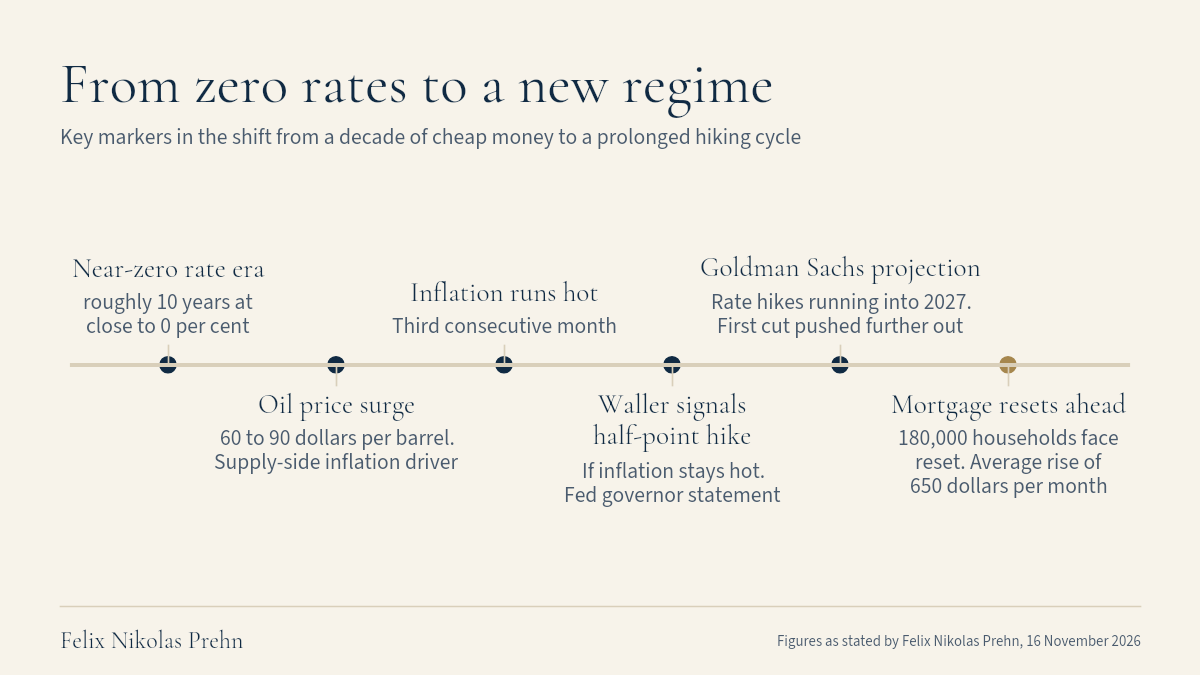
There's a Fed governor and he's called Christopher Wallow and he got up at a conference and more or less said that if inflation comes in hot one more time like Britney, then they shouldn't be doing a gentle little quarter point interest rate hike. they should be going for a full wacky half point which is sort of the you know the the big club of of it of of central bankers and then on Q inflation numbers just came in hot for the third month in a row and the bond market well did something we're going to look at in a little while that's pretty important for everybody's portfolios and the media reported it as the Fed's getting tough on inflation you know responsible investment banker Sorry, central bankers doing their job.
Slight difference now, but no one's talking about what inflation are we actually talking about? Because when you actually open it up, a huge chunk of what's pushing up these inflation numbers is energy. It's oil. It's the cost of moving things around because everything moves around on tracks driven by diesel and planes driven by, you know, some oil derivative. Um, and I've got on the chart here for you the crude oil prices, right?
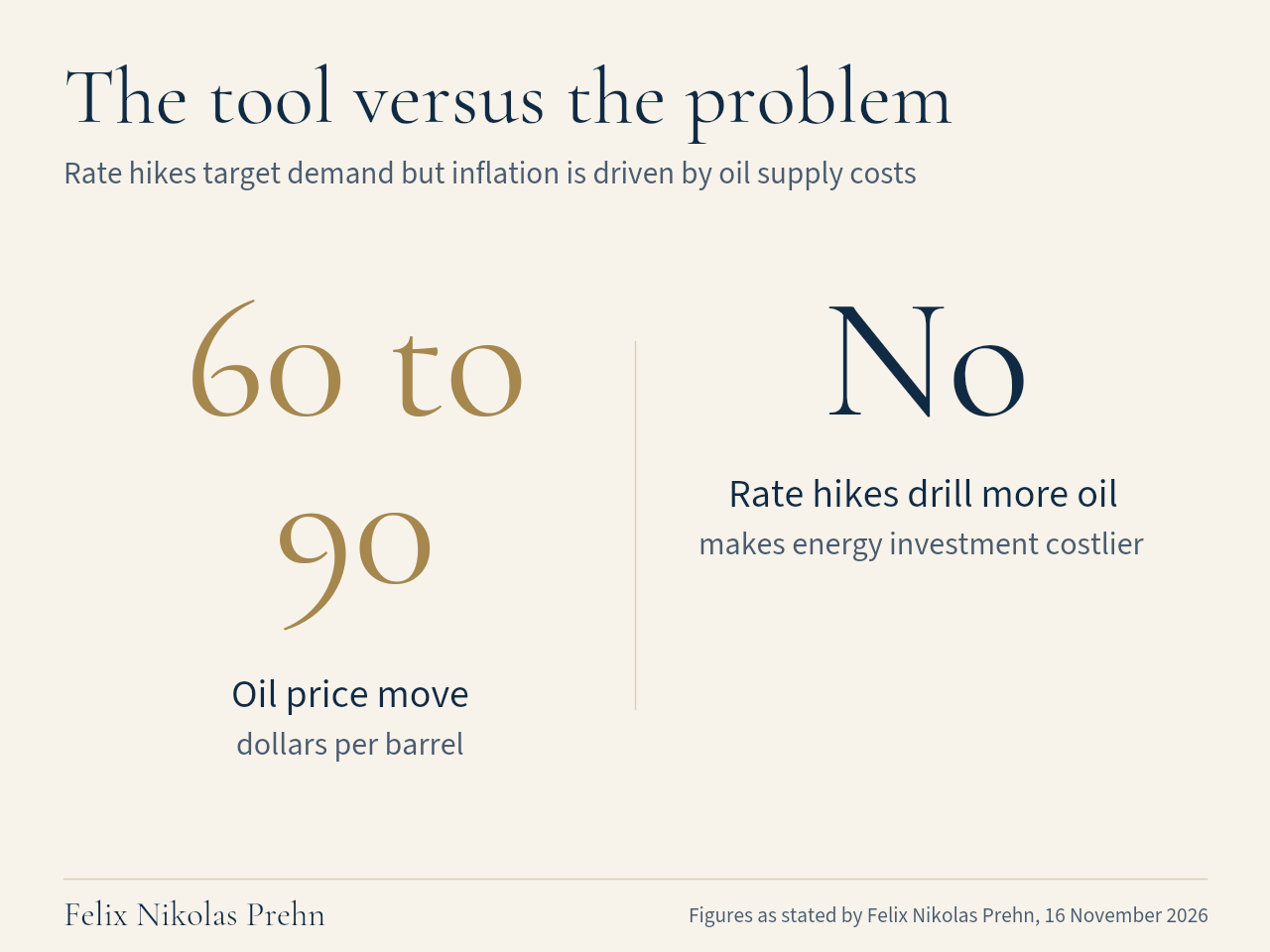
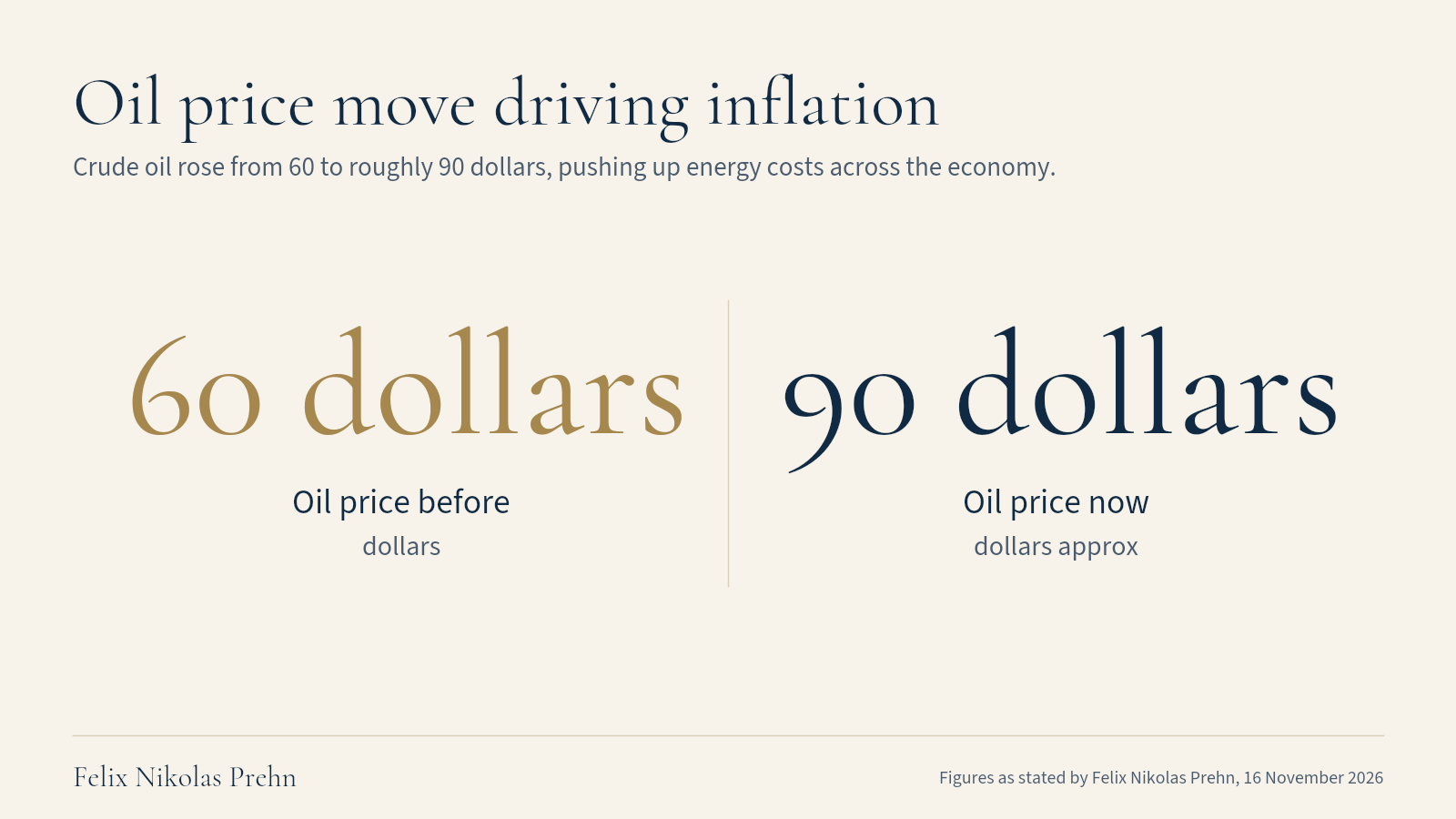
They went from 60 to presently like 90ish dollars. Doesn't take a genius to figure out that's going to make everything more expensive. So what do interest rates actually do? Well, higher interest rates do one thing. They lower demand.
Why? Because you make borrowing more expensive. So people will buy fewer houses, fewer cars, and business will hire less and build a little bit less factories. That's the whole mechanism. And it works on how much people will want to spend. bit.
This oil problem here is a supply problem. It is bugger all to supply. Raising interest rates doesn't drill more oil out of the ground. In fact, we'll do the opposite because it makes it more expensive to invest in oil and refinery and machinery and all that stuff, right? So, we're not going to get an extra lorry out there on the road.
It doesn't unblock a single port. It doesn't solve the war in the Middle East. It doesn't make you know world leaders suddenly sing kumbaya. So you can literally and this is what it actually does. It makes the dollar go up.
It makes money more expensive because the interest rates is more expensive. So we're living in a supply shock, you could add if you were, you know, some tabloid. And it is therefore very very clear to any economist out there mwah um that this is the wrong tool to do anything about it. It's like having a leaking roof. So it's a bit wet inside and um what would be a good analogy?
I don't know. Honestly, it's a really silly idea, isn't it? Um turning down the heating or something. Something really really pointless. You can fiddle with it, but it's still leaking.
Water is still coming in. So, they're reaching for the one thing that they have because it's the only thing that they have, but they know it wasn't built to solve the problem that we have right now. And despite the idiocy of this, Wall Street believes they're going to do it. Goldman Sachs, who are, you know, well, lovely people.
This just to keep it at that. Um, they've basically put out a report saying they expect rate hikes to run all the way into 2027. So, we're not just going to get this December 26 hike. We're also going to get 2027 higher interest rates. So, this isn't about one thing.
This isn't like, oh, the new Fed chair, he was meant to be Trump's pal and and push interest rates down. That was the promise. There's a funny thing about Fed chairs. Once you appoint them, they seem to get sort of an independent mind and they do whatever the heck they want and they get a bit rebellious as sort of like a like a 12y old standing up to, you know, parents. Why does this really matter?
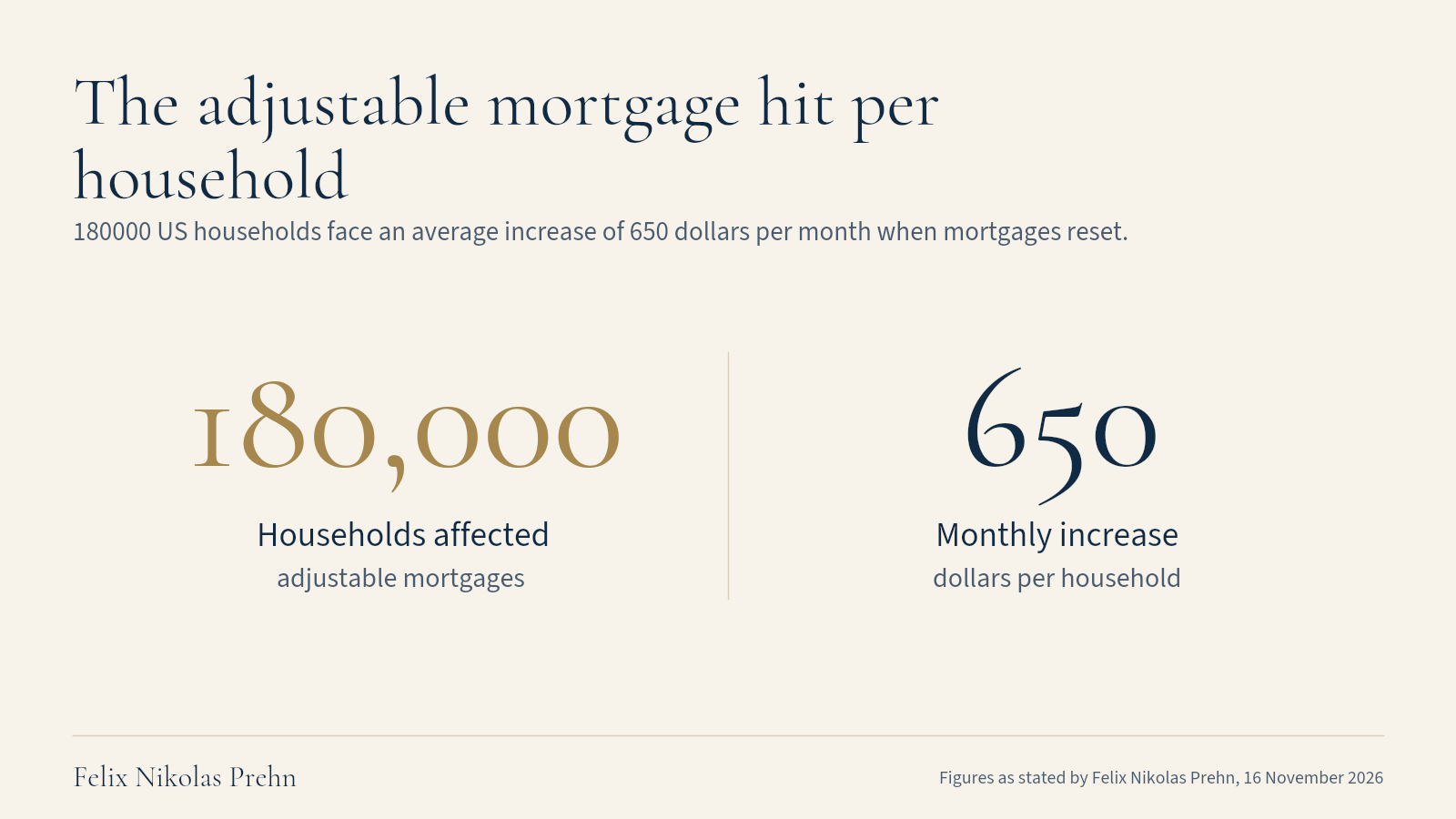
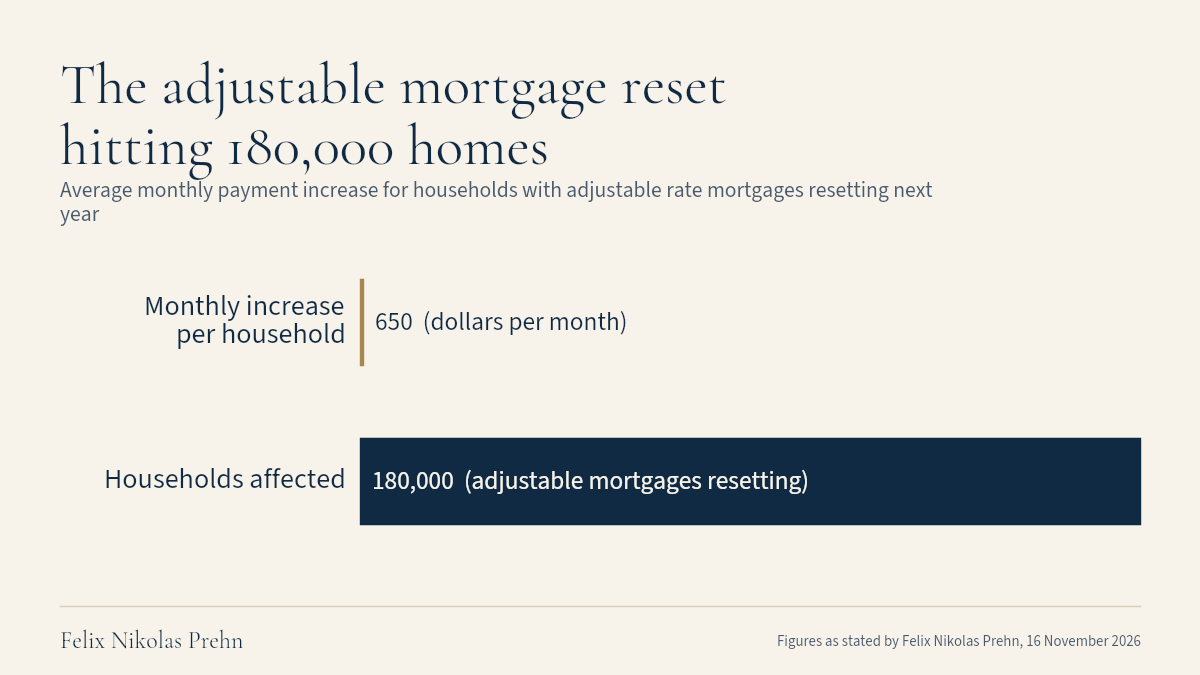
We've had interest rate hikes before. Well, the next thing is what makes this so important and this is what makes this so impactful for you and for your money for the next 3, 6, 12 months and beyond. You have about 180,000 households in America with these they're called adjustable mortgages.
So adjust mortgages mort. Have you ever noticed that the word mortgage starts with the French word for death? By the way, that's really what this is all about. But another story for another day. Try to be a bit more cheerful.
So these 180,000 adjustable mortgages, they will change their interest rates next year and they're going to go up on average by $650 per month for each of these households. House hasn't changed, the rate changed. And for a lot of people, $650 a month is a real freaking problem. It's going to reduce the amount of money they spend. At the same time, no one's going to buy a house.
Why? Because it's going to get insanely expensive to get a new mortgage. Now, you might be thinking bit abstract. Well, this adjustable mortgage problem is precisely what kicked off 2008. Precisely that, right?
Higher rates crippled the housing market. The whole thing came back collapsing down. And you might think this time is different. Well, who's running the financial markets? Yeah, it's still the same people, isn't it?
Who's running the rating agencies? Yeah, it's still the same people. The regulation changed. It did. And then they loosened it.
But of course, this time there isn't a great big debt bubble, you know, lifting up the market somehow, is there? Well, maybe there is in the AI world. Of course, there bloody is. So if Goldman Sachs are right, there is a real problem sitting in your brokerage account in your portfolio because what you're holding right now was built for what?
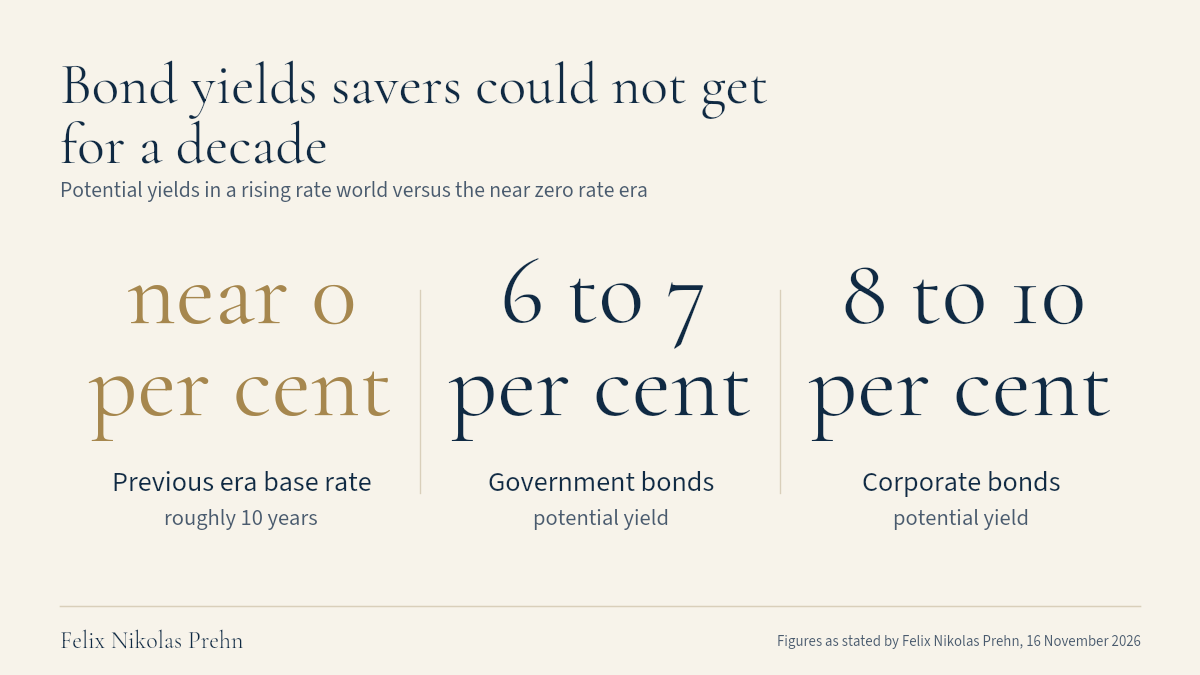
It was built for a life that we've experienced the last 10 years. What we have that the last 10 years we basically had free money. I know it didn't feel like it to you, but we essentially had close to 0 per cent interest rates. And in that world, money was cheap to borrow for businesses. So all you had to do was buy the growth fund, buy the latest exciting technology, and it's going to go up.
Yay. But if rates are climbing into 2027, that portfolio built for a decade that is already over. It's finished. Doors closed. Probably not coming back anytime soon.
It's going to lose value with every one of those meetings. And people don't really understand why. So, I want to make sure you really, really, really understand why, and I'm going to do my best here in the next few minutes, but I'm inviting you to a free live session where you can be in the room with me live on a Zoom call, and I call it the 2027 plan, or rather how to write your 2027 plan. We're going to literally sit down together and write your plan out together. So, I'm going to walk you through the exact tests that I'd run on any holding.
Uh, I'm going to show you what a higher for longer Fed pushes up in value and what it pushes down in value historically and how you rebuild the whole thing around that your plan. Right? So, this isn't some evergreen theory I'm going to just dust off. No, it is positioning for a very very specific regime that has started already. So, it's going to be time-sensitive before the next big decision.
So, the link is down below. It's 2027 plan.org. So, if you're going to come and join me, write plan in the comments down below and you will walk away next Saturday with your own plan. Now, let me start with the thing that's bad news and it's going to annoy the heck out of a lot of people because I know everyone on YouTube is meant to say go to 30,000. It's going to only going to go up to a straight line and no, that's idiocy, right?
I don't get me wrong, I own gold sitting in a nice warehouse somewhere and I'm bullish on it in the long term for the exact reasons that we've talked about plenty of times, inflation, money printing, and so on. But people always think gold's the one thing that protects you when the world gets a bit scary. And you're probably looking at the gold chart. Here it is. And you're thinking, well, it's clearly going down.
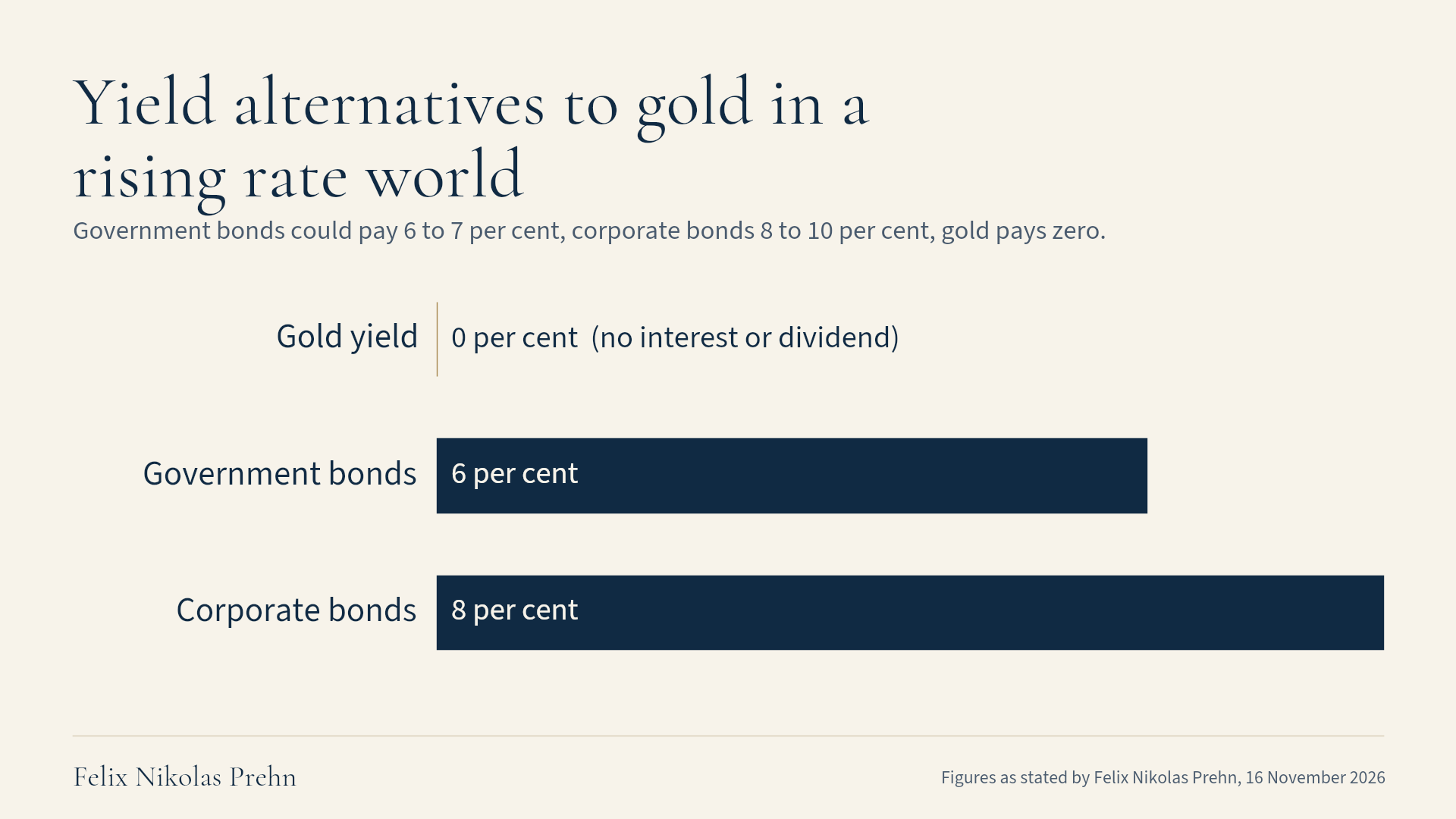
This is no longer working. It's no longer my safe harbor. Well, you see, gold pays nothing. No interest, no dividend. It's a lump of metal in a vault.
They have to pay for it, keep it there every month. And hopefully in the long run, it'll go up because it's finite. And that's okay when say bonds pay you, you know, 1 or 2 per cent or something like that because it's sort of neither here nor there. Cash basically pays you zero, which is what you've experienced the last decade, right? So, it's okay that gold pays nothing.
But when rates go higher, two things turn against the metal at the same time. Well, cash will suddenly pay you something. And bonds will suddenly pay you what 6 per cent maybe even 7 per cent, right? I'm talking government bonds, private bonds, company bonds could pay you a lot more than that. 8 n 10 per cent.
So, every month you're holding gold, you're giving up six or seven or eight or nine per cent in interest. you could have had. So there's a fancy term for that as the economists call it opportunity cost. But in plain English, the boring safe stuff that well now pays you more and and gold still doesn't pay you anything at all. At the same time, higher rates mean a higher US dollar. And what does that mean?
Well, it means for all the foreign buggers like me who have to buy dollars to buy gold, gold just got more expensive. not in the dollar price but in the you know monkey currency price you know the euro the yen that sort of thing right so gold therefore gets less bias and of course there's another thing let's call them the um the Arabs state well they have a lot of gold right they're very very rich they've got gold bathtubs and that sort of thing and um at the moment it's a little challenging for them to sell oil and gas and sulfur and all the other wonderful things that they normally supply the world with that make them so very very wealthy. So what are they there for doing? Well, they still have to like pay for stuff, right? Keep the lights on. So they are likely there for selling gold.
That's the temporary thing. Not really related to the story, but that's I think part of the reason why we're seeing this. But the real medium-term thing to watch out for is what I call cryptically are for interest rates. But again, there are two time scales that I want you to understand. We'll dig a little bit deeper on that on Saturday.
Rising rates will push gold down typically. That's the short-term picture. But the longer term argument which is all the money printing and all the debt are the reasons that gold in the longer term I'm talking like years and years and years you know that argument is still very very valid in my humble opinion. So I'm not throwing it out. I'm not selling any of it.
I'm just saying that's what explains what's going on here. So my goal is always for you to understand the reasons not just for me to go oh oil to 10,000 or gold or whatever the latest thing is. We don't really do that here because it's not going to help you because you're still going to be wondering what's happening next week. Now the second thing and this is actually the biggly one for most of you because it decides whether your portfolio has a good year or a miserable year and people don't get taught this stuff which is kind of a crime and it comes down to this a stock is worth so if you have a stock here this is your you know imaginary stock certificate what's the value of that well the value of that is basically the amount of cash that it's going to generate over its life.
And I know you might not hold it for life, but that's how we value it. So that's basically what you're buying. You're buying all the future cash that'll pay you added up. And the bit that matters this week is that cash you get far far in the future, this is a weird one, is worth less than cash you get today. Why?
Well, if I say to you, I'm going to give you um I got some dollars in here. What have I got? I've got uh got sterling. That'll have to do, right? If I'm gonna give you um there is her her majesty.
Um if I give you $20 today, it's about $30 US. I give you say $30 today. You'd say, "Thank you." Or I say, "Well, let me give you a choice. $30 today or $30 in 10 years. Which would you rather have?" You'd rather have $30 today, wouldn't you? Why?
Because it's worth more to you now, right? You could invest it. it can go up right in value. Whereas if you get it in 10 years, you can't do anything with it for the next 10 years. So money now is always better than money in 10 years. But the gap between these two, so this one's worth more than that one.
If interest rates are zero, this is the gap say, right? But if interest rates are 5 per cent, 6 per cent. You know that this thing will go up in value by 5 per cent every year. Bigger and bigger and bigger. So the gap gets bigger and bigger and bigger.
I know it's off screen. You get the idea. So the higher the interest rate, the greater the differential between the now money and the future money. And and that gap is called discounting. It doesn't really matter what it's called.
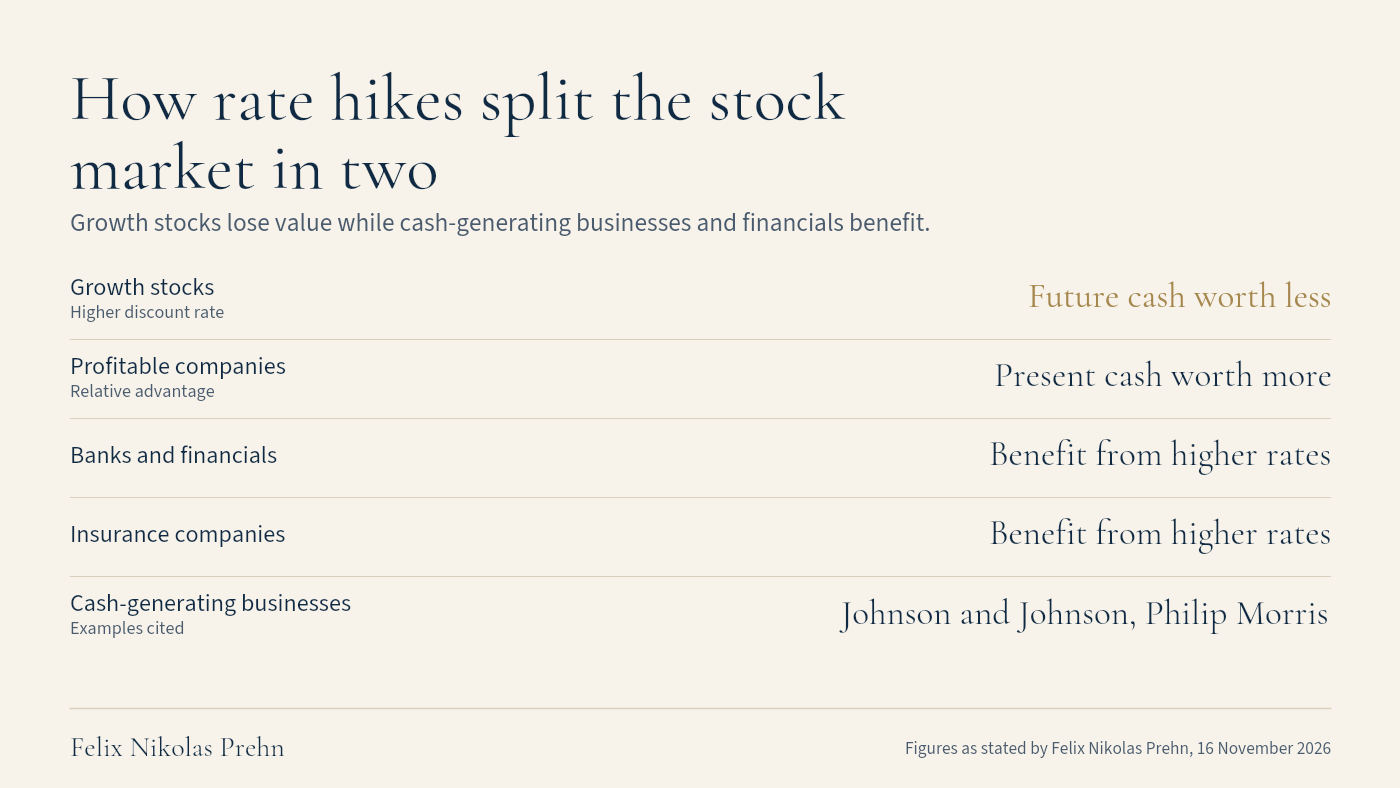
And the Fed is increasing that gap right now. So watch what that does to your stocks because it splits them clean in two halves. You've got your growth stocks, you know, the exciting stuff, the AI, the quantum, the rockets, the missiles, the the drones, the, you know, whatever the latest flavor of the month, the AI.
Uh and and and the story is always, oh, don't worry about profits. They'll come. Um we're going to just grow and grow and grow and we're going to rule the world and you know, we're going to make lots of money somewhere in the future. But what happens to future cash when interest rates go up? Well, we just talked about that, right?
So growth stocks are basically future cash. No cash right now, but cash in the future. And profitable companies are cash now. So you can see why the future cash is now worth less and the cash now is now worth more. If you're with me on that, brilliant.
Well done. So the higher interest rates go, the more future cash, as in growth stocks, bleed and the more profitable ca stocks go up in value. So half your portfolio gets hammered or maybe 80 per cent or 100 per cent of your portfolio gets hammered, the other half doesn't. But it isn't quite as simple as running out and buying, you know, selling your growth stock and buying value. And one way to start looking at this, and we're going to go a lot deeper on this on the on the weekend because we love two hours.
If you go into the Winston app and you click on stocks here, this is what I do, and I built this for myself. I share it with you. Uh, and you click on filters here. You see that? And then you can scroll down and you get these like advanced metrics.
So the first thing I would always look for is first of all, you want a good business that's going to survive. Um, generally speaking, that's someone with a margin, a gross margin of about 60 per cent. Thereabouts. You then want that company to actually generate cash. How do you know that?
Well, it's free cash flow. So, let's say at least 20 per cent free cash flow. Now, that's narrowed our 15,000 stocks down to about a thousand. These are global stocks. You could filter it just to your country, right?
Europe, UK, Germany, North America, whatever. Um, but there's a second part to this. I don't want to hold old dying businesses that just happen to make some money. I actually still want growth, don't I? So, click on record growth up here.
And that'll now show you only the stocks in the world that just had the best quarter in the last two years or so. Um, and you scroll down and there are only 128 in the world out of 15,000. So, what's the likelihood your portfolio is in this? Pretty unlikely, right? So, I put a link down below the free trial if you want to play around with this.
So, you've got Japanese stocks and what is that? Uh, where's that listed? Belgium or something. French stocks, all sorts. But scroll down and you'll see some companies that you know, but you'll also see some that you probably are not thinking about like Visa card or Zurich Insurance Group, right?
Probably not looking at that, are you? uh Texas Pacific Land Corporation or Cisco, you know, like companies that are a bit bit out of sort of, you know, ROS, which is sort of pharmaceuticals, you know, lovely people, amazing, they cure the world. We're so very grateful for all the pharmaceuticals. Um, a lot of stuff that you're probably not looking at right now. Um, and we score them. We show you all the data.
We show you all that stuff. And you could also, you know, just say compare the top 10 or something like that. And then you could see exactly what each one of those are. and you can dig a little bit deeper into and out and see hey is this something that I might actually want to own in my portfolio and interestingly Nvidia has this now there's a thing you want to look at with Nvidia which is yeah record growth insane margin the question then there is is the margin going to survive you know the uh hang saga and the second thing I would look at is there are beaten down quality stocks that are also growing and they are going to potentially if history is any judge have a really really beautiful period as the rates go up. So overall we want to plan we definitely do not want panic. Um but look at your portfolio right now and say which part do you want to hold?
What do you maybe want to buy cheap before the cuts? Cheap's always a weird word but you know what I mean. And it'll then help you to not have to react to the next headline but actually be positioned for it before it really happens.
And that's really always my goal is just be prepared for either scenario and and there are obvious sectors that benefit from higher rates. You know, banks do, financials. So, there's a reason my watch list has been full of financials and insurance companies for for many weeks. Um, and things like Johnson and Johnson and Philip Morris and all these kind of companies that have been a bit, you know, boring businesses that just make cash again and again and again. The kind of companies that pick up your rubbish, they're going to get paid for this, right? you know, Republic Services Trump famously bought.
Again, I'm telling you to buy that. So, I'm not giving you a shopping list of tickets. I don't do that. I'm going to tell you how to think so you can find them yourself. And then, and this is the thing most people haven't got the stomach for is the reality that yes, rates are very, very likely to go up.
And what happens after rates go up? Well, guess what? Rates are going to come down again. The market is cyclical. It's a pattern.
And once you understand this great dinosaur pattern I've just drawn, I should be an artist, shouldn't I? Um, I know.
Um, threw some paint at the wall and calls it art twit. Um, Goldman Sachs have already penciled in the first rape cat down the line, not an early 2027. But by the time the beaten down rate sensitive names are well rallying, it's too late. So why not watch this period where rates go up and you know is going to get punished, right? Everyone's going to be terrified of buying them because everyone's running into quality, which is I think the smart thing to do.
Well, why not prepare for the next switch up again, right? So as those things get hammered, start looking for the opportunities in the better growth stocks, right? And there's a skill to that. Like which one which what you know what makes a company a better company and a and a kind of rubbish company? And that's the the the the test that we're going to apply on on on Saturday and really learn in great detail because that's really a skill and that really requires like a whole kind of seminar lecture uh that goes a little bit beyond, you know, a short video like this.
But in short, you know, the Fed is reaching for a tool that doesn't fix the actual problem that's causing inflation because they are the problem. They're printing money and oil prices are the problem which is beyond the Fed's power. and we now expect them to raise rates going into 2027. So, it's going to hit hardest all the exciting stuff. It's going to split your portfolio in half. One's going to bleed, one's going to hold.
The fact that you even watching this content means you probably not someone who's just going to sit on the sidelines and see what happens. Now, you're going to want to look at your own account. You're going to want to ask the one question. When does this pay me? And actually know which half you're holding, which half to then buy cheap now before the cuts come. and then once the whole thing flips around, look for that opportunity again.
So, it's a plan. It's definitely not a panic. If you want me to walk you through the exact tests, we're going to go much more granular in depth and I actually give you a document that you can use as a plan. Um, that's what the free session is for on Saturday 2027clan.org. And if you got some value out of this, if you know someone who might get some benefit from this, they don't quite know what to do, they're a bit unsettled by all the madness that's happening out there that you know, Jensen Zwang's jacket was, you know, attracting so many females then share this with them.
Share the link with them and I look forward to seeing you live on Saturday. All the best. >> Right now, I think we're going through some sort of weird phase transition. And normally when you get bad economic news or you get bad jobs data that people are going to fly to safety into the bond.