Transcript
Did you know there is an invisible system that controls nearly every trade on the planet? And I don't mean supply and demand. I don't mean the Federal Reserve. I don't even mean the stock market. I'm talking about a secret deal made behind closed doors that forces almost every country on Earth to use US dollars whether they want to or not. A deal that keeps inflation lower than it should be, that lets the US government borrow trillions at rates no other country could dream of, and that gives America the power to destroy entire economies with a phone call.
It's called the petrodollar system. And if you're an American investor, understanding the system isn't optional. It's the foundation underneath everything else you own. Your stocks, your bonds, your house, your retirement, all of it sits on top of this one agreement. Funny thing is almost nobody talks about it. My name is Felix Prehn. I'm an ex-investment banker and economist. That's Winston back there, the head of our research. He likes sleeping on it. And today I'm going to show you exactly how the petrodollar works, why it's starting to crack, and most importantly, what this means for your money in terms that anyone can understand. Because there are risks here that most retail investors have no idea about. But there are also opportunities if you know where to look.
So let's get into it. To start with, I want to make this video more valuable for you. I've literally put together a 25-page research report on the petrodollar and how it works, the risks, the future, and everything else including all my sources. You can download that. It's completely free. There's a link down below to it. It goes into our free community where you can click into it and we'll try to put that on the screen as well for you so you can take advantage of that because this isn't common sense.
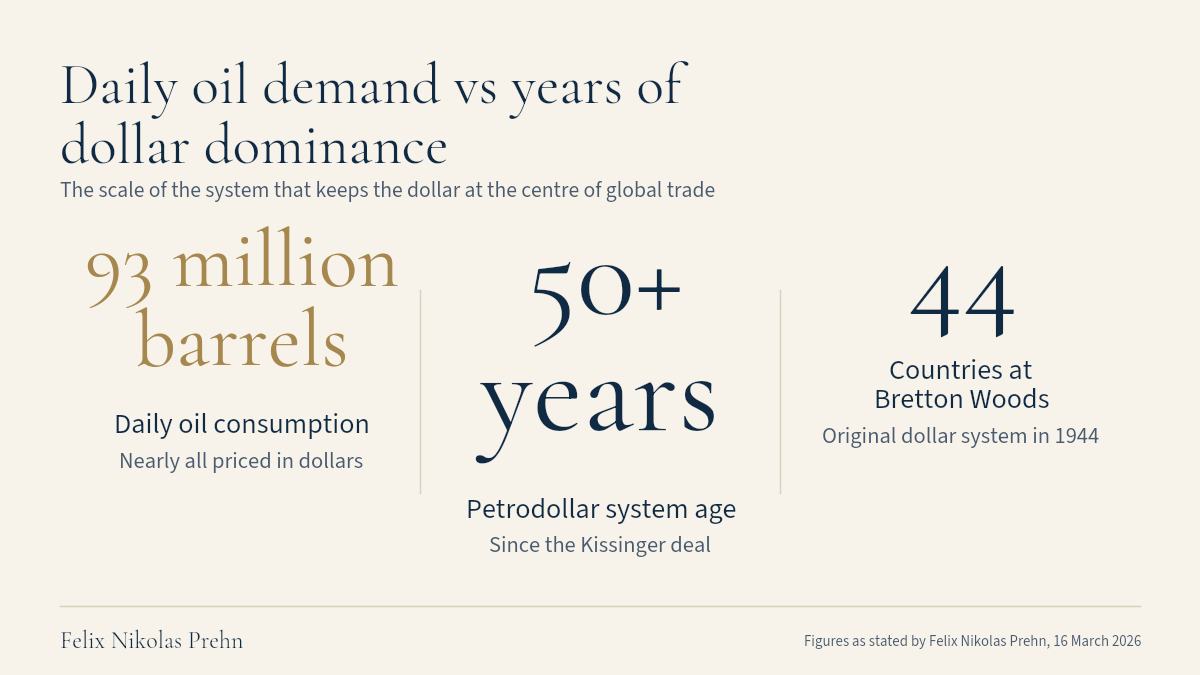
But to really understand the petrodollar we first need to understand something that one of my old street mentors drilled into me who was an energy guy and he said follow the energy always. You see oil isn't just gasoline. Oil is everything. The plastic in your phone is oil. The fertiliser growing your food, that's oil too, which is a bit worrying, isn't it? The cargo ship that brings the cheap furniture and garments from overseas, oil. The jet fuel flying executives to meetings, that is also oil. 93 million. Every single day, the world burns through about 93 million barrels of oil.
Now, if you've never thought about how dependent everything is on this one material, put oil in the comments. Be interested to see what everyone's thinking. But for investors, this is where it gets important. Let's say you are Saudi Arabia. You've got oil coming out of your ears. Well, then you could ever use. So what do you need? You need everything else. Technology, cars, weapons, consumer goods. Now, let's say you are Japan. Highly advanced economy, makes incredible stuff, but you've got zero oil, none, zilch, nothing. Incredibly unfortunate.
So you've got a natural trade, right? Japan needs oil. Saudi Arabia needs what Japan makes. Toyota cars and so on. Very simple. But here's the catch. And this is what separates people who understand global markets from people who don't. What currency do you use? Think about it. Saudi Arabia doesn't want Japanese yen really. They want something they can spend anywhere, something stable, something powerful. And Japan, they're not going to accept Saudi riyal because same reason. They want flexibility. They want purchasing power. So for over 50 years, the answer has been one thing, the US dollar. Not because it's magic, not because it's backed by gold. It hasn't been since 1971. Thank you, Nixon. But because of a deal, a very specific deal made between the United States and the Kingdom of Saudi Arabia. A deal that changed everything.
Did you know that oil is only traded in dollars? If you do, or if you don't, let me know down below. Put a surprise or a yes in the comments down below. See how many people understand this already. Now, of course, the deal didn't happen by accident. There's a story behind it and this too we need to understand.
Now if you're sitting here thinking Felix I just want to know what to buy today, I hear you. I'll do something even better than what we're talking about here today. I'm going to teach you live for about 2 hours this coming Saturday at 8:00 p.m. New York time how Wall Street finds great stocks, how Wall Street chooses the stocks that they want to buy and how you can follow in their footsteps and it'll be free. It'll be about 2 hours long and you can sign up for that.
Now, back to this history lesson, which is so flipping important. How did the US dollar become the currency that runs the world? To understand it, we need to go back to the end of World War II. Picture Europe bombed out, devastated. The old powers, Britain, France, and the Germans, they're in ruins, right? Economically, physically, whole generation is basically dead.
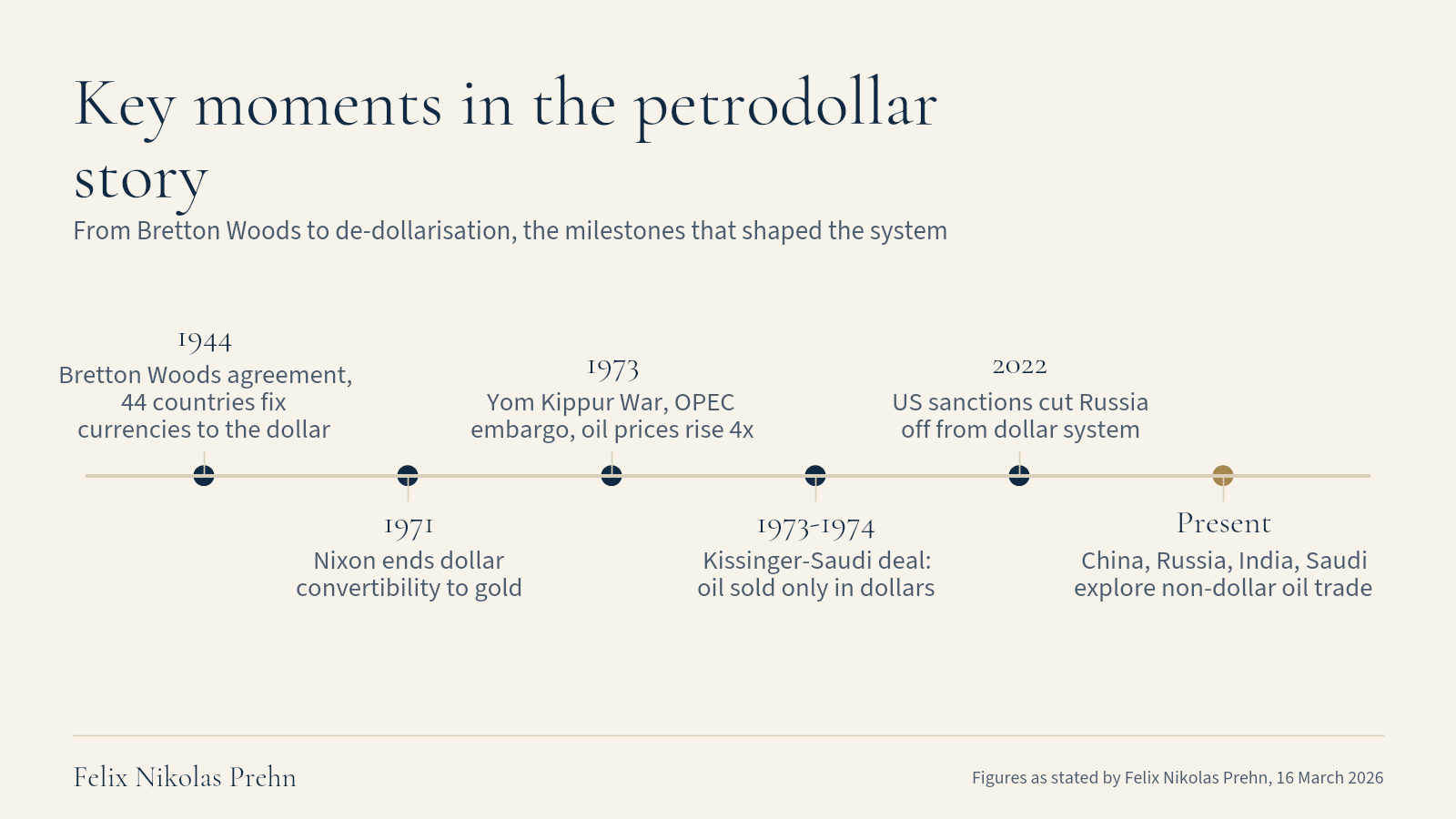
But America, America's factories are humming. American soil was never touched by bombs, right? America had become the world's manufacturer, the world's creditor, and the world's gold vault all at once. So in 1944, 44 countries gathered at a resort in Bretton Woods, New Hampshire. And their mission was to create a new global financial system from scratch. This is not a conspiracy theory. This is just history, right?
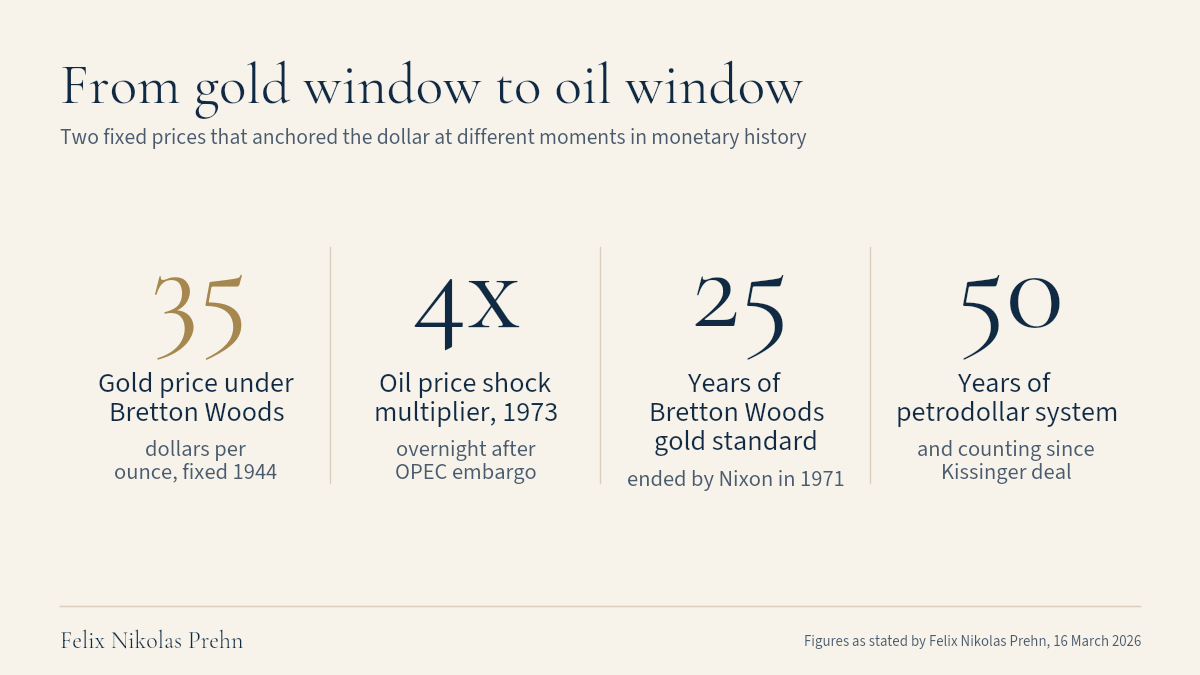
And the deal they made was this. The US dollar becomes the world's reserve currency. Other currencies pegged to the US dollar, which means their exchange rate is fixed, and the dollar is convertible to gold at a fixed price of $35 per ounce. Basically, the dollar was gold. You could walk up to a US bank and exchange your dollars for actual gold bars at a fixed rate. And it gave everybody confidence, right? The dollar was as good as gold. Literally, the dollar was literally as good as gold.
And this worked for about 25 years. But then the 1960s happened. Vietnam war. Great Society programmes. Spending exploded and countries started noticing something rather uncomfortable. The US was printing way more dollars than it had gold to back them. And France under de Gaulle actually started demanding gold in exchange for their dollars because they saw what was happening. The French are quite clever occasionally.
So President Nixon, he just went on the television and he said, "Yeah, we're not doing that anymore. No more gold for dollars. Sorry, my French friends." So just like that, the gold standard was dead. Now, here's where most people stop the story. But this is actually where it gets interesting, especially in today's world, because the dollar now had a problem. The dollar was now what we call fiat currency, basically money backed by nothing except a government saying it's worth something, which is not super reassuring, right? They are basically saying we really hope you believe us it's worth something.
And for a couple of years it was just chaos. The dollar dropped, other currencies became super volatile, and nobody really knew what that meant. And then in 1973 war broke out in the Middle East, the Yom Kippur war, and it was Israel versus Egypt and Syria, and the US backed Israel with weapons exactly how they're doing now with Iran. So Arab countries were pissed off, put it mildly, and they had one very powerful card to play.
So OPEC, which is the cartel of oil producing countries, announced an embargo. No oil for you American bastards or anybody supporting Israel. Now, oil prices went up 4x overnight pretty much. Gas lines stretched for blocks. The American economy went into an absolute tailspin. It was a crisis. It was a real one. And Nixon had to do something.
So what did they do? He sent Henry Kissinger, the Secretary of State, to Saudi Arabia with a very interesting proposal. And the deal was very simple. Saudi Arabia agrees to sell oil only in US dollars. And the United States agrees that it would provide military protection and weapons. In other words, you make sure everyone needs dollars to buy your oil. We make sure nobody messes with you ever.
Beautiful deal if you were the US or Saudi Arabia. For everybody else, you just became a forced customer of the US dollar forever. Now, before we go into the implications of that, because they're huge, I want you to learn how to use this information, this macro information, and give you better tools to actually apply it to your investment decisions day to day.
But let's break down this system exactly how it operates because once you see it, you can't unsee this. Let's go back to Japan. They need oil, right? Millions of barrels every single month or day. But they can't buy in yen. Saudi Arabia won't accept it, right? The deal says dollars only. So what happens? You have Japan. They need to do what? Well, first of all, you have the Saudis down here, and the Saudis want to send oil to Japan, right? But Japan can't pay for it.
In yen. So, how does Japan get dollars? Well, the US of A, say cars to the US or PlayStations, semiconductors, and so on. And then the US sends back dollars. Now you may not sell as many cars as you need dollars, so you could also do something else. Japan will also buy US debt.
But either way, they need dollars first before they can buy oil and send dollars to the Saudis. Right now, Japan doesn't just need dollars today. They need dollars all the time. Oil is a constant need, right? You burn fuel every day. So what do they do? They keep a massive pile of US dollars in reserve, lots and lots and lots of dollars just sitting there at the ready so they can buy oil.
Now, what's the safest way to hold dollars? You buy US debt, also known as US government bonds or US treasuries. Market likes to make things complicated, but it's all just debt. So now Japan and every other oil importing country is buying and holding dollar debt, lots of it. And maybe you start to see why this is such a good deal for America.
Let me know if this is landing for you so far. Put a "landing" in the comments down below and I'll see if it is. And if it isn't, also let me know. But here is where it gets even better for the US. Saudi Arabia and the other Gulf states, what are they getting? Well, these guys are getting all these Japanese dollars, and they're getting more and more and more dollars than they need.
What do they do with all the dollars? They can't spend it all in Saudi Arabia. There's only so many gold-plated Lamborghinis you can get. And so what do they do? They invest it. Where do they invest it? Right back into good old USA.
So they buy US debt with it because that's really safe, right? They buy US stocks with it because it has great opportunity. They buy US real estate because you can get income from it and of course US weapons. This is called petrodollar recycling, this part here, because the money flows out to buy oil and then it flows right back in as an investment.
It's a perfect loop. It's almost like it was designed that way to keep good old USA on top. Oh yes, it was. And this is why understanding this system matters for anybody who's investing in the US, because this loop creates 3 massive advantages for the United States that directly affect your money, as they say in some parts of the UK.
Here's the big idea and this is what separates people who understand markets from people who just react to headlines. The petrodollar system gives America 3 massive advantages that most retail investors have never ever thought about or heard of. And by the way, we've done again something even better for you. If you want to keep track of what's actually going on with this whole system, not only do we have the report for you, we have a live dashboard where we track what's going on around the world, metals, oil, and everything else.
Live news, and literally what's happening in the world. Do you want to worry about what's happening in the Middle East right now? Well, why not see what's actually going on there? Whether that's military flights or energy infrastructure and literally all the news and exactly where it's happening and why it's happening. You want to understand that, that's all in there.
But I've also just added a petrodollar tracker. We're going to keep building that out. Understand how this actually all fits together again with a petrodollar briefing which is updated there live for you. So you can take advantage of that. You can also filter, by the way, for stocks. So if you want to find some quality stocks, for example, we also do that for you and you can get an insight into what's going on with each one of these and so on.
So there's a ton of stuff in there, and that's about $6 a week. We just want to make good information available to everybody. There's a link down below to that too. So yes, loads of good stuff in the linking section.
Now, we've established that every single country that imports oil, which is basically everybody, they must all hold dollars. Not because they love America, not because they think the dollar is pretty, but they literally cannot buy energy without it. So it creates a constant structural demand, permanent demand for dollars that has nothing to do with the US economy.
Now what does it mean for you? It means the dollar stays stronger than it should just on the basis of this oil demand. It means if you're American, your purchasing power, especially for imports, is artificially boosted. The iPhone is cheaper than it should be, for example, right? Because of the petrodollar.
And then number 2, all those countries need to hold dollars. The safest way to hold dollars isn't holding cash, right? Because it's silly. What do they do? Well, they buy US government bonds with them. So there is this massive permanent demand for US debt.
And what happens when everyone wants to buy your debt? Well, you get to pay very low interest rates. So the US government can borrow at rates that would make all other countries jealous. And that means more spending on government programmes, lower taxes than otherwise necessary, bigger deficits without a real immediate consequence.
And for US investors, it means US bond rates stay lower, which pushes more money into stocks, into real estate, into riskier assets. So the whole stocks only go up environment of the last few decades, petrodollar is the invisible force that's making that possible.
And this is one of the most powerful and the most dangerous, which is number 3. You control the currency that everybody must use, you can cut anyone off from the global economy. And have you ever thought about why US sanctions are so devastating while other countries' sanctions barely matter? Well, this is why, right? Write "sanction" in the comments if this is something that just landed for you.
Now, when the US sanctioned Russia in 2022, they didn't invade it. They didn't bomb it, at least not directly. They just said, "You can't use dollars anymore." And suddenly, all Russian banks couldn't trade. Russian companies couldn't pay suppliers. Russian oligarchs couldn't access their yachts. That's the real scandal of the war.
We actually had some Russian students and we had to say to them, "I'm sorry, we can't have you because our banks will close down our accounts if we continue to give you guys access." So people were knocking on the door. We can do it. It's incredibly unfair because they're just people, right? They're just people like you and me.
But back to the story, the US has the power to economically destroy a country without firing a single shot. Now, if you're an American, you might think, "Great, we have all this power. What's the problem?" But here's the problem. Other countries have noticed. Took them a while, but they've noticed.
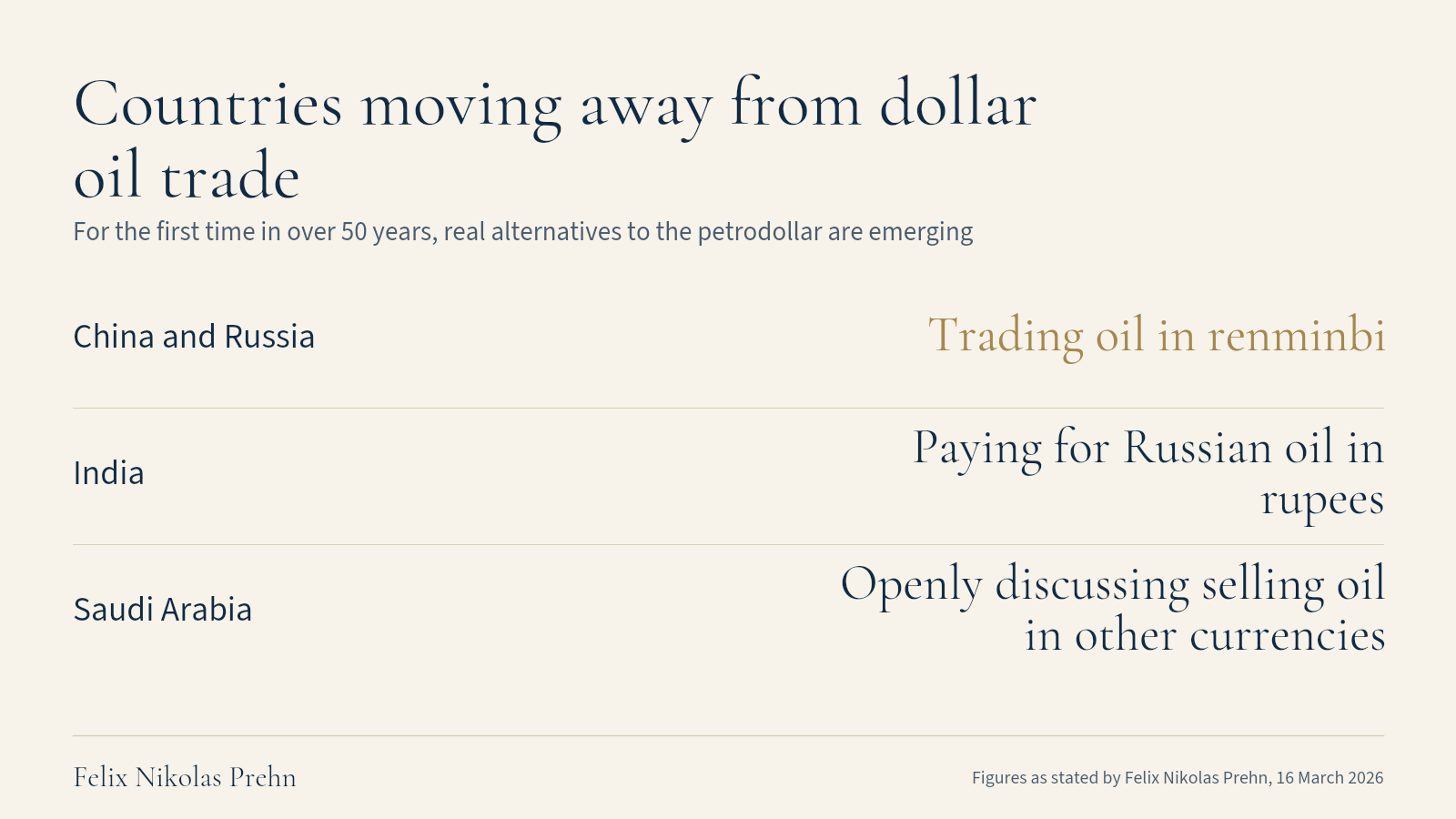
China, Russia, India, Brazil, Saudi Arabia, Iran, they've all watched American policy weaponise the dollar, and they thought maybe we should have a backup plan. Wouldn't that be an idea? But no, for the first time in 50 years, they're actually doing something about it.
China and Russia are trading oil in renminbi, the Chinese currency. India is paying for Russian oil in rupees. Saudi Arabia, America's original partner in this deal, is openly discussing selling oil in other currencies.
Now, for those of you who are building long-term portfolios, long-term wealth, this is the trend you really need to understand. And let me be clear that the dollar isn't going to collapse tomorrow or next year or probably even this decade. But the direction of travel, well, for the first time since 1974 there is a real alternative emerging to the US dollar and that has implications for everybody investing in US markets.
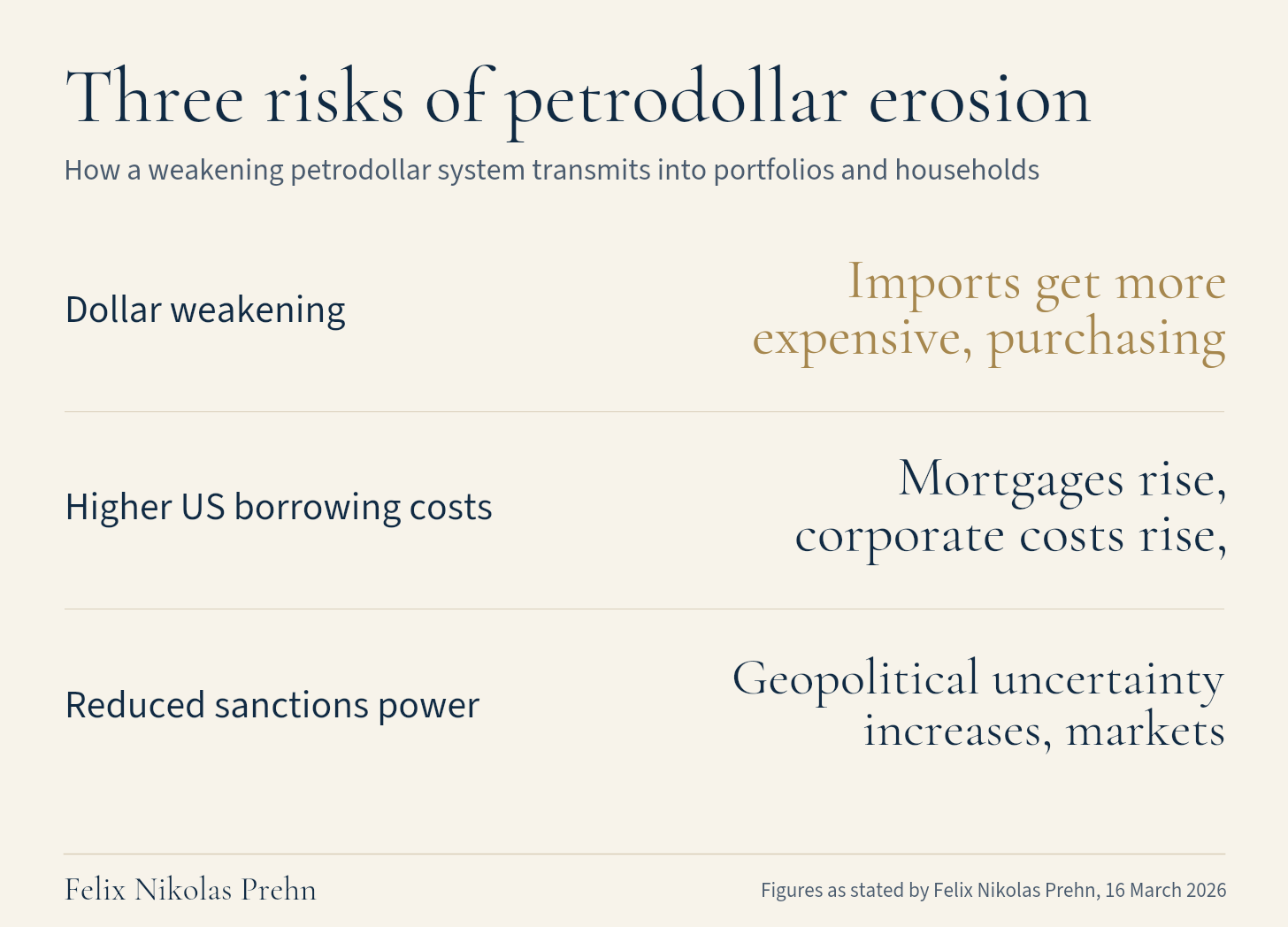
So let me break down what I'm watching and what my mentors told me to watch. The 3 risks I'm watching. First, there is a long-term dollar weakening. So if demand for dollars gradually decreases because they're trading in other currencies, the dollar will weaken and that means your imports get more expensive. Inflation for investments will perform better in dollar terms and US purchasing power will erode.
Right? And remember this is all in the free research reportings. But I know I'm dumping a lot of stuff on you here in a short period of time. The second risk is that if the foreign buyers buy less US debt, the US will have to pay a higher interest rate to attract buyers. So your mortgages will get more expensive. Corporate borrowing costs will rise and stock valuations will decline. And this is the hidden tax that nobody talks about.
And then number 3, if countries can trade without dollars, American sanctions and American banks will have a lot less power. That changes the geopolitical equation and it creates uncertainty which is something the market hates.
Now I want to talk about opportunities because I always think there is a silver lining under everything. But if you think through Venezuela and Iran in terms of 2 countries who are selling oil in non-US dollars, maybe that explains a little bit of what's going on out there and I probably can't say all the things that I want to say on YouTube. Otherwise I'd lose you lovely audience and I won't be able to help anybody anymore. But you can do some thinking on that front, right?
Please don't put that in the comments because again, YouTube doesn't like that sort of thing. But you know what I'm saying, right? Winston just told you that. So, opportunities. Now, if you want to hear the 3 opportunities, let me know in the comments. Put a 3 in there.
And let me know that you're still alive and with me and all that. First of all, if the dollar weakens, what goes up? Things that are not dollars, gold, commodities, real assets. And another reason why we built out our whole metals universe inside of Stocks, which is the app you have access to down below for like $6 a week.
And we literally look at what are the institutions doing with gold and silver. Are they buying? Are they selling? And what are the premiums in overseas markets? What is the inventory look like for gold and silver and all the other good stuff that is very important? Well, how's the stretch level looking in the markets and so on.
But beyond gold, there are other things. Yes, some people find that hard to believe. If the US loses this privilege it has, other markets become more attractive. Emerging markets, commodity exporters, countries that benefit from a weaker dollar.
And then the third benefit from the whole thing is perhaps a bit contrarian. If countries are trying to use less dollars because they don't want to be that dependent on the US, what's the long-term play? Well, less dependence on oil. So the energy transition isn't about the climate and the polar bears and that sort of thing. It's about breaking free from the petrodollar system. So countries that can generate their own energy, well, they don't need to buy dollars.
And that means companies building renewable infrastructure, battery storage, nuclear plants, yes, that green technology, LNG facilities, they are potentially a very good opportunity. And this is why I watch these big macro trends because they tell me where the money might be flowing next. And then we can look at that.
So what does the future look like of the petrodollar system? It's the million-dollar question everybody's asking. Perhaps the trillion-dollar question everybody's asking. So many countries want out. Why hasn't the dollar collapsed yet? And that's a great question.
Well, let me give you the honest answer. The first reason is momentum. The global financial system is like an oil tanker. It doesn't turn on a dime. Trillions of dollars in contracts are written in US dollars. Pricing systems, banking infrastructure, accounting standards, they're all built around the dollar. So switching is complicated, it's expensive, it's risky. It's like trying to change your phone operating system. Even if you hate it, the hassle keeps you stuck right now.
The second reason is there is no real alternative yet. What would replace the dollar? The Chinese currency. China has capital controls. You can't freely move your money in and out. That isn't going to work. The euro. Well, Europe can't even agree on a fiscal policy. And it's an instrument that's so poor. It was essentially designed to make the Deutschmark cheaper. And they did that by getting the Italians and the Greeks and the Portuguese and the Spanish economy into it and that would lower the whole thing. So again, it's a construct of horrors for an economist.
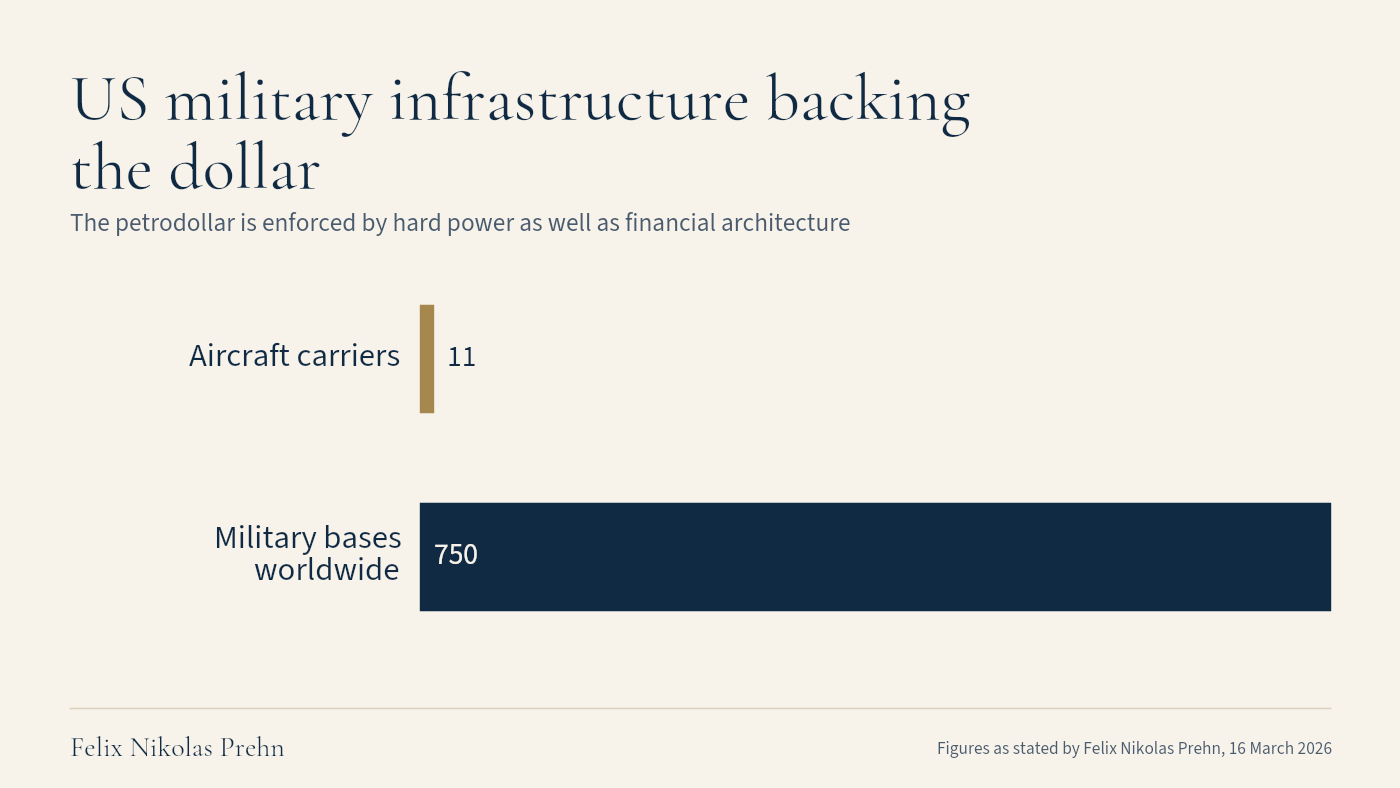
What else? Bitcoin. Yeah, it's not quite there yet, is it? So there's no real alternative. Now the third reason is the dollar isn't backed by just economic might. It's backed by 11 aircraft carriers, 750 military bases around the world. So countries think twice before they challenge a system and there are consequences. Look at what's happening in the Middle East.
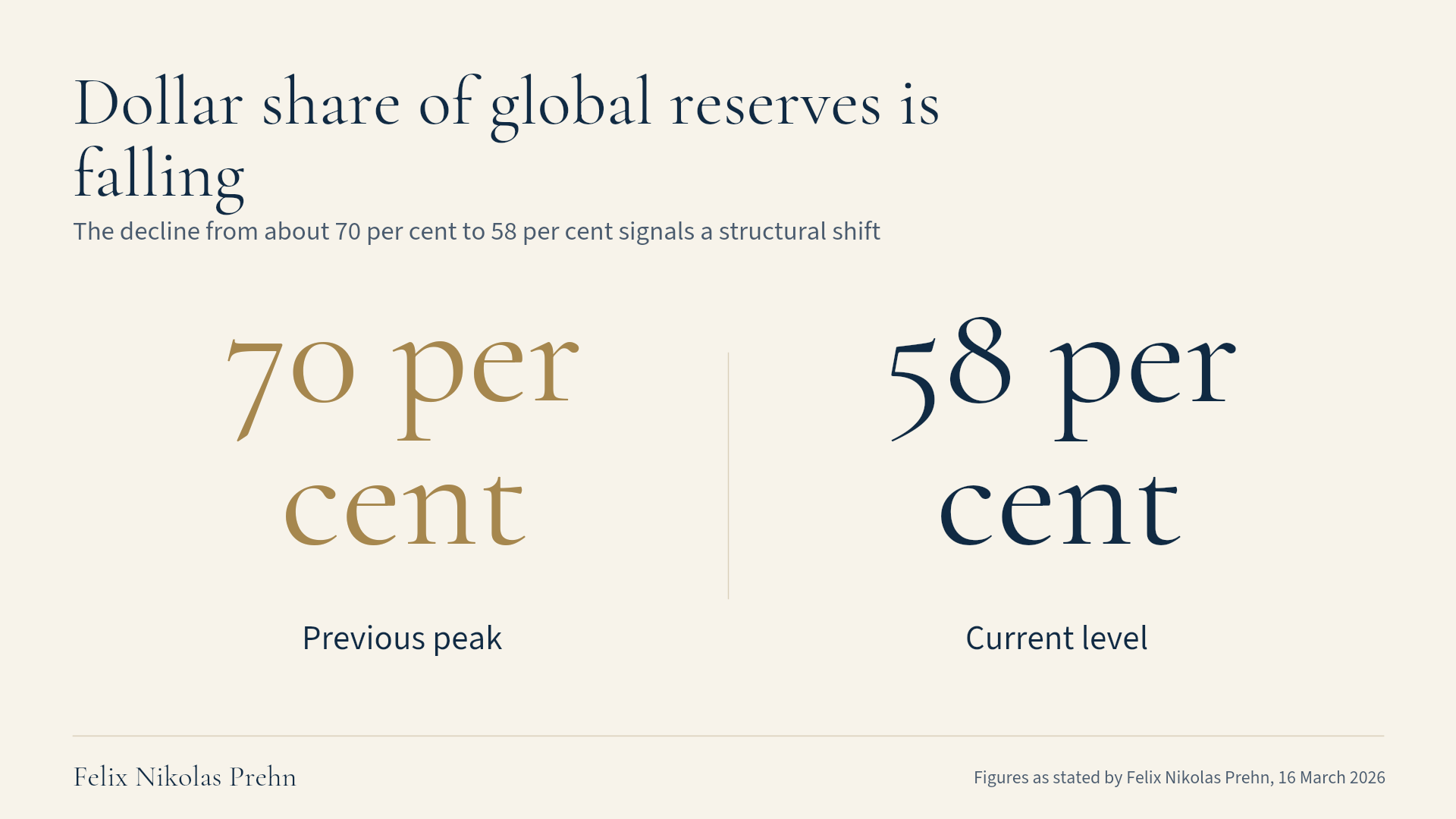
So my take is, and this is what my Wall Street mentors always said to me about big systematic changes, big systems don't collapse overnight. They erode very gradually and then sudden. So the petrodollar probably won't end with a headline. It'll just matter less year by year, trade by trade. And the dollar's share of global reserves has already declined from about 70% to 58%. Which is not a crisis, but it is a significant trend.
And maybe a good analogy is, do you remember when everybody said physical newspapers would die because of the internet around 1999? Well, they didn't die immediately, did they? But they declined for years. And eventually, yes, most of them are gone or barely surviving, and most of them are just owned by some billionaires who want to buy themselves an audience.
The petrodollar is essentially going through its newspaper moment. The smart money isn't betting on a sudden collapse, but it is repositioning for that gradual decline.
And that's what I want you to take away from this. Don't panic. Don't sell everything. Don't buy and put everything into gold bars. But do understand that the invisible foundation underneath your portfolio has cracks forming. Cracks that could widen, are likely to widen over the next decade.
And if you want to turn this into how do we actually use this and therefore find the new trends, the things that might go up a lot more a lot faster because Wall Street's buying it already, come and join me on Saturday at felix.org/training and I'll teach you that. Why didn't I teach you that in this video? Because it would make this into like a 3-hour video which could be a little bit much I think for YouTube.
If you got some value out of this, please share it with some other people so more people are better informed. And Winston and I say, thank you very much for watching. Don't worry, Winston. Winston, hey, any final thoughts on the petrodollar?
It's like he needs a nap. He's been on a big hike. I wish you all the best. If you own gold or silver or even just a 401k with stocks, what's happening right now in the Middle East could be the single biggest wealth event of your lifetime.